
Singapore and Tochigi Connected Through Sake: Exploring the Potential of MICE in Regional Revitalization Through a Trade Mission
History, culture, nature, and people. How are the elements that feel familiar to us perceived from overseas?
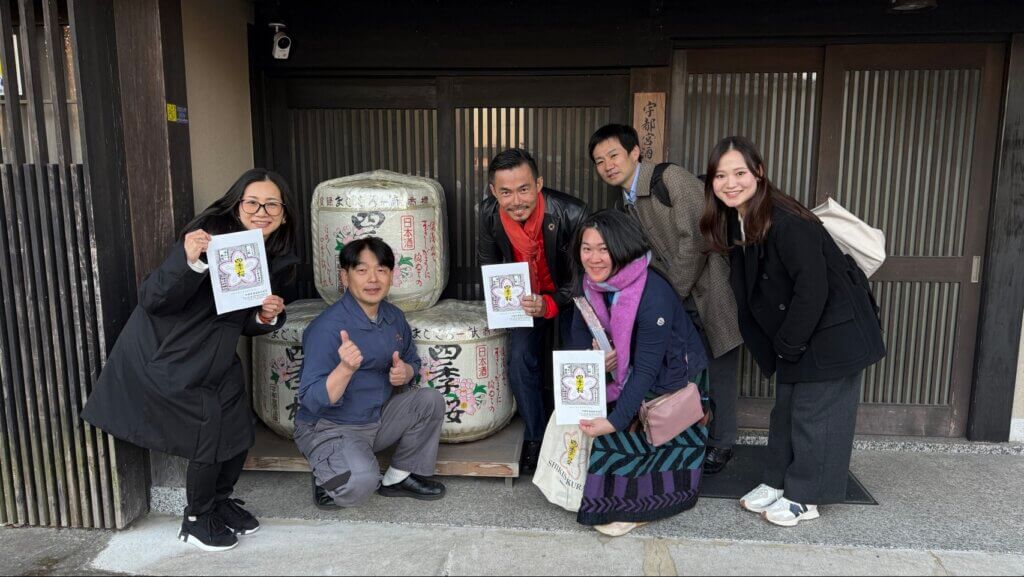
In November 2025, the “Discover Tochigi” tour was held in Utsunomiya City. The program was structured as a trade mission visiting sake breweries across Tochigi Prefecture. Participants noted that behind the craftsmanship refined over multiple generations, they sensed what they described as the “spirit” of Tochigi.
Drawing on perspectives from Daniel C. (Singapore), one of the participants, and the Utsunomiya Convention & Visitors Bureau (Japan), which hosted the program, this article explores insights into how such connections are formed and what they may suggest for future collaboration.
A Tour of Eight Sake Breweries in Tochigi Focused on Sustainability and the Continuity of Traditional Industries
The consultation for this tour was initiated by AONIA, a Singapore-based company. In response, the Utsunomiya Convention & Visitors Bureau collaborated with the Tochigi Prefecture Sake Brewers Association to design a program visiting eight sake breweries across Tochigi Prefecture.
The tour was conducted over four days, from November 21 to 24, 2025. It marked the first time that the bureau had worked with an overseas partner to organize and deliver a program of this nature, aimed at fostering international engagement through the region’s traditional industries.
Participating Breweries (Eight in Total)
- Daiichi Shuzo (Sano)
- Watanabe Sahei Shoten (Nikko)
- Katayama Shuzo (Nikko)
- Nishibori Shuzo (Oyama)
- Shimazaki Shuzo (Nasukarasuyama)
- Tonoi Shuzoten (Mashiko)
- Utsunomiya Shuzo (Utsunomiya)
- Inoue Seikichi Shoten (Utsunomiya)
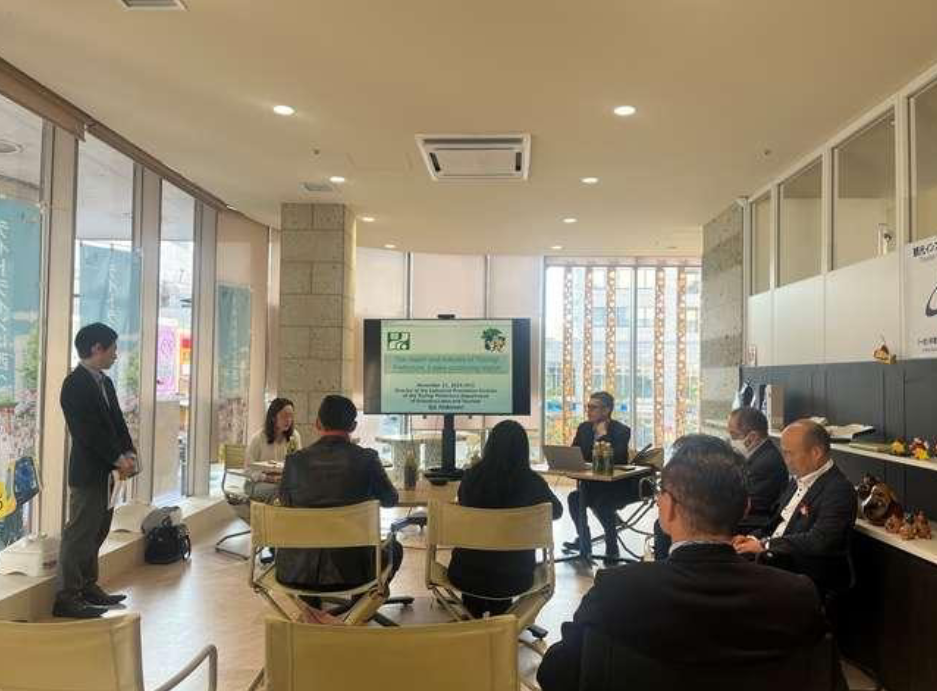
Initially, the program was planned with the expectation of attracting between 10 and 30 investors interested in the sake industry. However, due in part to a delay in the recruitment schedule, the anticipated number of participants was not reached. As a result, the tour was conducted as a preliminary site visit led by the organizing side.
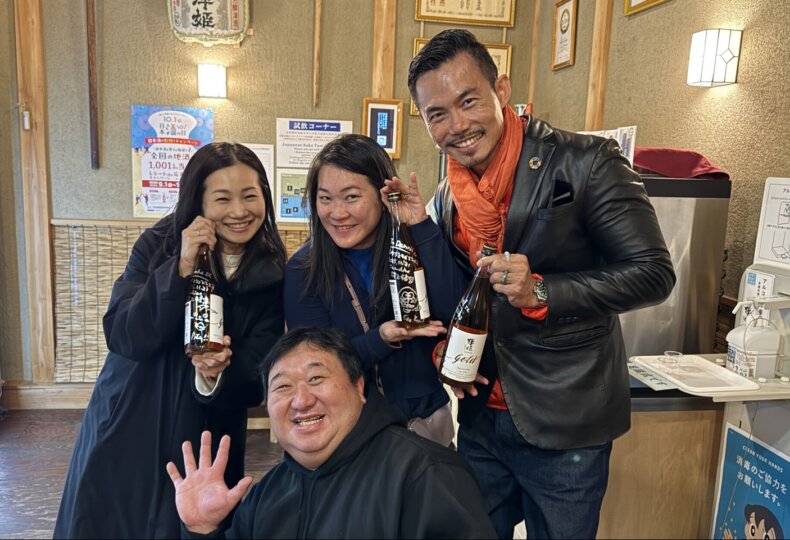
The three participants were Daniel Chua, Representative of AONIA, Daniel Wong, and Sayaka Yamaguchi.
The program was designed around the themes of sustainability and the continuity of traditional industries, with a focus on engaging investors and culturally attuned audiences.
Tochigi: A Sake-Producing Region Sustained by the Waters of Nikko and Nasu
Tochigi Prefecture, known for landmarks such as Nikko Toshogu Shrine, attracts a significant number of visitors each year. The prefecture is also among Japan’s leading producers of two-row barley, a key ingredient in beer production.
Surrounded by the Nikko and Nasu mountain ranges, the basin landscape is traversed by rivers including the Kinugawa, Nakagawa, and Watarase River. Abundant high-quality water sourced from these mountains flows through the region. Naturally filtered through Tochigi’s soil, the mineral-rich water is well suited to sake brewing.
The sake rice variety Yumesasara was developed over a period of 13 years specifically for brewing purposes. Leveraging the combination of water, rice, and climate, nearly 30 breweries across the prefecture produce sake that reflects these regional characteristics.
Nine Insights Drawn from Tochigi’s “Spirit,” Refined Across Generations
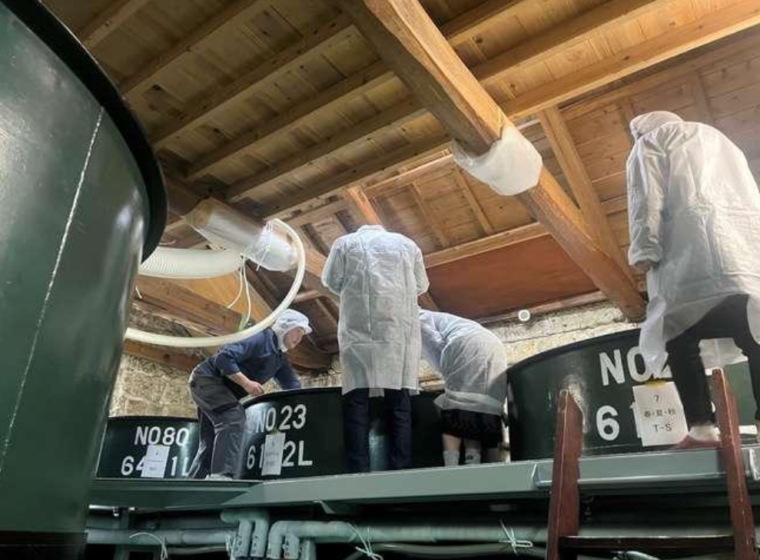
The brewery visits offered insight into what participants described as the “spirit” of Tochigi. Across the prefecture, the delegation met fifth- and sixth-generation brewery heads who have continued to refine their craft over decades, building on foundations laid by previous generations.
Each brewery conveyed a shared understanding that quality is not defined by indulgence, but by integrity and consistency in practice.
1. Leadership Chosen, Not Inherited by Obligation
Many brewery heads did not assume their roles by default. After pursuing careers in other fields, they chose to return—prioritizing continuity over personal stability. Their education extended beyond formal training. From an early age, they observed their fathers and grandfathers at work, absorbing traditions through daily experience.
The leadership they embody is rooted not in obligation, but in a deliberate commitment to stewardship.
2. Tochigi’s Distinctive Sake Rice: The Unseen Value in Every Bottle
Sake begins with rice, yet not all rice is the same. Breweries in Tochigi use locally cultivated varieties grown in the region’s clear air, abundant water, and mineral-rich soil.To taste sake from Tochigi is, in many respects, to experience the characteristics of its natural environment.
Yumesasara
A sake-brewing rice variety developed in Tochigi over a period of 13 years. Known for its elegance and clarity, it serves as a foundation for high-quality daiginjo expressions.Asahi-no-Yume
Produces a smooth and refined profile, well suited to modern and approachable styles of sake.Yasuzume / Yasusume
Characterized by balance and crispness, reflecting the distinctive qualities of the local terroir.Tochigi-grown Gohyakumangoku and Yamadanishiki
Well-known sake rice varieties that express new nuances when cultivated in Tochigi’s climate and soil conditions.
3. 蓄積された知恵から生まれるイノベーション 酒造りは、一瞬のひらめきから生まれるものではありません。発酵のわずかな調整、精米の技術、酵母の改良——。何十年にもわたる試行錯誤の積み重ねです。 同時に、蔵元の方達は理解しています。世界に羽ばたくためには、酒に込めた物語を丁寧に伝えながら、 その本質を守ってくれる新たな視点やパートナーの存在が欠かせないということを。 4. ”もったいない”の美学 日本の精神”もったいない”は、栃木でも息づいています。 酒粕は、 ・グルメ向けビスケットや菓子 ・日本酒入りアイスクリーム ・化粧品・スキンケア ・料理用マリネや味噌の新商品 へと姿を変え、循環型経済が、ひとつの”美学”へと昇華されています。
3. Innovation Emerging from Accumulated Knowledge
Sake brewing does not result from a single moment of inspiration. It evolves through incremental refinements—subtle adjustments in fermentation, advances in rice polishing techniques, and improvements in yeast cultivation. Each step reflects decades of experimentation and accumulated expertise.
At the same time, brewery leaders recognize that international expansion requires more than technical excellence. Communicating the story behind each product, while preserving its essential character, calls for new perspectives and trusted partners who understand its cultural context.
4. The Aesthetics of “Mottainai”
The Japanese concept of mottainai, often understood as a philosophy of avoiding waste, is evident in Tochigi’s brewing practices.
Sake lees (sake-kasu), a by-product of the brewing process, are repurposed into:
- Gourmet biscuits and confectionery
- Sake-infused ice cream
- Cosmetics and skincare products
- Culinary marinades and newly developed miso products
Through such initiatives, circular practices are integrated into everyday operations, demonstrating how sustainability can be embedded within traditional industries.
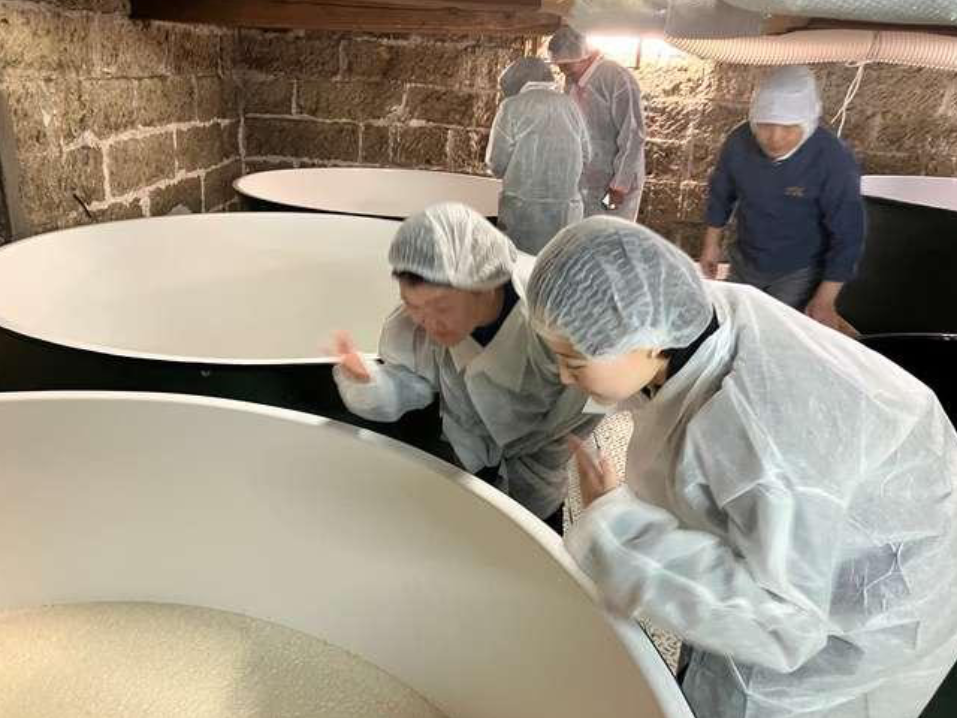
5. Breweries as Tasting Rooms, Museums, and Workshops
Several breweries have evolved beyond production facilities into integrated cultural spaces. Their premises function simultaneously as tasting rooms, small museums, and working ateliers.
Visitors encounter:
- Carefully designed tasting areas
- Handcrafted sake vessels on display
- Narratives of family lineage and technique
- Quiet spaces that encourage reflection
The atmosphere is understated and intimate, reflecting a refined approach to hospitality rooted in Japanese tradition.
6. Protecting Water Means Protecting Craft
Nearly all of the breweries visited draw from deep well water that has been safeguarded across generations. The purity and mineral composition of this water significantly influence aroma and finish.
For these producers, environmental stewardship is not positioned as a policy initiative, but as an essential responsibility. Protecting water resources is inseparable from preserving brewing technique.
7. Pursuing Character Over Scale
Tochigi’s breweries do not prioritize expansion in volume. Their focus lies in expressing distinct character—whether delicate, structured, or richly aromatic.
The primary challenge is not production capacity, but identifying discerning consumers who recognize and value these differences.
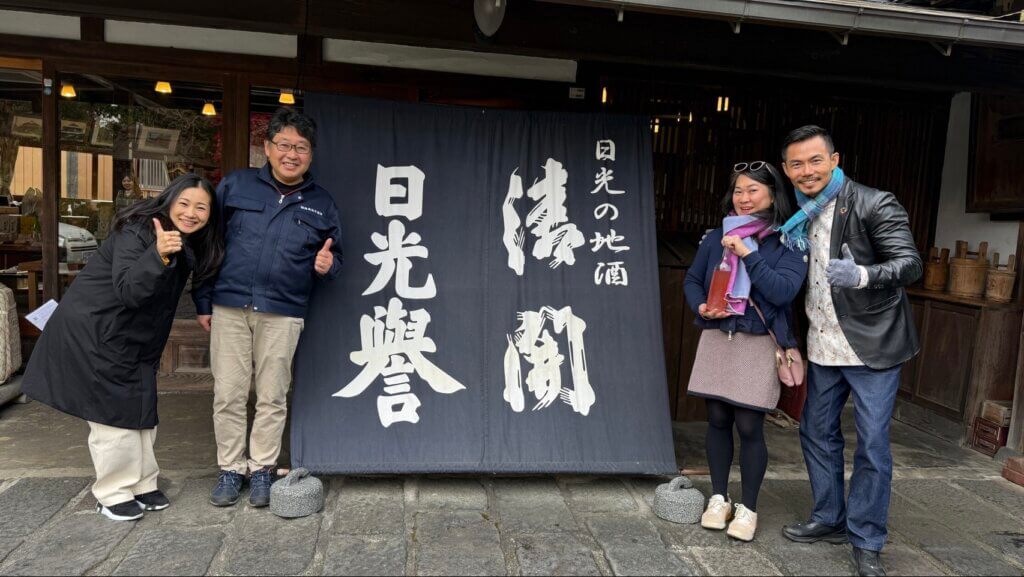
8. A Regional Ethos of Competition and Coexistence
One brewery shared an account illustrating local industry dynamics: during an unexpected rice shortage, another brewery lent rice to support continued production.
In a field shaped by seasonal cycles, manual processes, and physically demanding work, mutual support remains important. While competition exists, it is accompanied by a cooperative spirit that underpins the region’s brewing community.
9. Partnerships with Leading Hospitality Brands as a Mark of Trust
Despite facing challenges such as labor shortages and succession issues, Tochigi’s breweries continue to operate with consistency. Some supply sake to prominent hospitality establishments, including The Ritz-Carlton, Nikko and the historic Kanaya Hotel.
Such relationships are built over time and reflect accumulated trust between producers and hospitality partners.
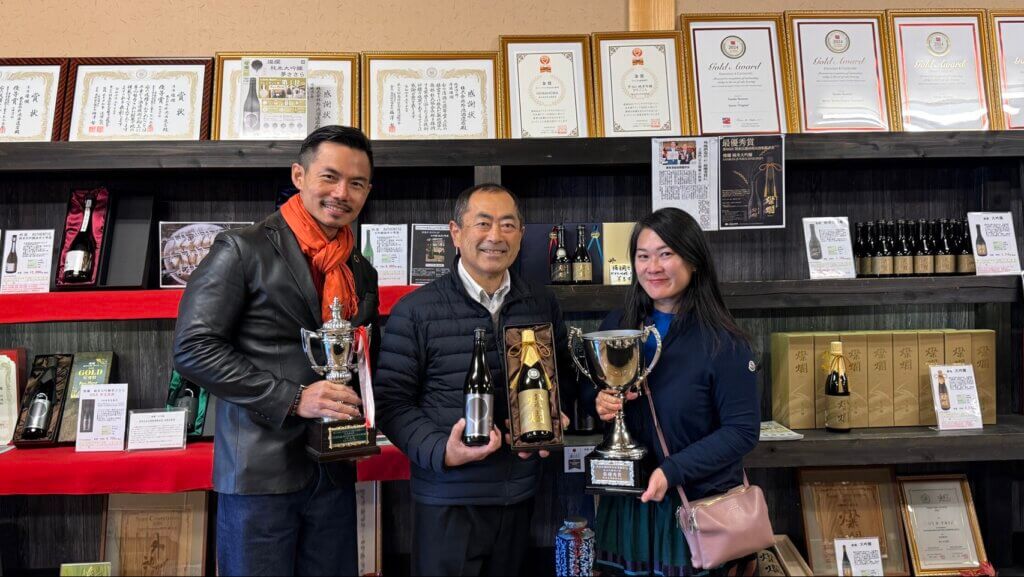
Two Key Insights Shared by Daniel
Through the tour, he identified two principal insights.
1. Trust Is Built Through Direct Engagement
In Japan, the act of visiting in person—demonstrating attentiveness, humility, and sincerity—carries significant weight. Relationships are shaped not only by formal agreements but by presence and dialogue.
Opportunities that may remain inaccessible through email or online communication can open when counterparts meet face to face and engage in direct conversation.
2. Excellence Is the Product of Continuity
Business strength and regional distinctiveness do not emerge overnight. They are the result of sustained effort across generations.
If even one generation had discontinued its commitment, the accumulated expertise and cultural capital may not have been passed forward. Continuity, therefore, becomes a defining element of long-term resilience.
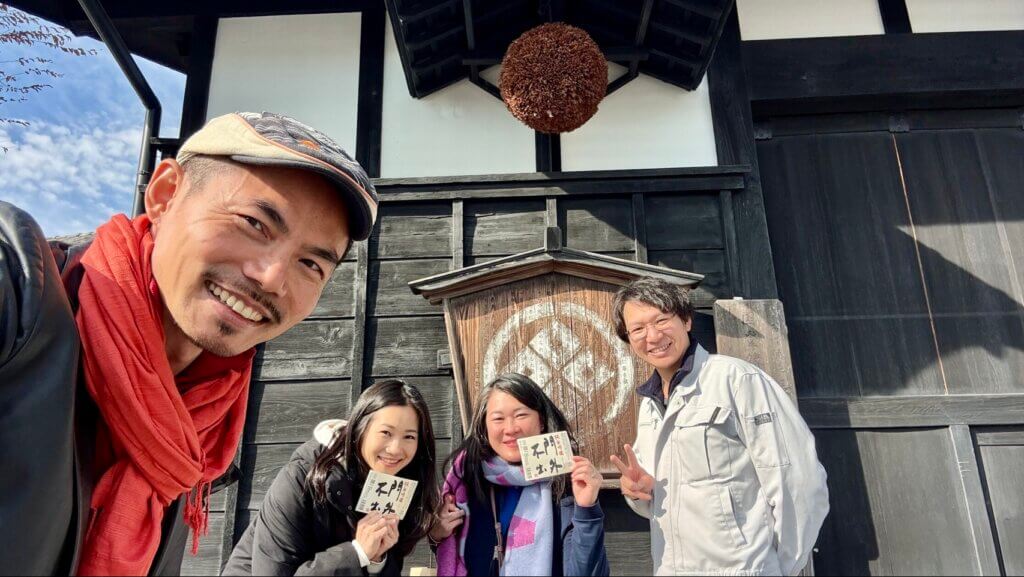
AONIA’s Next Steps
Through discussions with senior prefectural officials, the delegation gained insight into Tochigi’s evolving landscape—from the growth of its sustainability ecosystem and refined traditional industries to its broader global ambitions.
While the primary focus of the mission was to support traditional industries in Tochigi from a circular economy perspective, representatives of the Tochigi Prefectural Government also shared their goals of fostering industries such as aerospace, semiconductors, pharmaceuticals, and biomedical sectors. Both sides acknowledged the potential for educational exchanges between universities in Singapore and Tochigi in these fields.
The tour reaffirmed AONIA’s long-standing emphasis on purposeful engagement, cross-cultural understanding, and genuine partnership. Looking ahead, the company intends to continue building connections between Singapore and Japan, as well as with other countries.
Its stated objective is to support skilled artisans, promote sustainable business development, and contribute to shared prosperity through international collaboration.
Interview with Mr. Komaba and Mr. Yoshino of the Utsunomiya Convention & Visitors Bureau
A Meeting with the Mayor That Left a Strong Impression
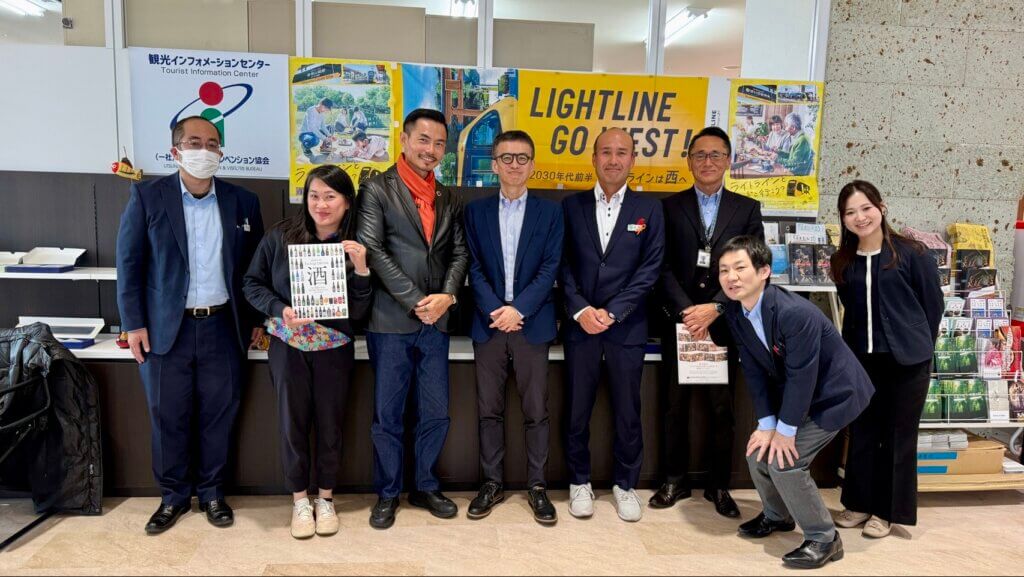
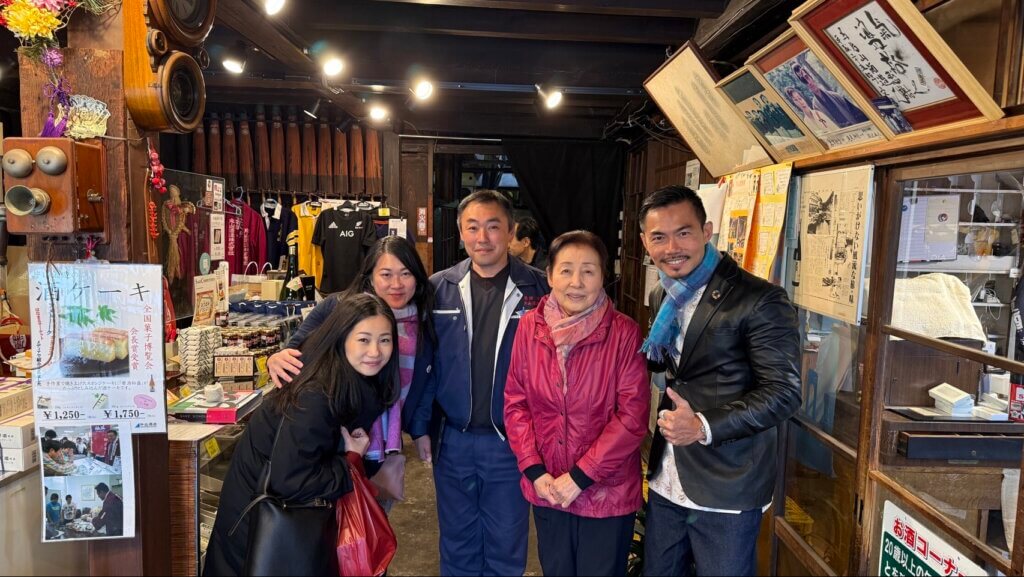
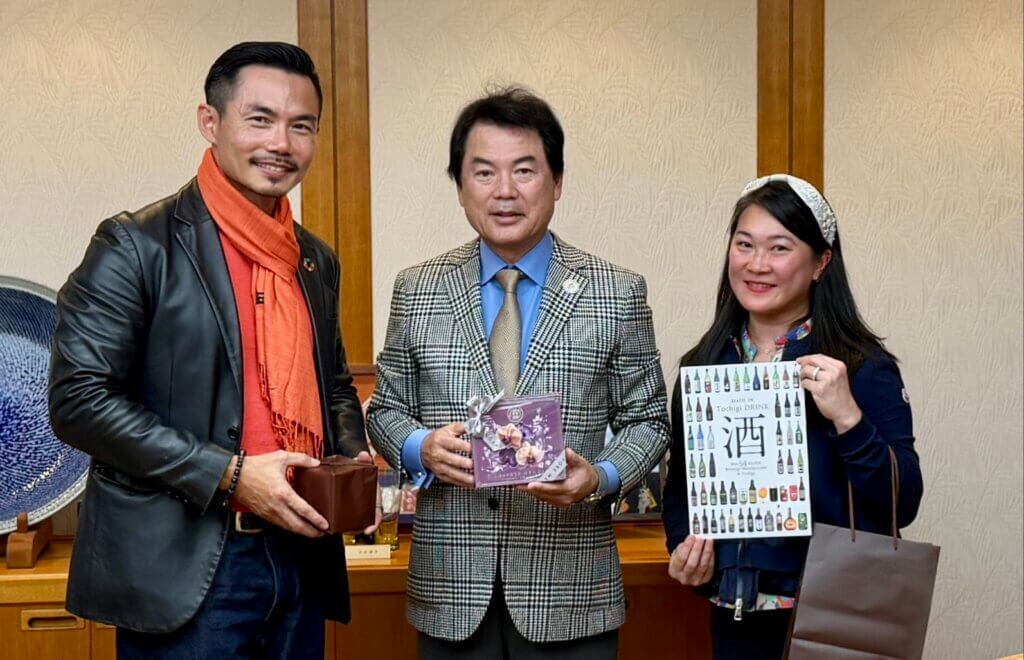
According to the bureau, one of the highlights for participants was the opportunity to meet the mayor prior to the start of the tour. A courtesy visit was arranged at Utsunomiya City Hall, where Mayor Eiichi Sato welcomed the delegation despite his busy schedule.
For the participants, the experience of speaking directly with the city’s top official appears to have been particularly meaningful. A similar meeting had taken place during a FAM tour in 2024, and Daniel had expressed appreciation for that opportunity. In response to his request to meet the mayor again, time for a formal greeting was incorporated at the beginning of the 2025 program.
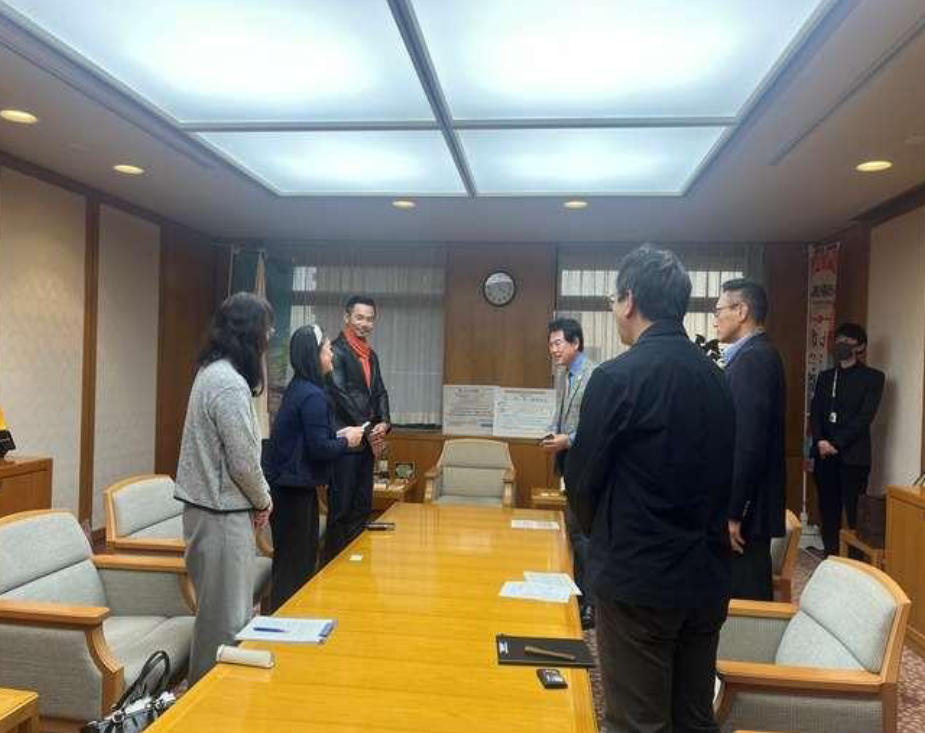
Daniel reflected on the experience as follows:
“The most memorable moment was the second meeting with Mayor Eiichi Sato of Utsunomiya City, made possible through our return visit. The mayor received our team warmly. Through his hospitality, we gained insight into the Japanese approach to relationship-building. Trust is not something that arises from transactions alone. It is cultivated, maintained, and renewed over time. The meeting signaled that the relationship between Utsunomiya, as the gateway to Tochigi, and Singapore is deepening through mutual respect and shared aspirations.”
Overseas Visits and Concerns Over M&A: Coordination Challenges Behind the Scenes
At the same time, coordinating with individual breweries was not without challenges.
According to the organizers, some breweries initially expressed caution, questioning whether “an overseas inspection might lead to discussions of mergers and acquisitions.” As this was the first initiative of its kind, a degree of uncertainty was understandable.
However, Daniel’s objective was not acquisition, but engagement—gaining firsthand understanding of operations, building dialogue, exploring the potential for business matching, and learning about sustainability initiatives and new developments aligned with the SDGs.
As these intentions were communicated clearly and carefully to stakeholders, the level of concern gradually eased, facilitating broader acceptance of the program.
The Next Phase for the Utsunomiya Convention & Visitors Bureau
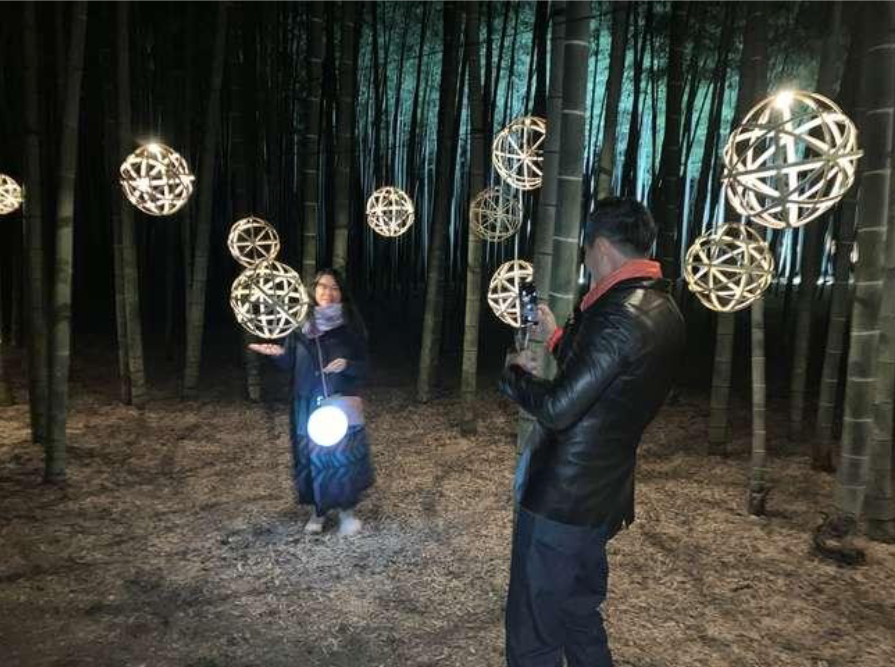
According to the bureau, preparations are now in place to welcome overseas guests in collaboration with the eight participating breweries in Tochigi Prefecture. While the recent tour functioned largely as a preliminary visit, the next step will be to invite the originally intended target group—investors with an interest in the sector.
Rather than positioning the initiative as a one-off event, the bureau aims to develop it into a structured program that can be offered as part of corporate incentive travel. By packaging sake brewery visits as a form of team-building and Japanese cultural experience, the bureau intends to propose a distinctive “sake tourism” program unique to Utsunomiya for international companies.
In parallel, the bureau is also considering more concrete business outcomes, including the expansion of sake exports to Singapore and potential joint projects framed within a circular economy perspective. During the visit, preliminary discussions reportedly touched on export opportunities and distribution development, indicating the potential for future business matching.
Background to the Initiative: A Buyer Visit to Utsunomiya at Japan MICE EXPO 2024
The origins of “Discover Tochigi” can be traced back to Japan MICE EXPO 2024, held in Osaka. As part of the exhibition program, a FAM tour to Utsunomiya was organized. Daniel Chua, CEO of AONIA, participated in the tour as an invited international buyer.
AONIA is a Singapore-based company. Its CEO, Daniel Chua, is known within the MICE and business communities for his work in market development strategy, storytelling, and stakeholder engagement. Through these approaches, the company has supported the growth and development of its clients and partner organizations.
During the visit, Daniel conveyed his interest in organizing a tour of Tochigi’s sake breweries for Singapore-based investors. In Singapore, interest in Japanese sake has grown in recent years, accompanied by an increase in related events. The proposal was framed as an opportunity to create new business prospects for both Japan and Singapore.
Editor’s Note: Not a Conclusion, but a Starting Point
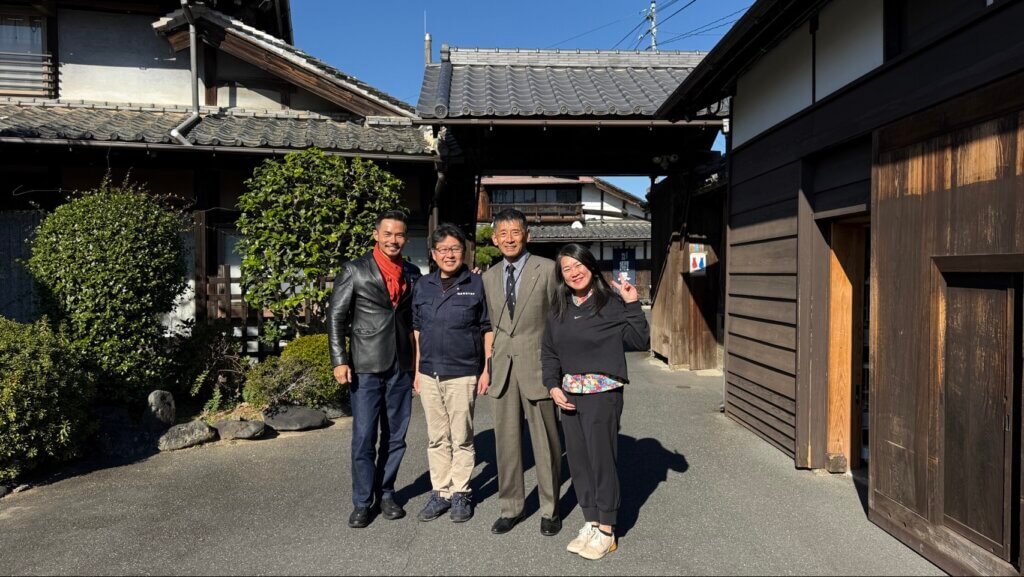
The initiative described in this article represents a preliminary phase preceding a full-scale trade mission. However, such preparatory efforts also fall within the broader scope of MICE.
How can Japan—and its regions—be effectively understood by overseas audiences? A necessary first step is for local stakeholders to recognize and articulate the distinctive strengths of their own communities. Inviting external perspectives and confirming how a destination is perceived from abroad can serve as an important foundation for regional strategy.
Similar approaches may be applicable in other regions as well. If this case study contributes to the early stages of such discussions, it will have achieved its purpose.
Trade Mission (Definition)
A trade mission refers to a delegation organized by government bodies, industry associations, or private companies to visit a specific country or region overseas. Unlike general tourism, its primary objectives typically include business meetings with local companies or public institutions, market research, and the development of professional networks.
Information provided by:
AONIA: for Progress, Planet & People
Daniel Chua, CEO
Web site https://aonia-group.com/
In cooperation with:Utsunomiya Convention & Visitors Bureau
Web site https://utsunomiya-convention.jp/

-
PR/Is Busan, South Korea the Ideal Destination for a First Overseas Workation?A One-Week Business Stay Report Covering Work, Sightseeing, and Daily Life — From Taxis and Hotels to Convenience Stores and Local Cuisine
-
Top 29 Must-See Exhibitions and Events in March 2026 / Upcoming Coverage on AnimeJapan and the Motorcycle Show