
[Column] Where Does Innovation Emerge—If Not on the Stage? Designing Spaces That Blend Diverse Perspectives [TechGALA Japan 2026]
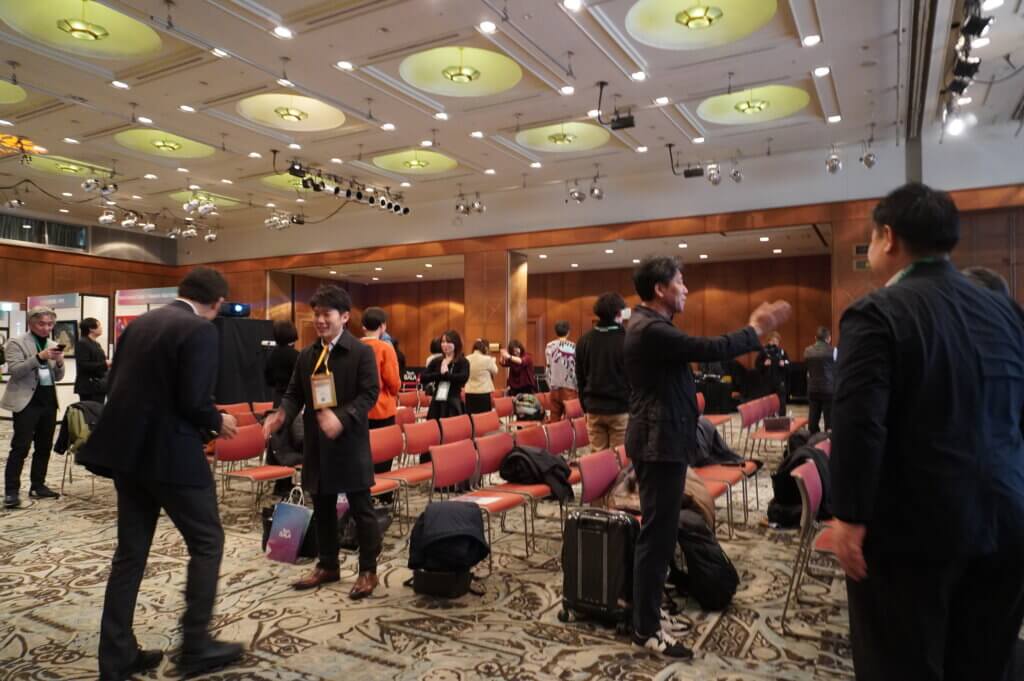
In January 2026, “TechGALA Japan 2026” was held in Nagoya.One particular session raised a central question: how should environments that foster innovation be designed?
Do the events or communities you organize tend to bring together similar participants? Do they risk becoming spaces where attendees only listen to speakers? The structure of a setting can influence the outcomes it generates.This article reflects on the design of such environments, drawing insights from sessions at TechGALA Japan 2026.
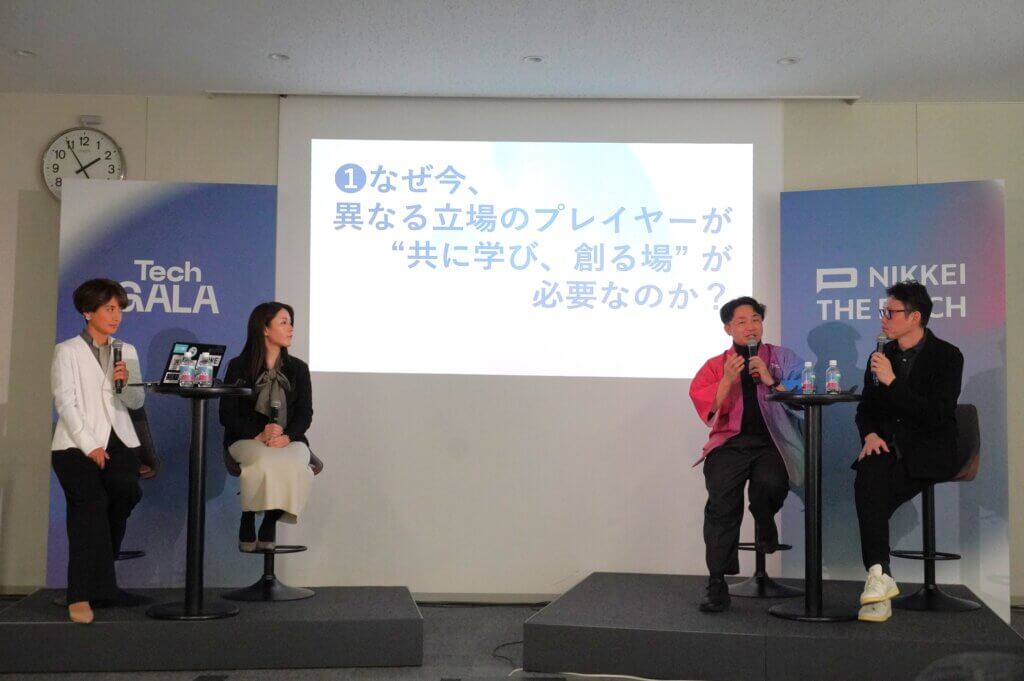
Designing Spaces for Innovation: Insights from “Tradition × Innovation — New Forms of Innovation”
During the session “Tradition × Innovation — New Forms of Innovation,” held on the first day of TechGALA Japan 2026, Go Fujita, President and CEO of MTG Ventures and a long-time venture capitalist, raised a thought-provoking perspective.
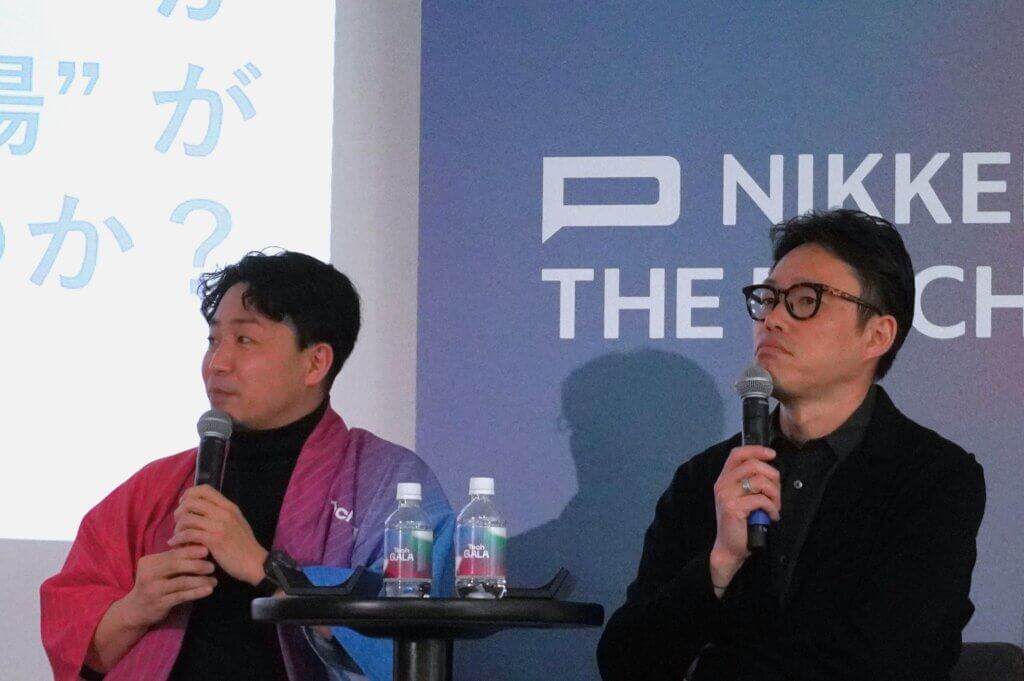
Shifting to Roundtable Discussions with 20-Minute Face-to-Face Dialogue
Fujita has been working in Akita Prefecture, which faces an advanced stage of population decline, positioning it as a “frontline for problem-solving.” His initiatives involve bringing numerous startups from outside the region and connecting them with local governments and companies.
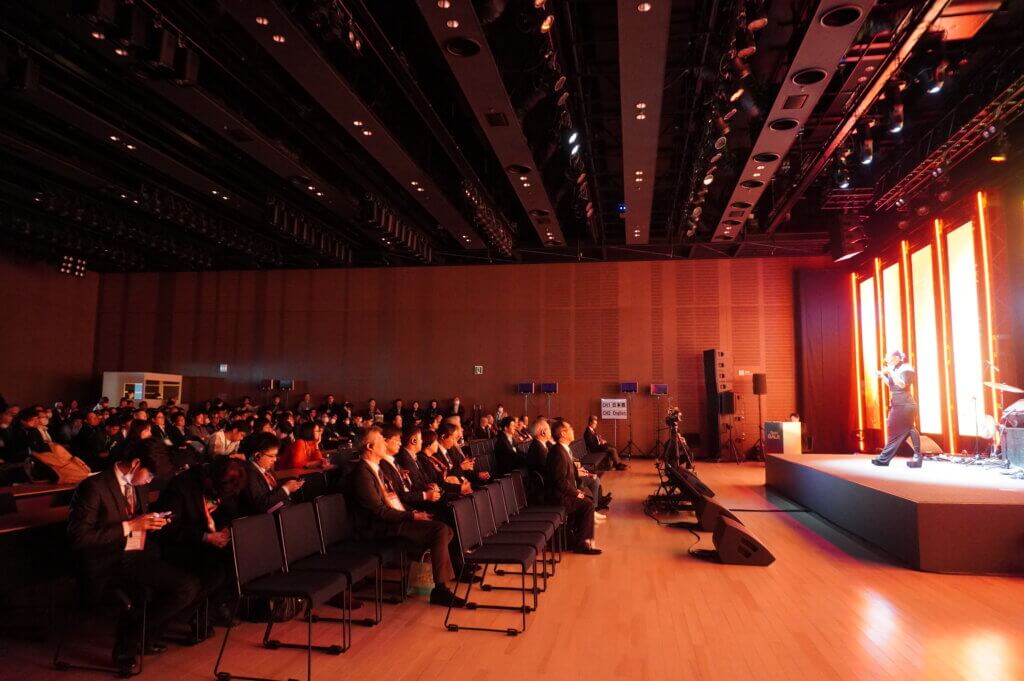
In these efforts, events were organized where 10 to 20 startups delivered consecutive presentations of three to five minutes each to municipal officials and other stakeholders.
However, as the sessions progressed, participants on the receiving side were often overwhelmed by the volume of information. Their concentration declined, opportunities for questions were limited, and the outcome was reduced to simply “having listened.” According to Fujita, such formats make it difficult to achieve meaningful matching or foster genuine innovation.
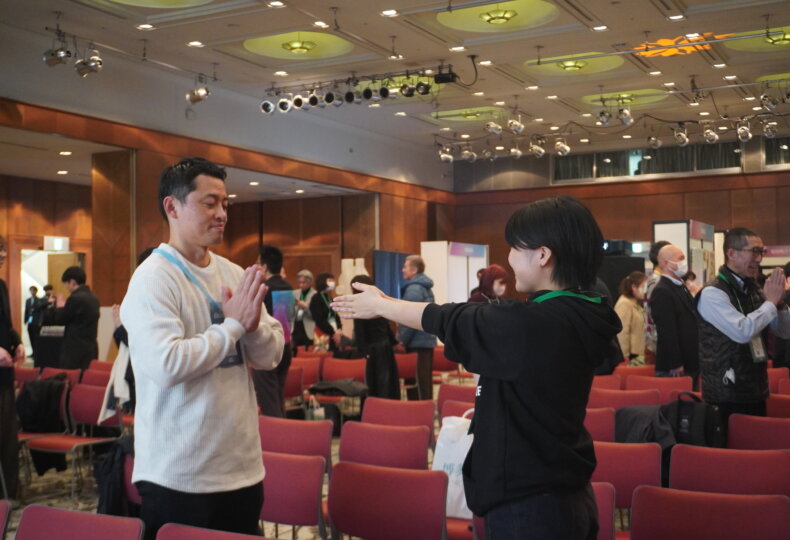
In response, Fujita introduced a roundtable format. Rather than relying on one-way presentations, each table brings together a mix of participants — including startups, local government officials, and financial institutions — who engage in 20-minute face-to-face discussions focused on how to address regional challenges.
According to Fujita, this shift in format has led to stronger engagement among participants, resulting in an increasing number of cases that progress to concrete pilot projects and business expansion.
What is critical is not only the content of the discussion, but the structure of the setting itself. Moving away from a stage-and-audience configuration toward a shared table format can significantly influence participants’ sense of involvement and ownership.
A Community Built Around Conversations “Like Gathering Around a Fire”
What considerations are important when creating environments where participants from different backgrounds come together?
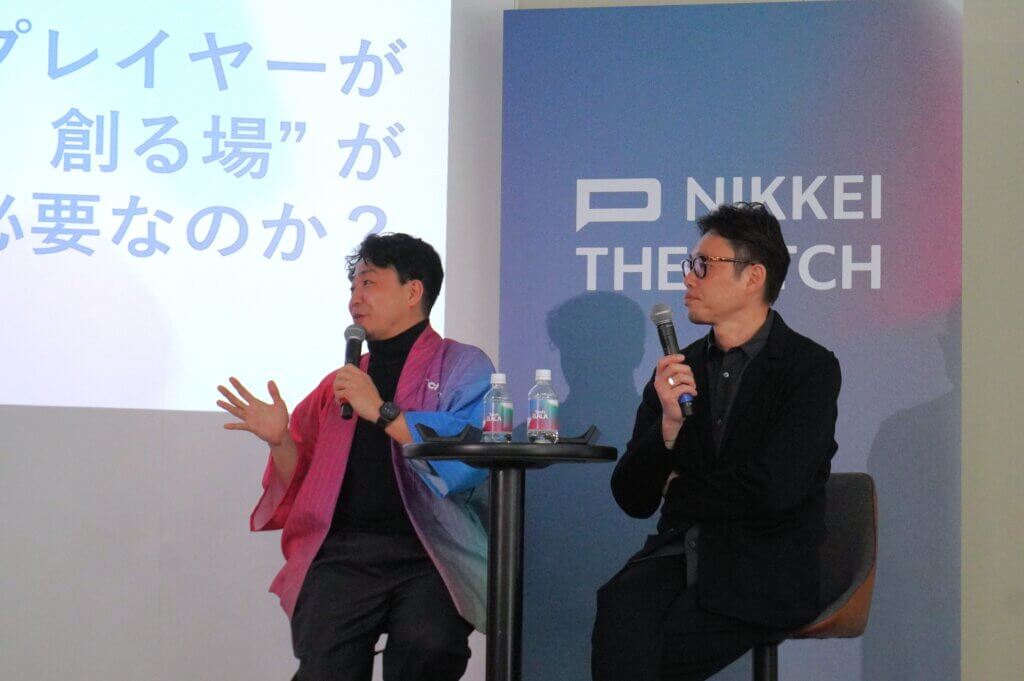
One example is “Takibiko,” an initiative led by Iwata, representative of Mitsuboshi Group. The community brings together successors of small and medium-sized enterprises (known in Japan as atotsugi, or next-generation business leaders) and startups, encouraging dialogue in a flat and collaborative setting. Its main base, Takibiko Campus — a coworking space with an outdoor area designed for bonfire-style gatherings — serves as a hub for projects that aim to foster new forms of collaboration and cross-sector interaction.
According to Iwata, the concept of “gathering around a fire” emerged from a sense of discomfort with conventional models of open innovation. In collaborations between large corporations and startups, relationships often tend to become hierarchical, with larger companies positioned as providers of resources and startups as recipients of support. Iwata also notes that even the term “small and medium-sized enterprises” can carry an implicit perception of being in a dependent role.
Takibiko was established to create a space where participants can engage on equal footing, similar to the way people gather around a fire. The differences between traditional companies and startups, he explains, are not a matter of superiority or inferiority, but rather differences in time horizons — between long-established businesses and organizations pursuing rapid growth. Mutual respect, therefore, becomes the foundation of collaboration.
The image of people sitting in a circle around a fire suggests a shared orientation rather than a face-to-face opposition. This structure has similarities to roundtable formats, where participants align within the same space. Such configurations may contribute to creating a more balanced and open dialogue.
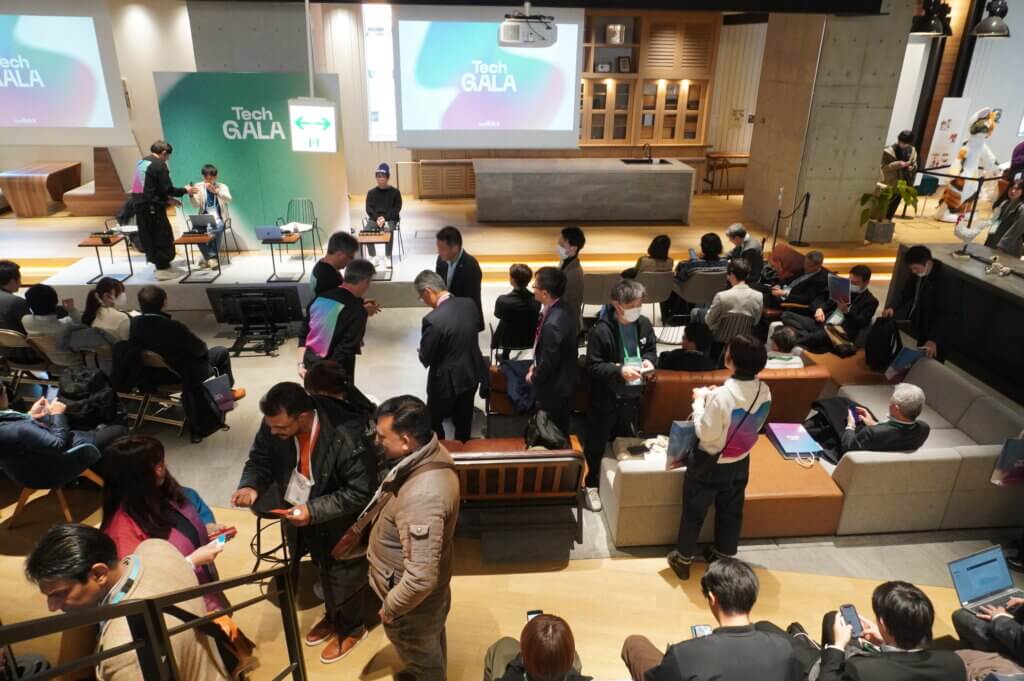
Iwata concluded the session with the following remark:“If we do not bring different actors together, it becomes a risk.”
He explained that startups alone cannot sustain the scale of Japan’s economy, while existing companies may struggle to remain competitive if they continue as they are. For this reason, he emphasized the importance of creating environments where both sides can interact and collaborate.
Learning from the Sauna: Creating Flat Environments Without Hierarchy
Chisato Kunimoto, President and CEO of Cynthialy Inc., shared the following perspective while discussing communication in the age of AI:
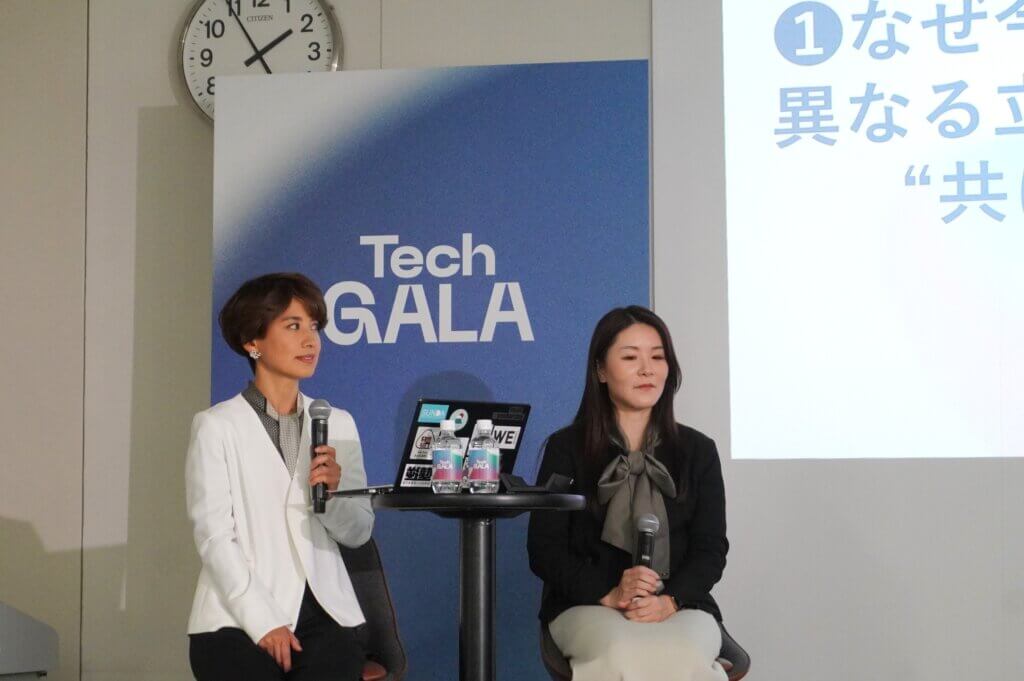
“In a sauna, there is no hierarchy of seating.”
In business meetings or formal dinners, seating arrangements often imply hierarchy — distinguishing between upper and lower positions. These configurations can unconsciously reinforce power dynamics, such as those between clients and vendors or large corporations and startups.
Kunimoto suggested that environments like saunas offer a contrasting model. Without assigned positions or titles, participants can engage with one another on equal footing, which may encourage more genuine interaction and facilitate change. She raised the question of whether meaningful transformation can occur without rethinking how such environments are designed.
To create value in gatherings where people come together, it is important to enable interaction among individuals with diverse roles and backgrounds. Designing spaces that allow for open and balanced dialogue is therefore a key consideration.
Editor’s Note: From Stage-Centered Formats to More Integrated MICE Experiences
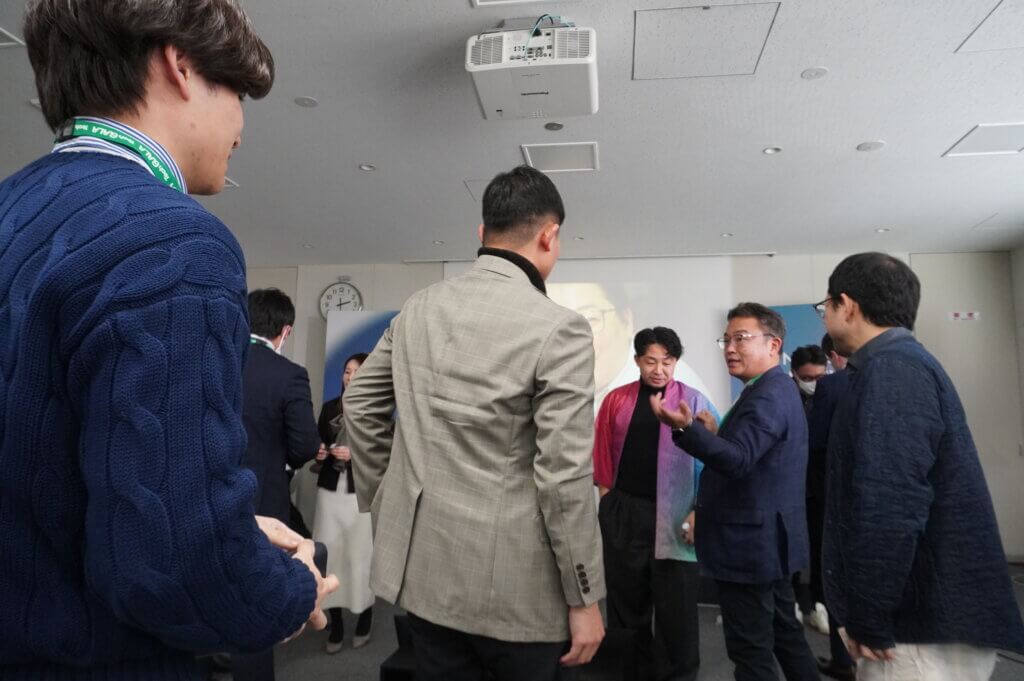
Rather than relying solely on pitch-style formats, there may be value in designing environments where speakers and participants — as well as participants themselves — can interact more directly. Moving beyond one-way presentations, this approach shifts from stage-based communication to dialogue at the same level, where speakers and attendees gather around shared tables.
By changing the physical setting, the atmosphere of the space, the relationships among participants, and the outcomes that emerge can also change significantly.
Instead of creating environments where participants simply listen, there is an opportunity to design spaces where they think together. Innovation may emerge not from the stage, but through dialogue.