

Gala Dinners and MICE: How to Leverage Gala Dinners to Elevate MICE Events — Historical Background and Practical Considerations
The MICE (Meetings, Incentive Travel, Conventions/Conferences, and Exhibitions/Events) industry plays a central role in facilitating international business and academic exchange, connecting companies, organizations, and academic institutions across borders. For event organizers, however, success is defined not only by the functional aspects of conferences or exhibitions, but also by the ability to maximize opportunities for interaction and experiential value.
In this context, the strategic use of the “Gala Dinner” has gained increasing attention. Traditionally regarded as a formal banquet or celebratory gathering, a gala dinner can enhance the overall atmosphere of a MICE event while also serving as a platform for participant networking and the promotion of local culture and destinations.
This article explores the relationship between gala dinners and MICE, examining historical background, domestic and international examples, and key practical considerations for planning and implementation.
1. Overview of Gala Dinners and Their Connection to MICE
1-1. What Is a Gala Dinner? From Formal Banquets to a Broader Interpretation
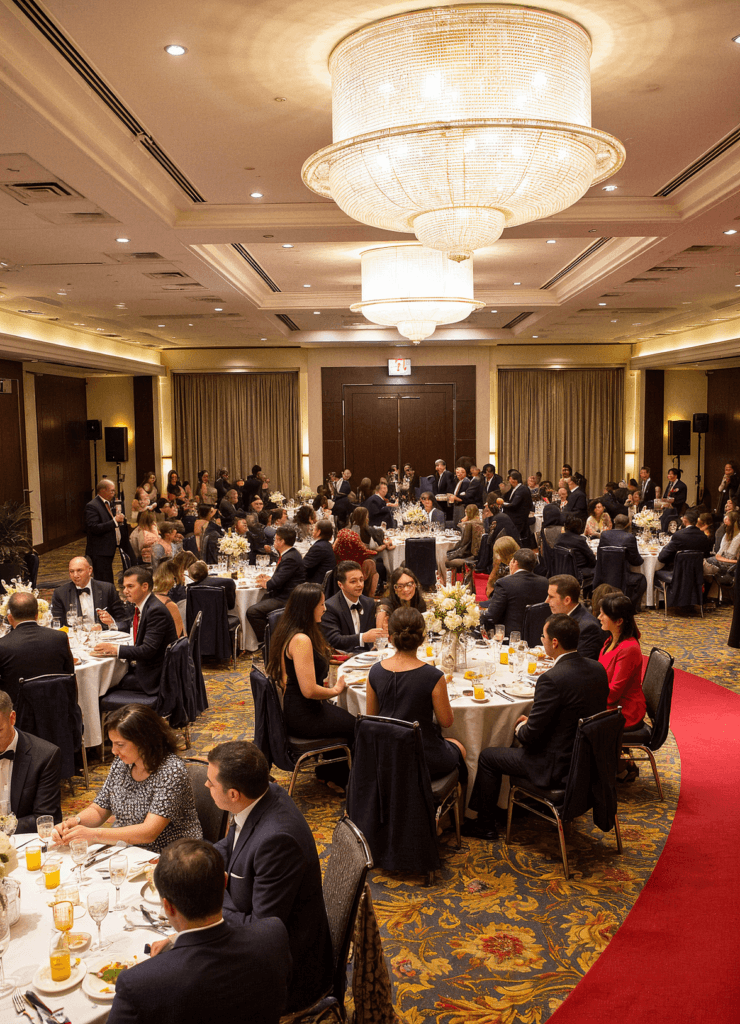
A gala dinner traditionally refers to a special celebratory banquet or formal evening reception, often accompanied by a designated dress code. Its origins in Europe can be traced back to medieval and early modern court banquets hosted by royalty and aristocracy. Over time, these ceremonial gatherings evolved into the hotel banquets and social functions associated with international conferences today.
In contemporary settings, however, gala dinners are not necessarily defined solely by strict formality. For example, at incentive travel programs or academic conference receptions held in Japan, organizers may prioritize creating a relaxed atmosphere for participants, recommending business casual or smart casual attire. Regardless of the level of formality, a common feature is that gala dinners are positioned separately from the main conference or exhibition program, serving as dedicated occasions for networking and for creating a sense of distinction within the overall event experience.
1-2. The Affinity Between MICE and Gala Dinners
MICE—an acronym for Meetings, Incentive Travel, Conventions/Conferences, and Exhibitions/Events—refers to gatherings where international business exchange, tourism, and academic engagement converge. Within this context, gala dinners can serve several important functions.
1.Facilitating Network Formation
Unlike formal conference rooms or exhibition booths, gala dinners provide opportunities for participants to deepen relationships in a more relaxed setting through shared meals and drinks.
2.Hospitality and Destination Branding
By allowing attendees to experience the host’s hospitality firsthand, gala dinners can reinforce brand positioning and leave a lasting impression of the destination’s appeal.
3.Enhancing Motivation and Long-Term Impact
Positive shared experiences contribute to higher participant satisfaction and can strengthen the overall memory of the event. In particular, gala dinners are often effective as the culminating moment of incentive travel programs or award ceremonies, providing a sense of celebration and recognition.
2. Domestic and International Examples of Gala Dinners
2-1. Examples in Japan
1.Gala Dinners at Unique Venues
In Kyoto, for example, gala dinners may be organized at historic buildings, allowing participants to enjoy Japanese cuisine alongside the city’s traditional scenery. Programs may incorporate elements such as traditional performing arts or live demonstrations by artists and sushi chefs, offering cultural experiences distinctive to Japan.
2.MICE Promotion by Local Governments and Gala Dinners
An increasing number of local governments in Japan are actively engaged in attracting MICE events. When planning a gala dinner, organizers may consider not only large-scale venues but also smaller local halls and collaborations with regional businesses. By consulting relevant municipal departments, organizers can obtain information on subsidies, local facilities, tourism resources, and culinary offerings. Such support can facilitate the planning of gala dinners that leverage unique venues in regional destinations.
3.Corporate-Led Award Ceremonies and Commemorative Events
It is not uncommon for major corporations to invite high-performing employees or dealers to incentive parties held at luxury hotels or historic properties. In cities such as Tokyo, Kyoto, Osaka, and Okinawa—where inbound demand is high—gala dinners often attract international guests. As a result, menus and entertainment programs typically require consideration of diverse cultural and dietary preferences.
2-2. International Examples
1.Gala Dinners at Large-Scale International Conventions
In cities with well-developed convention infrastructure—such as Las Vegas, Singapore, Dubai, and various cities across Germany and France—large-scale gala dinners are frequently held in conjunction with international conferences. While Western-style parties traditionally center on formal multi-course dinners, there has been a growing emphasis on accommodating diverse dietary needs. Considerations such as halal options and vegetarian menus have become increasingly important.
2.Charity-Linked Social Gatherings
In many overseas contexts, gala dinners are combined with social contribution or philanthropic initiatives in the form of “charity galas.” Organized by international NGOs or corporations, these events often attract celebrities and corporate VIPs, drawing media attention and supporting fundraising objectives. In Japan, similar formats—where gala dinners incorporate a strong charitable component—may attract increasing interest in the future.

3. Historical Background: From Court Banquets to International Conference Receptions
The origins of the gala dinner can be traced back to banquets hosted by royalty and aristocracy in ancient and medieval times. In Europe, court cuisine flourished as a form of “total art,” combining gastronomy with music and dance. With the progress of modernization, affluent and middle-class citizens also began to host and attend such banquets, and formal “gala parties” became established fixtures of social life.
From the 20th century onward, particularly during the postwar reconstruction period and subsequent economic growth, the number of international conferences and trade fairs increased worldwide. It became customary to organize official banquets as part of these events. Over time, the value of networking at such occasions became more widely recognized, shaping the prototype of the gala dinner within today’s MICE framework.
The idea of banquets serving as venues for relationship-building is not unique to Europe; similar traditions have long existed in Japan. It is possible that a distinctly Japanese style of gala dinner may continue to evolve in response to contemporary MICE needs.

4. Practical Considerations for Hosting a Gala Dinner
To ensure the success of a gala dinner, organizers are expected to incorporate the traditional sense of elegance rooted in its historical origins while addressing contemporary expectations regarding global accessibility and diversity.
4-1. Planning and Preparation
A critical first step in delivering a successful gala dinner is to clearly define its purpose and the type of experience it aims to provide. Whether the primary objective is networking, an award ceremony, or a charity initiative, narrowing the focus to a single core purpose allows organizers to establish a coherent theme or concept. This, in turn, creates consistency across staging, dress code, and menu design.
It is also essential to analyze participants’ nationalities, cultural backgrounds, and religious dietary requirements—such as halal or kosher—in advance. Preparing multilingual signage and event scripts can help create an inclusive environment in which all attendees feel comfortable.
When selecting a venue, organizers should carefully consider the event’s objectives and participant profile. Options may include unique venues such as historic buildings or cultural facilities, or banquet halls at luxury or resort hotels. Each option presents distinct advantages and limitations. In developing the budget plan, it is important to account not only for venue rental, catering, and production costs, but also for interpretation services and multilingual materials for international guests.
Finally, clearly communicating the dress code through invitations and the official website enables participants to prepare with confidence and reduces uncertainty prior to the event.
4-2. Operational Considerations on the Day of the Event
To minimize congestion and ensure smooth entry, organizers may consider utilizing electronic tickets (QR codes) or advance check-in systems. The program should avoid becoming overly concentrated with consecutive speeches or award presentations. Incorporating interactive elements—such as live music performances, traditional arts, or games—at appropriate intervals can help maintain participant engagement and prevent fatigue. Detailed, minute-by-minute scheduling, with built-in flexibility to accommodate unexpected delays, contributes to stable event management.
In food and beverage service, thorough attention should be given to vegetarian options, allergy accommodations, and religious dietary requirements, with all staff fully briefed on relevant details. To encourage networking, organizers can integrate table rotations, designated business card exchange sessions, or social media campaigns, while ensuring sufficient time for informal interaction. Safety measures—including confirmation of evacuation routes, establishment of emergency communication systems, and appropriate staffing when serving alcohol—should also be carefully addressed. Standing-style receptions, while efficient, may impose physical strain on participants; providing rest areas or opportunities for seated conversations can improve overall comfort.
4-3. Post-Event Follow-Up
Following the event, timely sharing of thank-you messages along with photographs and video materials helps participants revisit their experience. Publishing case studies on corporate websites or municipal portals can further enhance brand value and destination visibility. Conducting multilingual surveys enables organizers to collect feedback on satisfaction levels and areas for improvement, supporting continuous quality enhancement for future editions.
It is also advisable to establish mechanisms that allow networks formed during the gala dinner to develop into online meetings or collaborative initiatives, thereby fostering sustained relationships beyond the event itself.
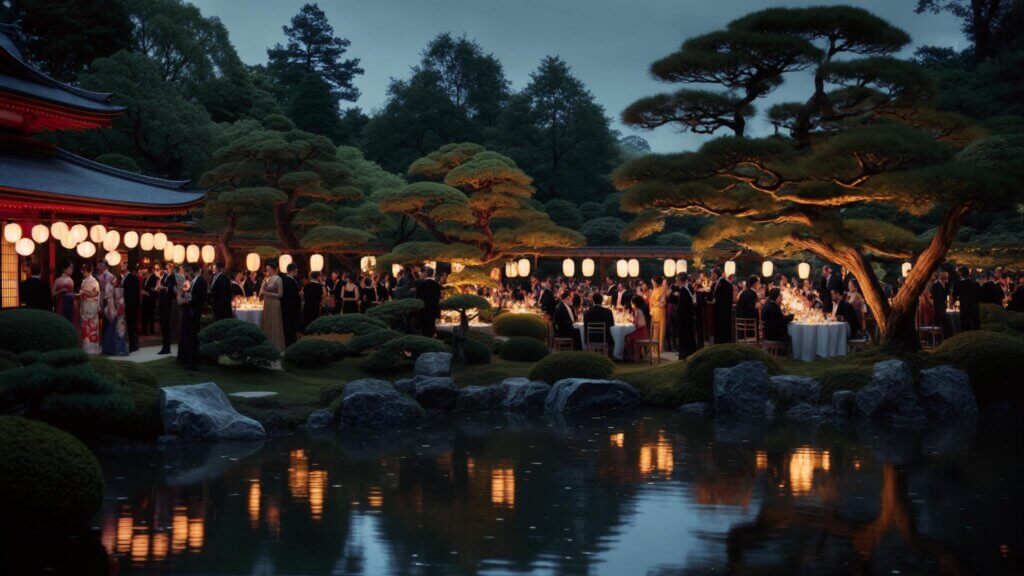
5. Leveraging Japanese Identity in Gala Dinners
5-1. The Appeal of “Distinctively Japanese” Production
A gala dinner is also an opportunity to create a sense of occasion beyond everyday experiences. As inbound demand from overseas continues to grow, incorporating elements unique to Japan—such as traditional cuisine, performing arts, and historic architecture—can serve as a meaningful differentiator when hosting events domestically.
When welcoming a large number of international guests, venue selection becomes a central consideration. Options may include shrines and temples, castles and gardens, or traditional townhouses that reflect Japanese architectural heritage. Beyond hotels and conventional halls, organizers may also explore museums, aquariums, amusement parks, or modern architectural landmarks. Production elements can be equally varied, ranging from staff dressed in kimono to live performances by sushi or tempura chefs, as well as traditional dance by maiko performers.
5-2. Regional Revitalization and Tourism Promotion
Proactive adoption of gala dinners by local governments can also contribute to regional revitalization. Even outside major metropolitan areas, historic ryokan inns or hot spring resorts may be reserved exclusively for gala dinners, with the event seamlessly connected to overnight stays. Incorporating regional specialties and local cuisine into the menu allows organizers to offer participants experiences that are unique to the destination.
Collaboration with municipal support offices and regional convention bureaus can further enhance planning and operations. By engaging local businesses and traditional performing arts groups, organizers can create gala dinners that are both distinctive and smoothly executed, while contributing to broader tourism promotion objectives.
5-3. Outlook Beyond 2025
From 2025 onward, demand for international conferences is expected to increase, supported in part by the Expo 2025 Osaka, Kansai, Japan and the broader recovery of global business travel in the post-pandemic era. As hybrid formats incorporating new technologies continue to develop, including coordination with online participants, gala dinners may also integrate elements such as VR and AR production or live online streaming.
At the same time, the core appeal of gala dinners remains rooted in the real-time energy created when people gather physically and share the same space and meal. While digital technologies can enhance reach and engagement, the direct, face-to-face communication that takes place at such occasions continues to be a defining feature. Going forward, gala dinners that combine digital innovation with Japan’s distinctive spirit of hospitality are likely to attract increasing attention.
6. Gala Dinners as an Essential Element of Successful MICE Events
A gala dinner serves as a celebratory culmination of a MICE event, providing a dedicated setting for participants to strengthen connections and engage in meaningful interaction. In today’s international business environment, such networking opportunities remain highly valuable. In Japan, an increasing number of gala dinners are being held at unique venues that reflect regional identity—such as historic properties in Kyoto or traditional facilities in Kanazawa—offering distinctive experiences for international visitors.
In the digital era, shared in-person experiences continue to play an important role in building trust. Production elements such as traditional attire, Noh performances, and seasonal Japanese cuisine can communicate the essence of hospitality. By ensuring multilingual support and careful attention to cultural considerations, organizers can enhance participant satisfaction and potentially encourage repeat attendance and positive word-of-mouth.
As inbound demand continues to recover and international conferences are expected to increase, gala dinners are likely to remain a key component of successful MICE strategies. Strategically incorporating Japan’s distinctive hospitality into event design can contribute to creating lasting value for participants.

-
Tokyo Game Show 2026 Announced Celebrating 30th Anniversary with Record 5 Day Event

-
Redevelopment Project “KAMIHACHI X” Announced to Strengthen MICE and Accommodation Functions in Central Hiroshima — First “Andaz” by Hyatt in the Chugoku Region