

Onboard Report: Can a 2-Night, 3-Day Taiheiyo Ferry Journey from Nagoya to Tomakomai (Hokkaido) Work for Business Travel? A Workcation-Style Review from the Nagoya Terminal to Sapporo
What modes of transportation do you usually choose for long-distance business trips?
High-speed rail, company cars, and air travel are likely the most common options. At the company behind MICE TIMES ONLINE, ferries are also frequently used—specifically long-distance ferry routes.
In the past, we have shared onboard reports on Orange Ferry and PanStar Cruise Ferry. This time, we selected a 2-night, 3-day journey on Taiheiyo Ferry traveling from Nagoya to Tomakomai in Hokkaido as a means of transportation. While onboard, we considered whether using a long-distance ferry for business travel is a viable option or not, from a practical perspective.
Of course, if the purpose is not a business trip but a summer vacation with family or a group, ferry travel offers a distinctive, non-routine experience that can be highly appealing. This article is also intended to serve as a reference for leisure travel planning.
Overview of Taiheiyo Ferry: A Route Connecting Nagoya, Sendai, and Tomakomai
A Pacific Route Served by Three Vessels
As an island nation surrounded by the sea, Japan has long relied on maritime transport. Even today, despite the development of land and air transportation networks, numerous vessels continue to operate along coastal waters, carrying large volumes of cargo and vehicles. While ferry services that simply cross straits have declined following the construction of major bridges and tunnels, long-distance ferries continue to operate on many regular routes.
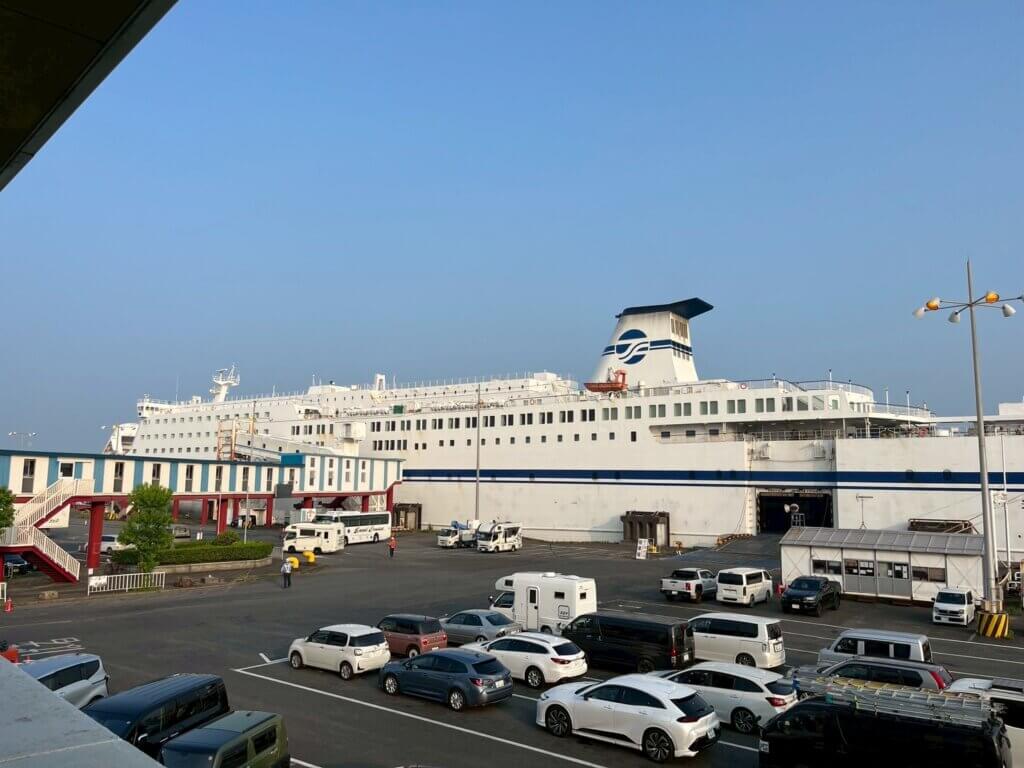
Taiheiyo Ferry is, as its name suggests, a ferry service that operates along the Pacific coast. The route connects Nagoya Port, Sendai Port, and Tomakomai Port.
The service is operated by three large vessels. As with other long-distance ferries, Taiheiyo Ferry is capable of carrying not only passengers but also private vehicles and motorcycles.
“Ferry of the Year” Awarded for 32 Consecutive Years
According to Taiheiyo Ferry, the company has received the “Ferry of the Year” award for 32 consecutive years since 1992, as recognized by the magazine Cruise.
The vessel used for this journey, the second-generation Kiso, was awarded the title from the 14th award in 2005 through the 19th award in 2010.
One of the Longest Domestic Ferry Journeys: A 2-Night, 3-Day Voyage
A defining feature of Taiheiyo Ferry is its extended onboard duration—2 nights and 3 days, totaling approximately 39 hours.
On departures from Nagoya, the ferry leaves at 19:00, calls at Sendai at 16:00 the following day, and arrives in Tomakomai at 11:00 on the third day. The service can also be used for the Nagoya–Sendai and Sendai–Tomakomai segments independently.
For departures from Tomakomai, the schedule is 19:00 departure, 10:00 arrival in Sendai the next day, and 10:30 arrival in Nagoya on the following day.
Among domestic ferry services in Japan, Taiheiyo Ferry is currently the only route that allows passengers to stay onboard for two nights.
Specifications of the Three Vessels
The vessel used on this journey was Kiso, which has the largest gross tonnage among Taiheiyo Ferry’s three ships. Commissioned in 2004, the vessel has been in service for nearly two decades.
| Vessel | Ishikari | Kiso | Kitakami |
|---|---|---|---|
| Gross tonnage (tons) | 15,762 | 15,795 | 13,694 |
| Length (m) | 199.9 | 199.9 | 192.5 |
| Beam (m) | 27 | 27 | 27 |
| Passenger capacity | 777 | 768 | 535 |
| Passenger cars | 100 | 113 | 146 |
| Trucks | 184 | 183 | 166 |
Both Ishikari and Kiso are equipped with suite rooms, offering a wider variety of accommodation options.
Cabins are broadly divided into shared accommodations and private rooms. Shared accommodations include floor-style sleeping areas as well as berth-style bunks similar to those found on sleeper trains. Private rooms are available in Japanese-style, Western-style, and hybrid Japanese–Western formats, while suite rooms are Western-style.
Spending 39 Hours from Nagoya to Tomakomai While Working
To the Nagoya Port Ferry Terminal: A Direct Bus from Nagoya Station Is Convenient
Travel to the ferry terminal began at Nagoya Port. A direct bus from Nagoya Station offers a convenient option.
The bus departs from Meitetsu Bus Center at 17:00 and heads directly to the ferry terminal. For those using public transportation, this is generally the most practical choice. The one-way fare is JPY 1,000 for adults.
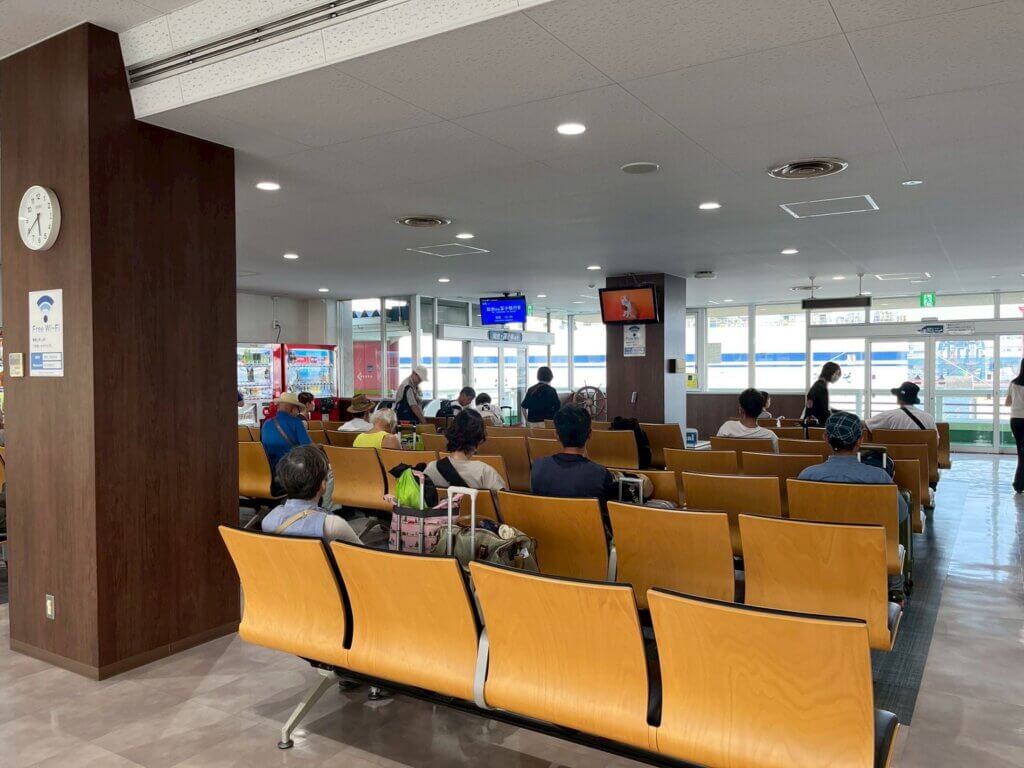
The Meitetsu Bus Center is equipped with convenience stores and an air-conditioned waiting area. After approximately 40 minutes, the bus arrives at the ferry terminal. As this is a direct service, passengers can remain seated until arrival.
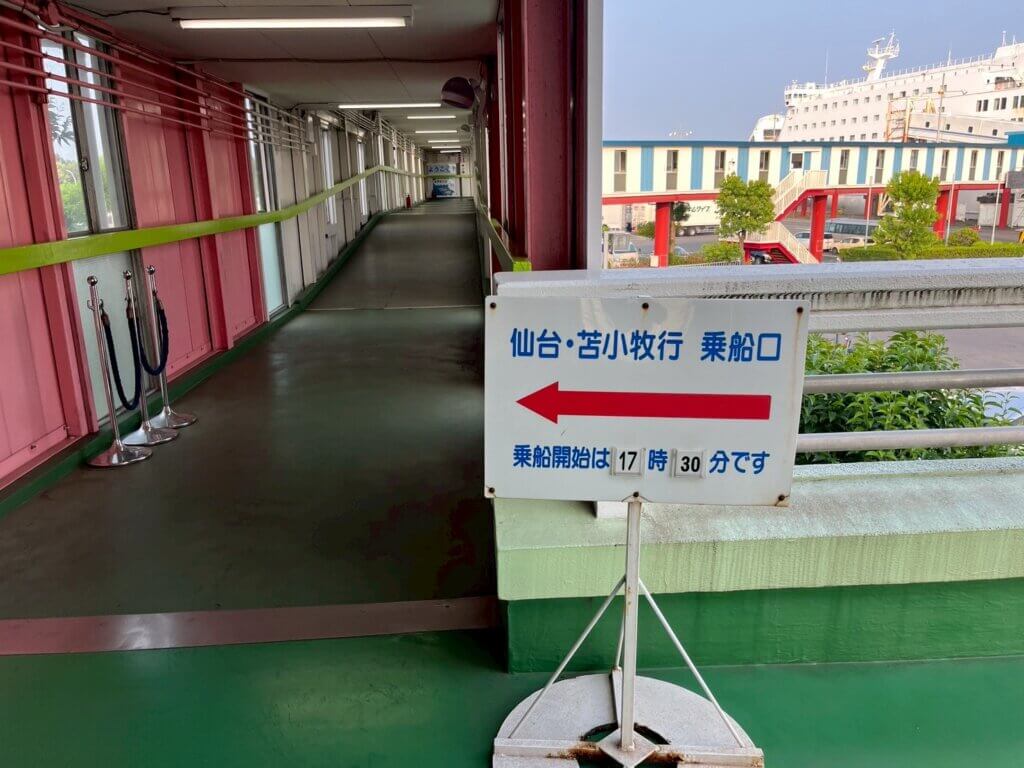
Smart Check-in: Proceed Directly to the Boarding Gate Without Onsite Procedures
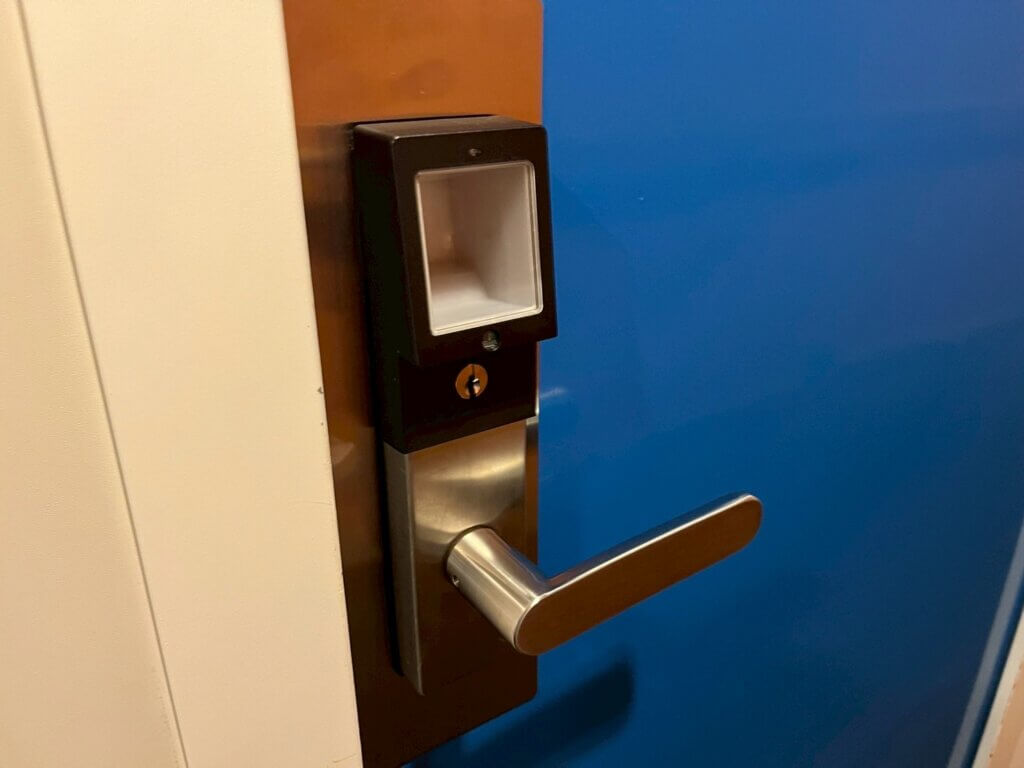
On the day of departure, an email is sent containing a mobile QR boarding pass. This QR code is used not only for boarding but also as the key to the cabin. It is advisable to save a screenshot of the screen in advance, as internet connectivity may be unavailable in certain areas once the vessel departs, making it difficult to retrieve the QR code.
The cabin number is also displayed on the same screen, and no onsite procedures are required. To enter the room, passengers simply scan the QR code at the reader installed outside the cabin door.
A Special-Class Western-Style Cabin Offering Functionality Comparable to a City Hotel
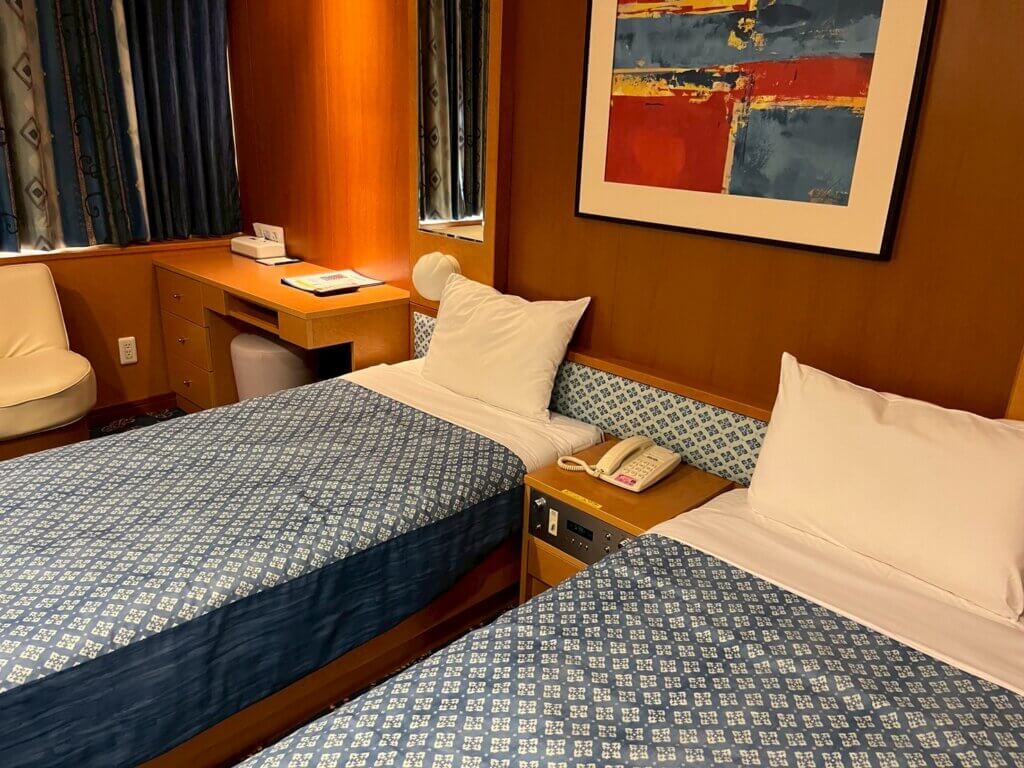
For this journey, a Special-Class Western-Style Cabin with a capacity of two passengers was used. The cabin is private, and the fare does not increase when used by a single occupant. For those planning to work onboard, a private cabin is recommended. In addition to privacy—particularly important when handling confidential information—the cabin is well equipped with multiple power outlets and a desk suitable for desk work.
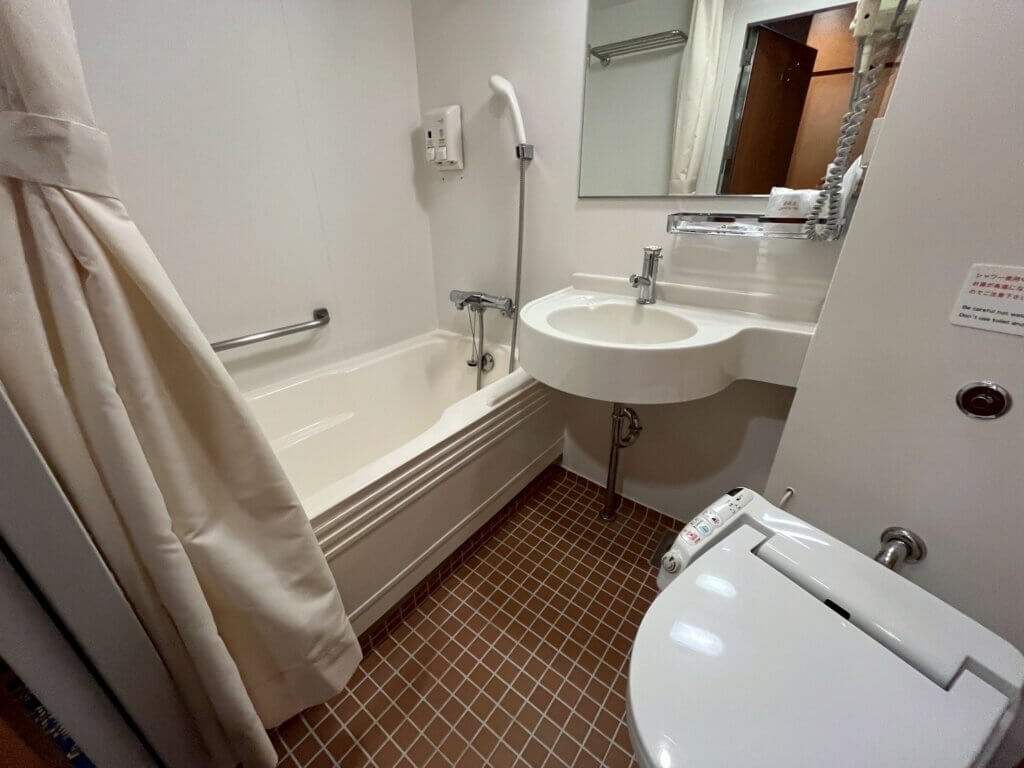
The cabin features a double bed, a unit-style bathroom with a spacious bathtub, a refrigerator, a closet, and a large sofa. Overall, it offers a level of comfort comparable to a city hotel of a higher grade than a standard business hotel.
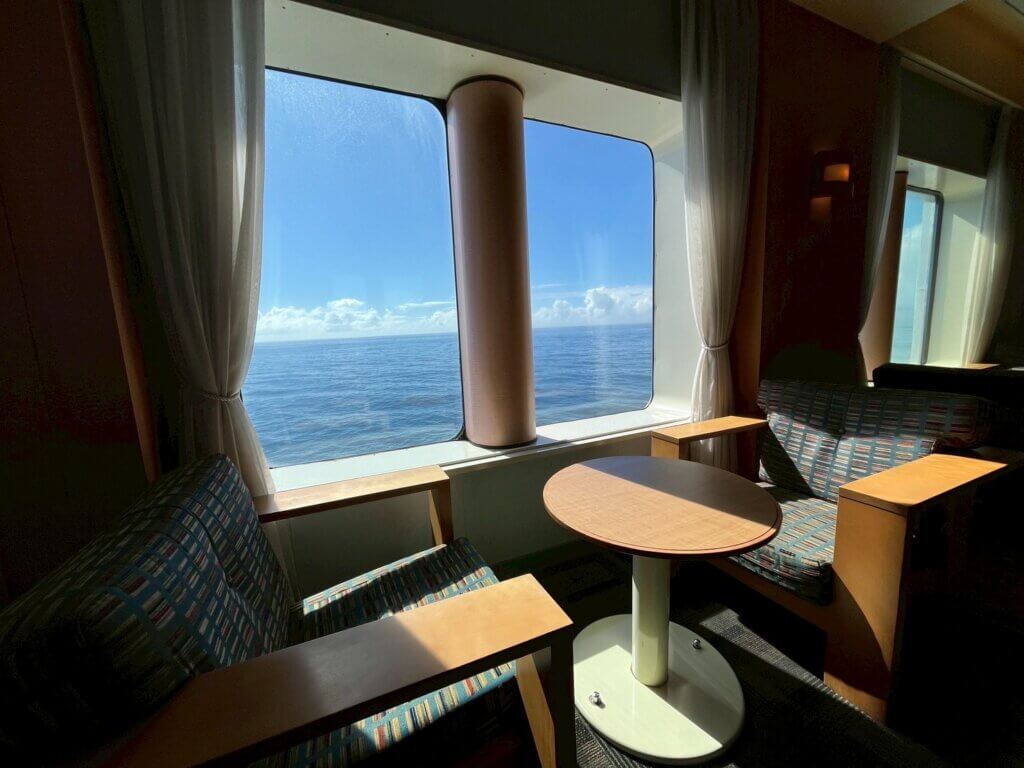
Above all, the view of the horizon through the large window is something that cannot be experienced at a land-based hotel. As this cabin was located on the port side in the direction of travel, distant landmasses could be seen across the sea. The passage past areas such as the Chita Peninsula, Atsumi Peninsula, Omaezaki, Nojimazaki, and Inubosaki added to the experience.
The fare for this trip was JPY 26,700. Considering that it includes accommodation for two nights as well as transportation to Hokkaido, the pricing does not appear excessive. Fares vary by season, with higher demand typically seen during the summer months.
An Overview of Onboard Facilities: Well-Equipped Shared Spaces Including Lounges, Observation Walkways, and Public Baths
The lower decks of the vessel are dedicated to vehicle loading, while Decks 5 through 7 are primarily passenger areas.
The onboard layout is described here using Kiso as an example. Please note that layouts may differ on the vessels Ishikari and Kitakami.
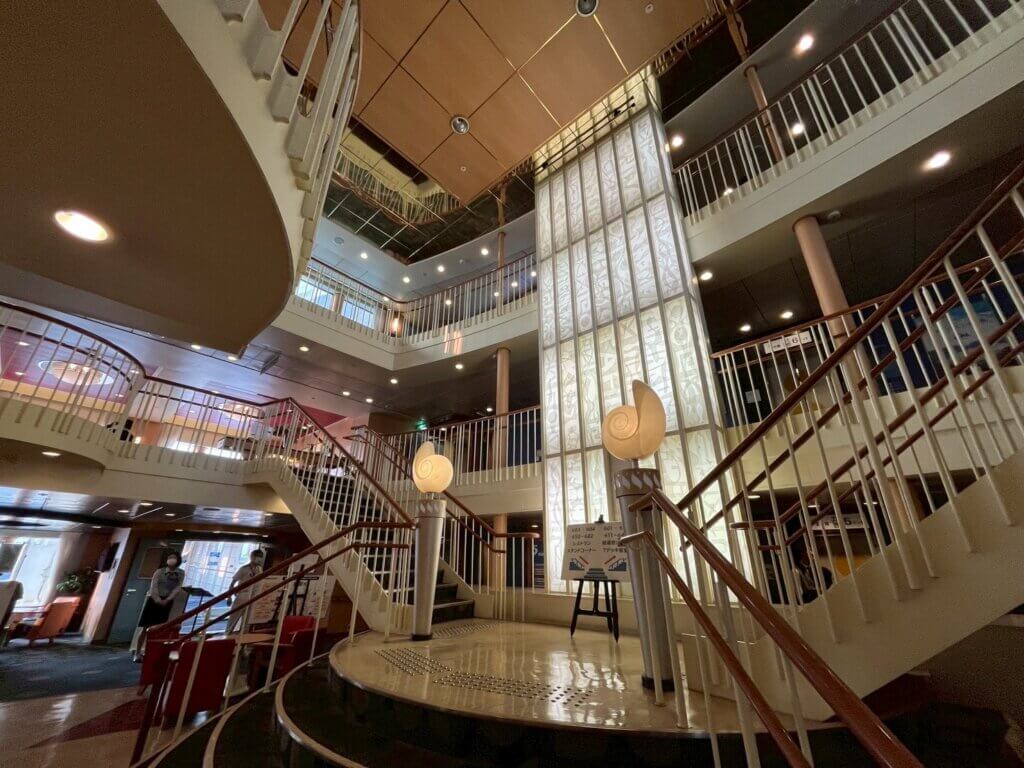
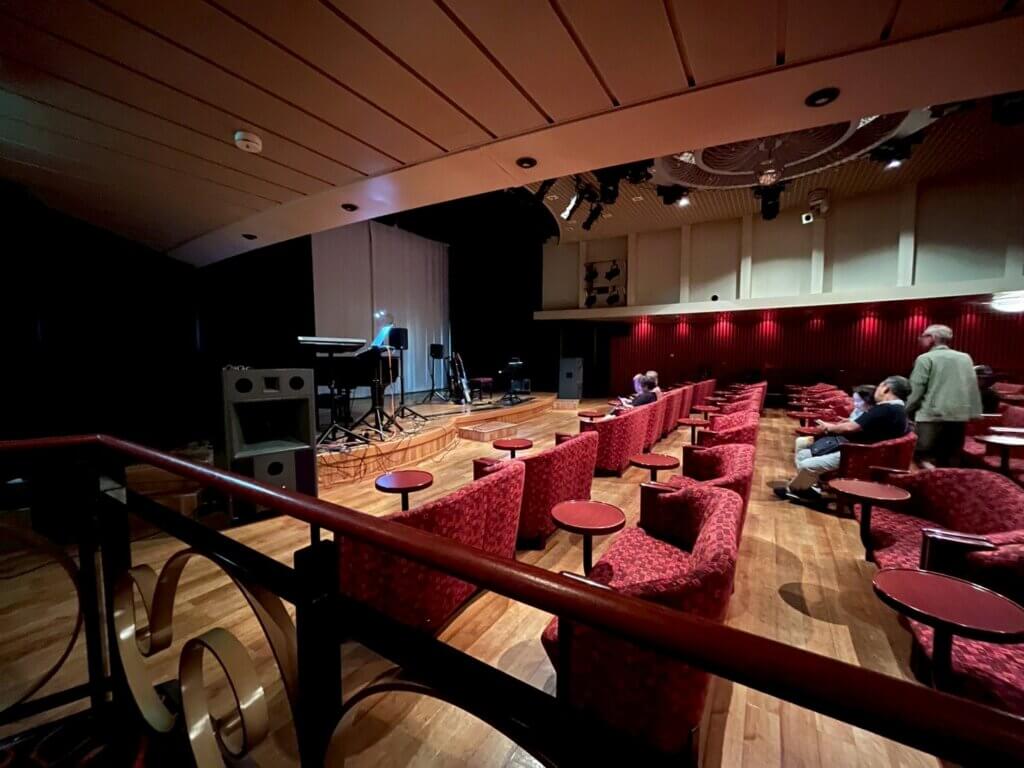
Deck 5 houses the entrance hall and information desk, along with a shop, a large public bath, and a game corner. This deck functions as one of the main hubs for passenger services onboard.
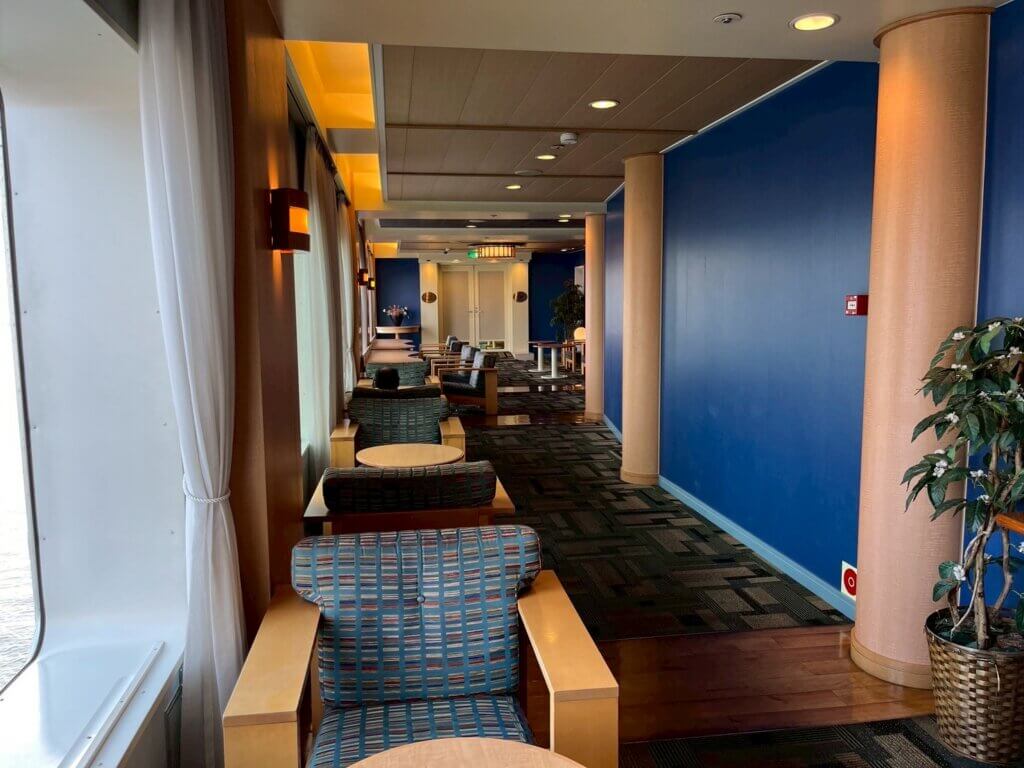
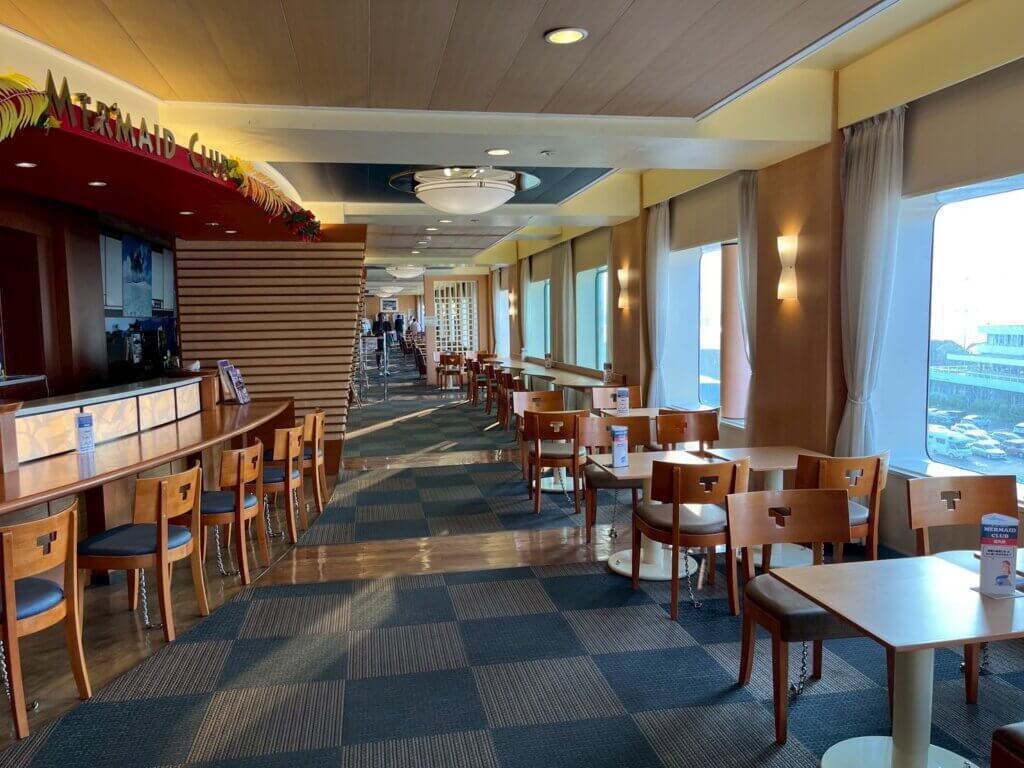
Deck 6 features a lounge equipped with a stage, a light-meal corner, a restaurant, and an observation walkway. Numerous sofa seats are also available, allowing passengers to use the space freely throughout the voyage.
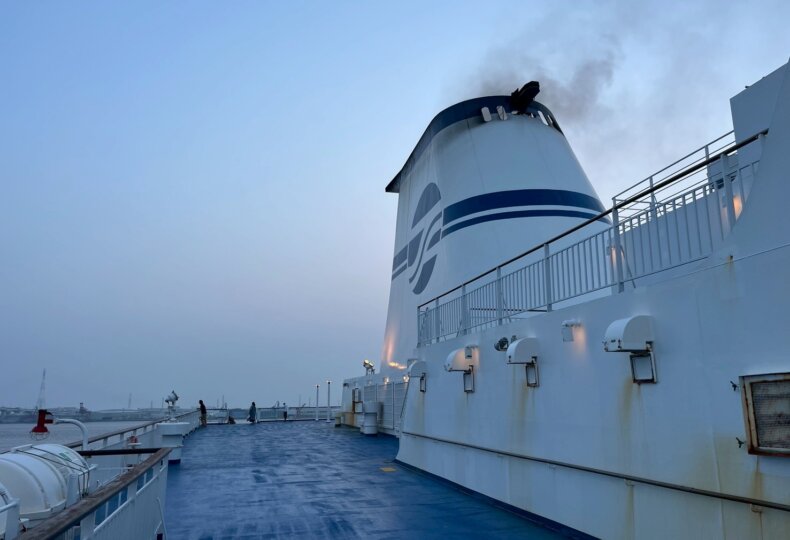
Deck 7 is largely dedicated to passenger cabins and provides access to the outdoor deck, where passengers can step outside during the journey.
Five Meals Over a 2-Night, 3-Day Voyage: Mealtimes Matter
Boarding typically begins shortly after 17:00, and dinner service at the restaurant starts at 18:00. Passengers who prefer ocean-view seating are advised to arrive early. Meal tickets are purchased at a vending machine located at the restaurant entrance. Please note that cash only is accepted onboard, so passengers should be sure to bring sufficient cash.
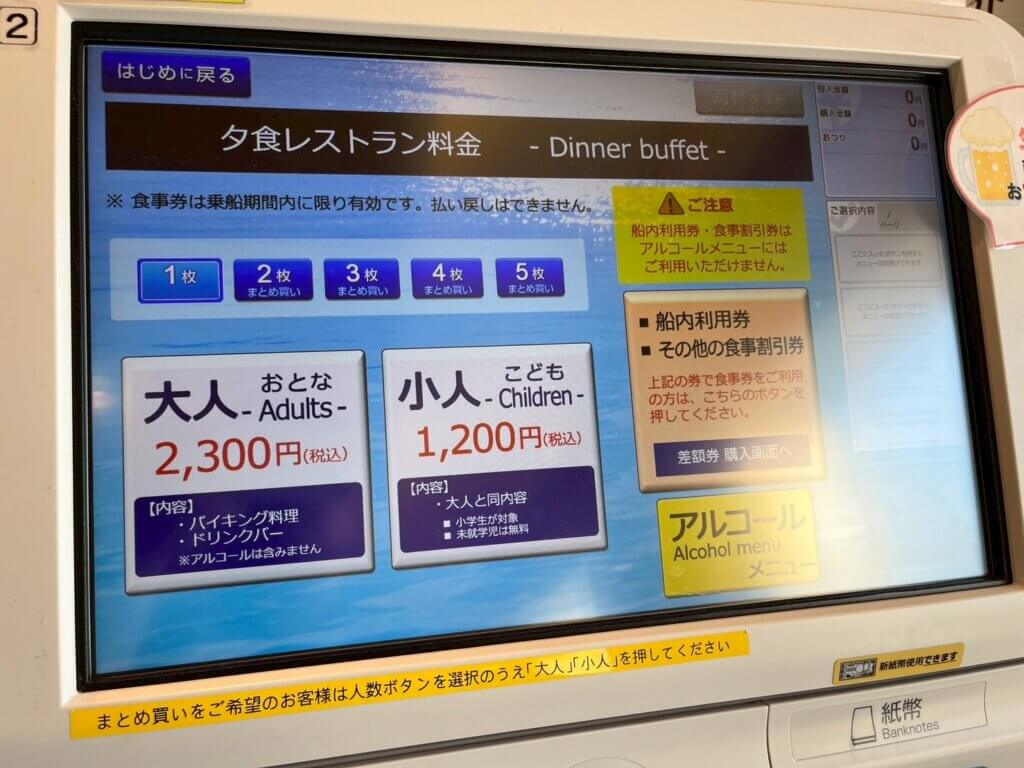
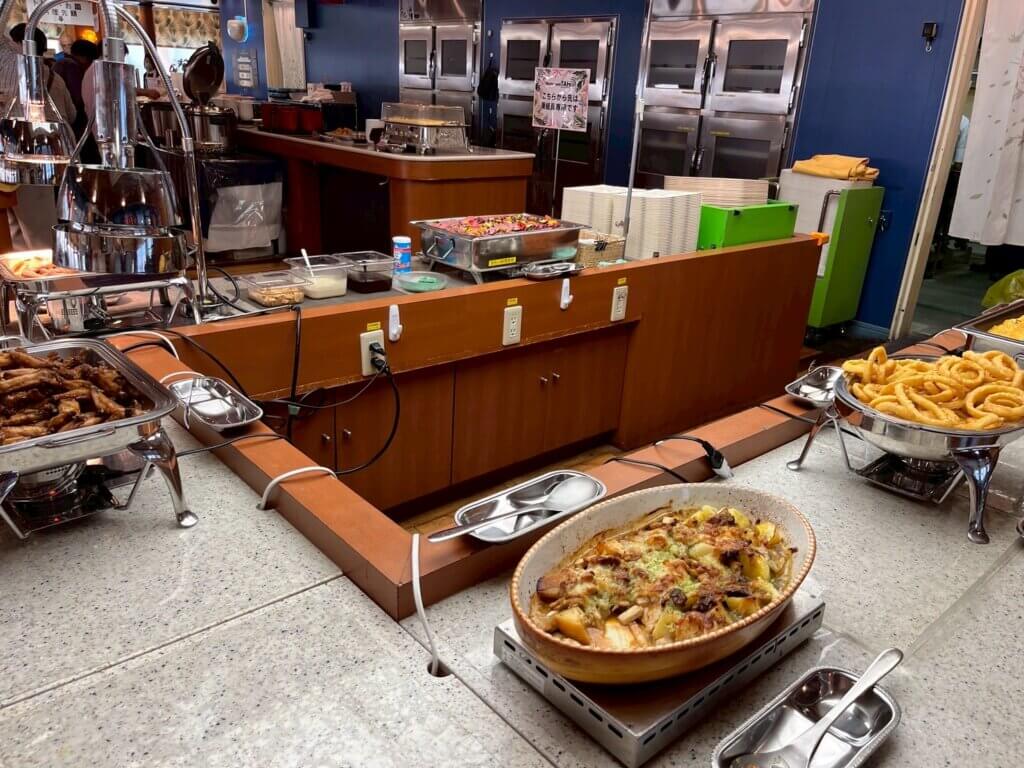
Given the long duration of the voyage, passengers will have five meals onboard in total: two dinners, two breakfasts, and one lunch. While it is permitted to bring bento boxes or instant noodles onboard, the restaurant is worth trying at least once.
Breakfast and lunch are priced at JPY 1,200, while dinner is JPY 2,300. All meals are served in buffet style. For those who find the restaurant pricing relatively high, the light-meal corner offers menu items generally priced between JPY 500 and JPY 800, allowing passengers to choose according to their preferences and schedule. From a personal standpoint, opting for dinner at the restaurant and lighter options for other meals can be a balanced approach.
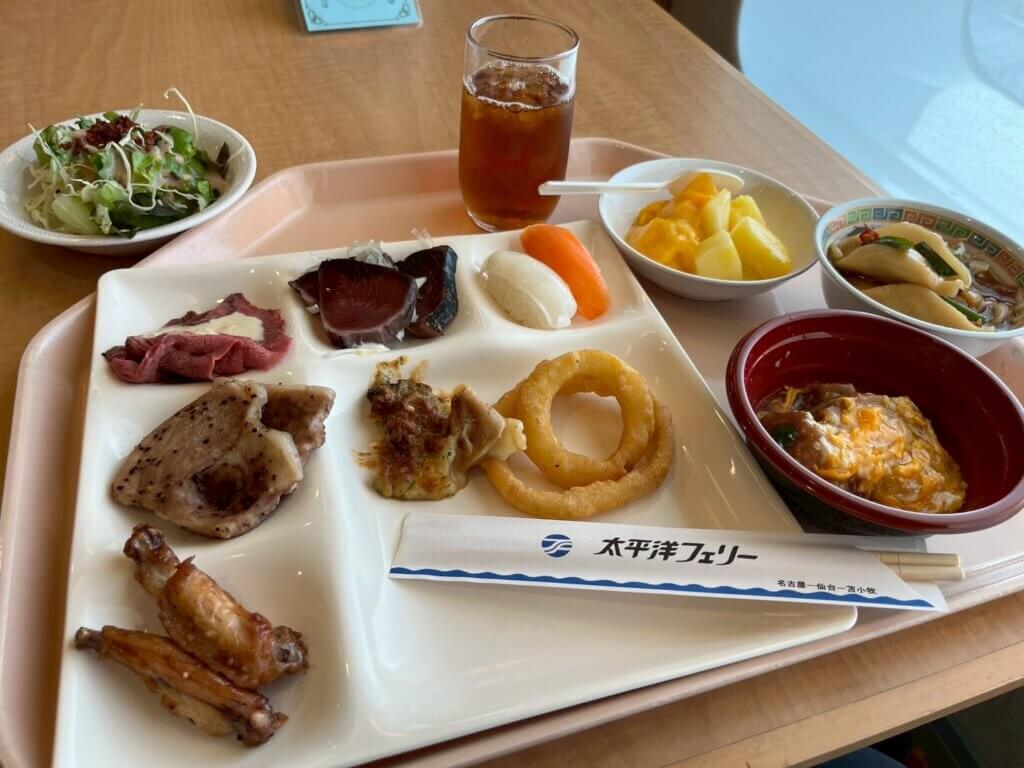
Dinner:
Roast beef and seared bonito (katsuo no tataki) are featured highlights, accompanied by a wide selection of main and side dishes. Regional specialties such as Sendai-fu and chan-chan yaki are also offered. Combining Sendai-fu simmered with egg over rice allows passengers to create a Sendai-fu don, which proved to be a particularly satisfying option.
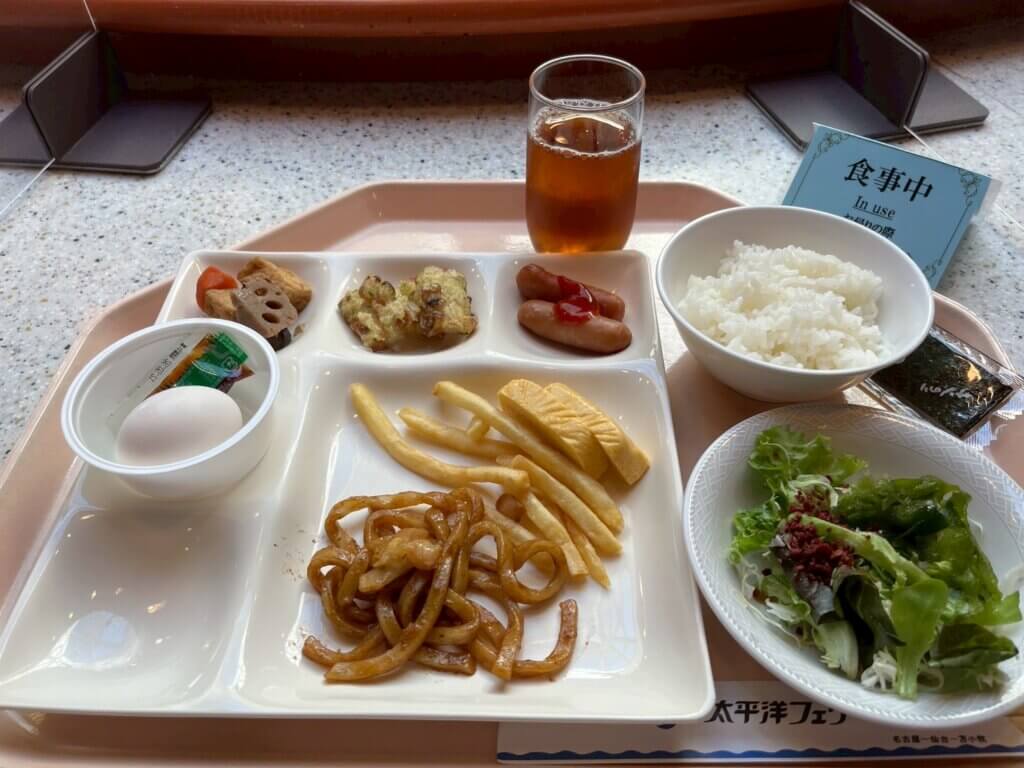
Breakfast:
A mix of Japanese and Western dishes is available, similar to the offerings typically found at business hotels in Japan. The option to prepare tamago kake gohan (rice topped with raw egg) is also available.
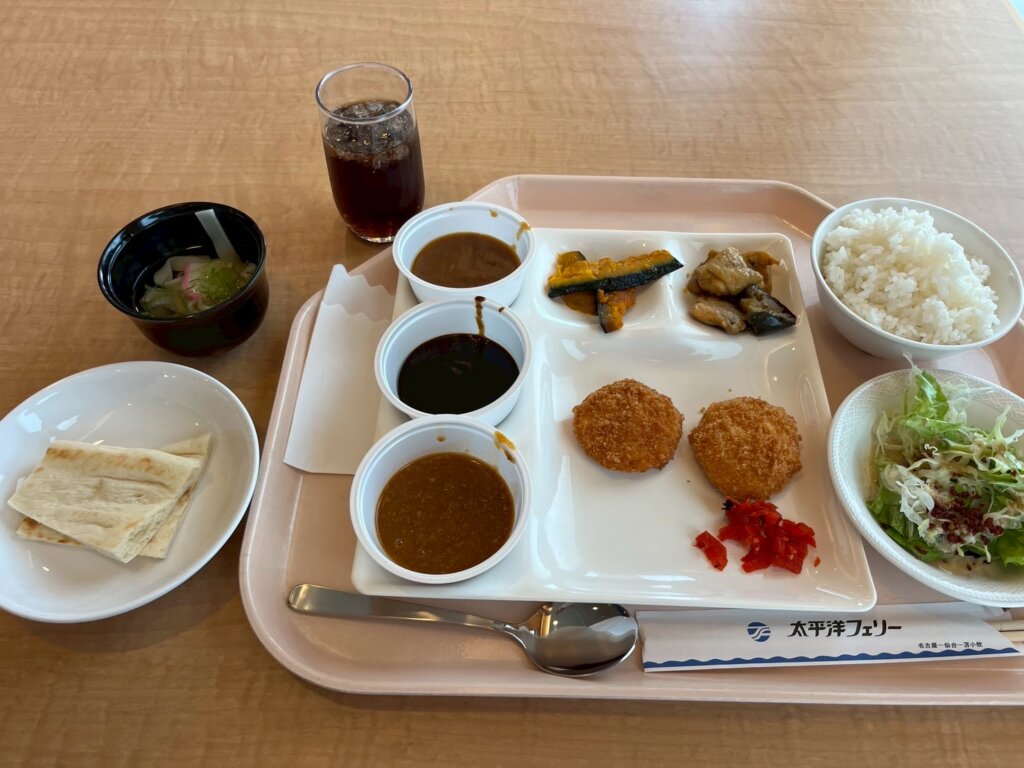
Lunch:
Lunch centers on a selection of four curry varieties. For those who are less inclined toward curry, options may be somewhat limited. Side items such as pork fillet cutlets, assorted vegetable fritters, and tandoori chicken-style dishes are provided to complement the curries. Naan bread can also be warmed using a toaster.
Arrival in Tomakomai and Onward Travel to Sapporo
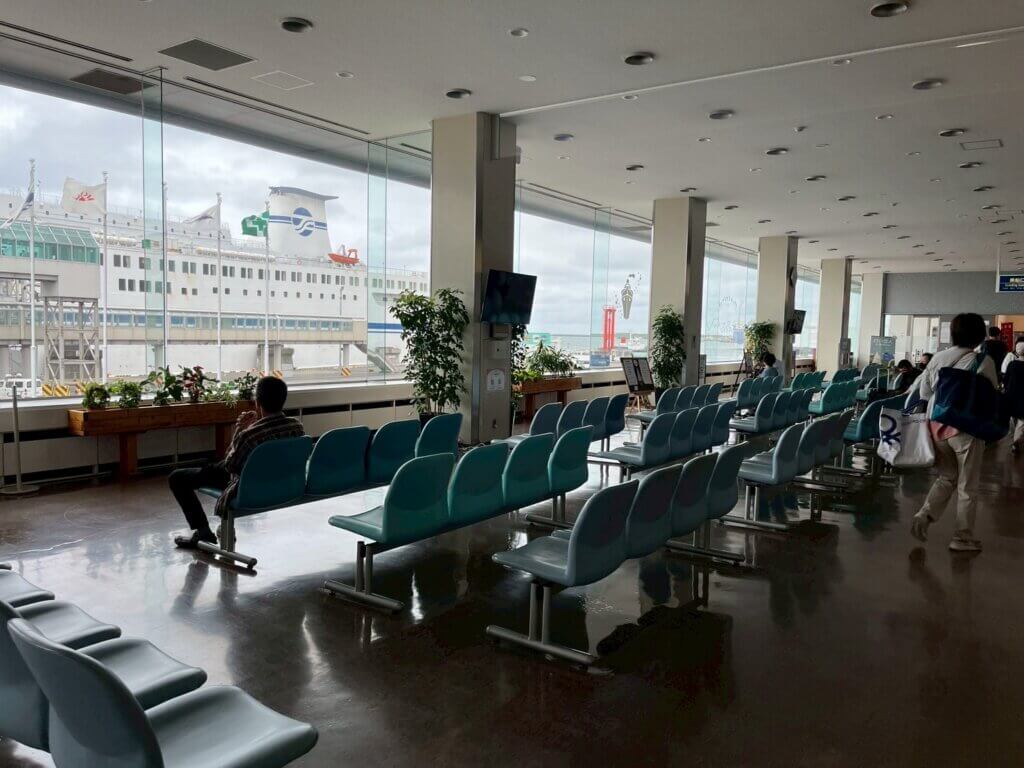
Arrival at Tomakomai Port is scheduled for 11:00 on the third day. The temperature at the time of arrival was 18°C, offering a cool and comfortable climate.
From the ferry terminal, bus services were available, including a 11:30 departure to JR Tomakomai Station and an 11:46 departure to Sapporo. Taxis were also waiting at the terminal.
In this case, travel continued to JR Tomakomai Station, followed by boarding the Limited Express Hokuto.
Seats on the Limited Express Hokuto were largely occupied. The journey to Sapporo takes approximately 40 minutes. Even when transferring to the Rapid Airport service, travel time is around one hour. Overall, it is reasonable to plan to arrive in Sapporo shortly after midday.
Trying to Work on a PC: Connectivity Was a Challenge at Times
How suitable is the ferry as a working environment?
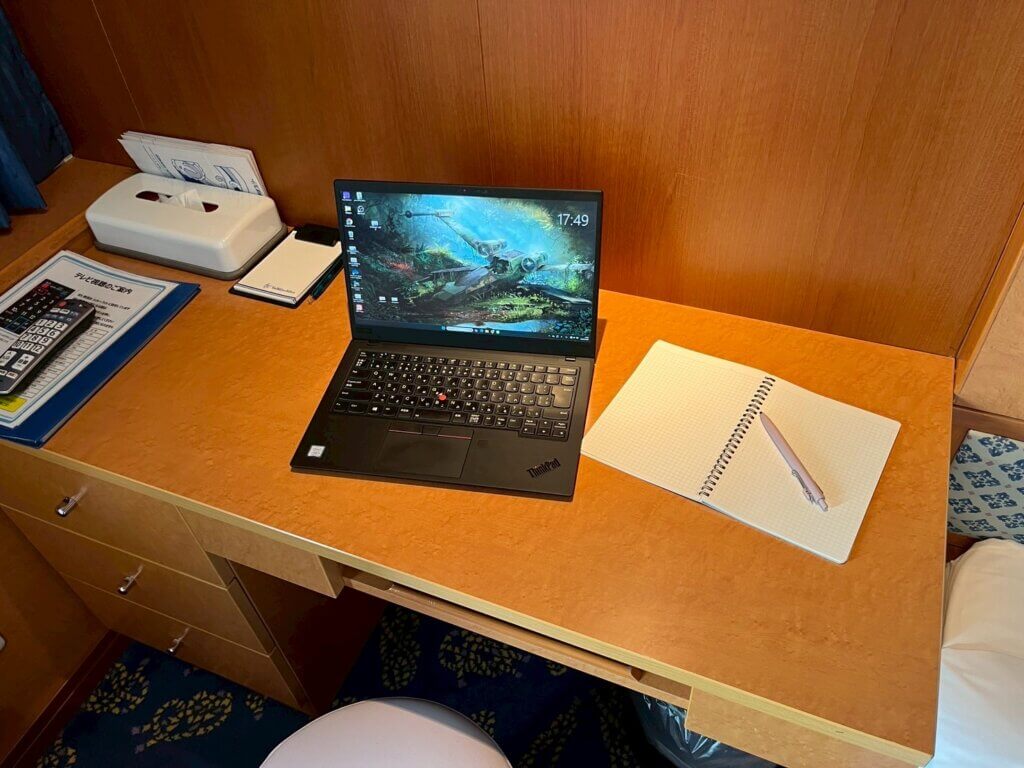
For internet access, smartphone tethering was used. In terms of basic connectivity, there were no major issues. The desk measured approximately 120 cm in width and 45 cm in depth, similar in size to a typical office desk. In some respects, it felt even more comfortable—unlike a personal desk, it was uncluttered, and unlike many business hotels, there was no mirror directly in front, avoiding the awkward feeling of facing one’s own reflection while working.
Timing Matters: When the Network Becomes Usable
As the vessel travels offshore, it maintains a distance where land remains faintly visible for much of the route. Connectivity is not completely unavailable throughout the journey. On the first day, from departure at Nagoya Port until around midnight, internet access remained usable.
On the second day, while the signal weakened in the afternoon, connectivity was still available, and upon arrival in Sendai at 16:00, speeds were comparable to everyday use. Connectivity remained stable until around 19:30, making this period a practical “window” for online work.
In contrast, the lounge located near the center of the ship, surrounded by thick walls, offered very limited signal reception. Connectivity clearly varies depending on location within the vessel.
Does the Motion of the Ferry Affect Concentration?
Throughout the voyage, there is a constant combination of small, subtle vibrations and occasional gentle rolling caused by larger swells. This type of motion is characteristic of large vessels. There were no situations where walking became difficult or items such as pens rolled off desks. While conditions depend on the season and weather, severe motion appears to be uncommon. Those who are concerned may find it reassuring to take motion sickness medication before boarding.
From a work perspective, the motion did not pose a problem. The spacious work area and the ability to move around the ship for a change of pace made working onboard noticeably easier than on trains.
As for noise, it may be noticeable for some, but generally at a manageable level. Earplugs or noise-canceling headphones can help mitigate this and are worth bringing. Announcements for meals, shows, and disembarkation are made onboard, which should be kept in mind when planning focused work sessions.
How to Spend Your Time After Boarding
Head to the Restaurant First—An Early Highlight on Departures from Nagoya
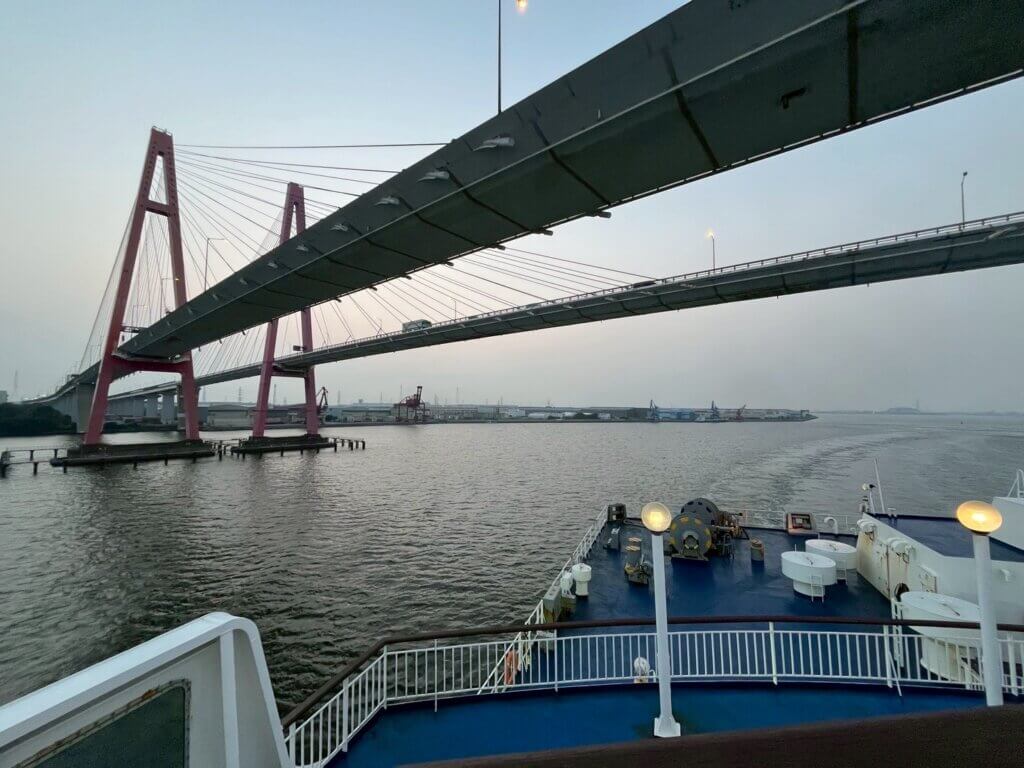
It is advisable to have dinner at the restaurant before it becomes crowded. On departures from Nagoya, an early highlight awaits shortly after departure. The moment when the ferry passes beneath the Meiko West Bridge is particularly impressive and well worth watching.
For some time after departure, passengers can also enjoy views of the harbor and the surrounding industrial nightscape, making the early evening hours a visually engaging part of the journey.
Exploring the Ship: Live Performances Begin at 20:00
After taking some time to explore the onboard facilities, it is already around 20:00. Live performances are held in the lounge at this time. On this particular evening, the program was oriented toward an adult audience, and many older passengers appeared to be thoroughly enjoying the show. A movie screening followed from 21:30.
Spending the evening this way leaves little time for work on the first night. Bringing along a long-unread book and settling in for some quiet reading can also be a pleasant option.
Sunrise, Sunset, and Passing Ferries
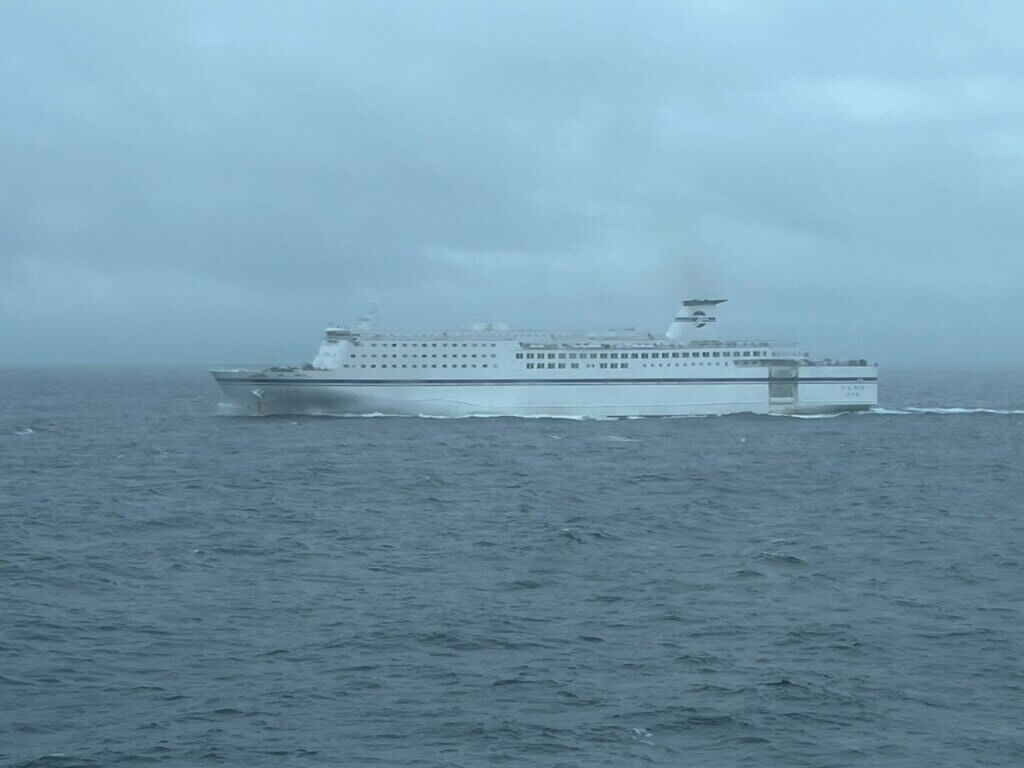
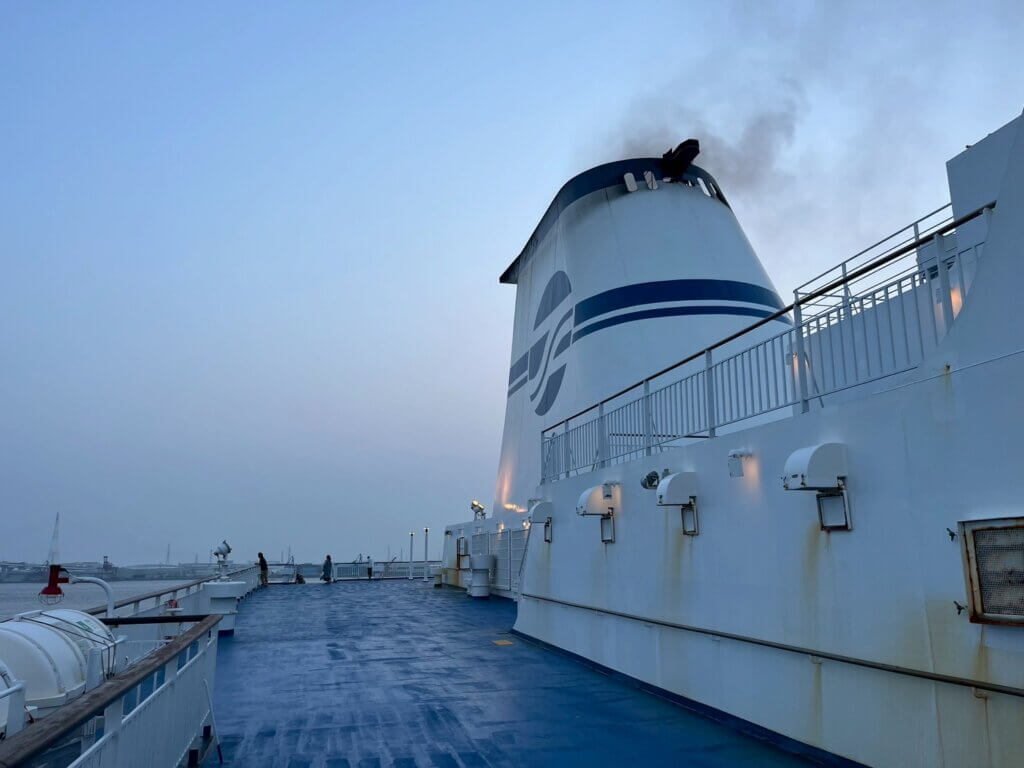
From the open deck, passengers can enjoy a 360-degree panoramic view. In favorable weather, the experience includes dramatic morning and evening skies at sunrise and sunset. At around 14:00 on the second day, it was also possible to witness a passing encounter with the Taiheiyo Ferry vessel Ishikari.
Plan Work for Day Two—Prepare While Connectivity Is Available
As the second day is spent entirely onboard, it presents the main opportunity to focus on work. However, because internet connectivity is not consistently available, it is advisable to prepare necessary data in advance—either on the night of the first day or before departure—and to ensure that tasks can be handled offline when needed.
For departures from Nagoya, network connectivity tends to improve in the late afternoon upon arrival in Sendai. This window can be used to synchronize data, send emails, or access groupware services. With advance arrangements, it is also possible to disembark briefly to enjoy local dining—such as beef tongue specialties at nearby shopping malls or outlet centers—before reboarding.
So, Is Business Travel by Ferry a Viable Option? Let’s Sum It Up
Pros and Cons of Ferry-Based Business Travel
In conclusion, business travel by ferry can be considered a viable option—depending on the situation. Below is a balanced look at the advantages and disadvantages.
Advantages
- A Non-Routine Experience
Ferry travel offers a refreshing break from everyday routines for many people. Such experiences can spark new perspectives and insights—something many business professionals have likely experienced in their own work. - Well-Equipped Facilities and Satisfying Meals
Compared with buses or trains, ferries offer significantly larger public spaces and a high degree of freedom. Facilities such as large public baths and lounges are available at no additional cost. Meals are freshly prepared and served hot, and the spacious dining areas allow passengers to eat comfortably. Depending on the cabin class, suite rooms can provide an experience comparable to that of a city hotel. - Combining Transportation and Accommodation
Many long-distance ferries operate overnight, reducing idle time when arrivals are scheduled for the morning. While overnight buses offer a similar advantage, ferries stand out for allowing passengers to sleep in proper beds and use bathing facilities. - Routes Not Easily Accessible by Rail
Certain routes—such as Osaka to Beppu, Maizuru to Otaru, or Tokyo to Tokushima to Kitakyushu—are cumbersome by rail. Replacing one leg of a journey with a ferry can be an effective and appealing option.
Disadvantages
- Longer Travel Time
Even at a speed of 30 knots, this equates to roughly 55 km/h. Ferries are often perceived as time-consuming, and reaching ferry terminals from city centers can also take time. Making good use of onboard time and choosing terminals with direct bus access can help mitigate this. - Motion Sickness
This remains a concern for some passengers, regardless of experience. Motion sickness medication can be effective, especially when taken before boarding rather than after symptoms appear. - Internet Connectivity
Limited internet access can be challenging in modern business settings. Some routes, such as those through the Seto Inland Sea, offer relatively better connectivity. Checking firsthand accounts—blogs or videos—beforehand can be helpful. Preparing an environment that allows for offline work can also address some of these limitations.
Personally, I am someone who enjoys transportation itself and prefers to travel in a relaxed environment, even if it takes longer. While this perspective may not apply to everyone, the relaxed atmosphere, well-equipped facilities, and quality dining offered by ferry travel are compelling.
Arriving at a destination with the line, “I came by ferry,” also adds a memorable talking point. Taking all of this into account, ferry-based business travel earns a qualified “yes.”
Using Ferry Travel for Incentive Trips and Workcations
How about approaching ferry travel as an experience that carries its own meaning, rather than viewing it solely as transportation?
One example is offering a journey in a higher-grade cabin as part of an incentive travel program, or selecting a ferry for a company trip. Because ferries operate with fixed passenger capacities, onboard spaces tend to feel relatively uncrowded even during peak seasons. On overnight services, there is also the option to enjoy food and drinks without concern for driving afterward—though it should be noted that alcohol can feel stronger at sea, so moderation is advisable.
With trains and automobiles, traffic congestion and station crowding are often unavoidable. Ferries, by contrast, offer a different set of advantages unique to maritime travel.
Ferries can also serve as an entry point to workcation-style travel. Even if the primary workcation takes place at the destination, the journey itself can effectively mark the beginning of that experience. For those particularly interested in workcations, the idea that workcation starts during transit may be especially appealing. Traveling by ferry provides a distinct environment that differs from everyday settings—and in that sense, it is well suited to this style of working. Indeed, this article itself was written onboard.
In today’s Japan, where regularly scheduled overnight trains have become extremely limited, long-distance ferries may be seen as an alternative way to recreate the atmosphere of overnight travel. Experiencing something that cannot be replicated elsewhere is one of the key attractions of ferry journeys. If this article serves as a reference for exploring such possibilities, it will have achieved its purpose.
Related Articles : Cruise

-
Discover the World’s Most Iconic and Large-Scale Trade Shows
-
What Is a FAM Tour? Its Value, Practical Benefits, and How to Implement It Effectively — with a Focus on MICE