

【On-the-Ground Report】A Comprehensive Guide to Major MICE Facilities and Unique Venues in Busan, South Korea, Featuring Over 70 Images (BEXCO, BPEX, Nurimaru, and More)
Every autumn, the Busan International Film Festival brings together approximately 12,000 industry professionals from around the world and attracts nearly 200,000 spectators, generating a high level of enthusiasm across the city. Busan’s profile continues to rise internationally, extending beyond Asia. Today, Busan is increasingly recognized as one of Asia’s leading MICE cities.
The city offers a well-developed infrastructure, with not only large-scale exhibition halls and international convention centers, but also a diverse range of unique venues and hotels. With strong domestic and international accessibility and a concentrated industrial base centered on manufacturing, Busan presents significant potential when viewed through a MICE perspective.
In this article, we feature interviews with professionals working at three of Busan’s representative MICE facilities. Through their firsthand insights, we introduce each venue’s characteristics, practical use cases, and the broader appeal of Busan as a destination.
This article is based on on-site reporting conducted in April 2025 at the request of PanStar Cruise Ferry, which operates the Busan–Osaka route. Coverage of each facility was carried out with the cooperation of the Busan Tourism Organization.
Due to the length of this feature, readers are encouraged to bookmark it for future reference.
Busan, South Korea’s Second-Largest City and One of Asia’s Leading Port Cities
As South Korea’s second-largest city after Seoul, Busan serves as the gateway to the southern region of the country. Since the port opened in 1876, the city has developed as a major port and logistics hub. In the 2022 global ranking of container throughput by port, Busan ranked seventh worldwide, according to Port and Shipping Trends published by Ministry of Land, Infrastructure, Transport and Tourism, underscoring its position as one of Asia’s leading logistics centers.
Busan has a population of approximately 3.29 million, with the metropolitan area exceeding 4 million residents. The city is also a core manufacturing base in South Korea, accounting for around 90% of the nation’s shipbuilding output and more than 40% of automobile manufacturing, highlighting its strategic importance to the country’s industrial economy.
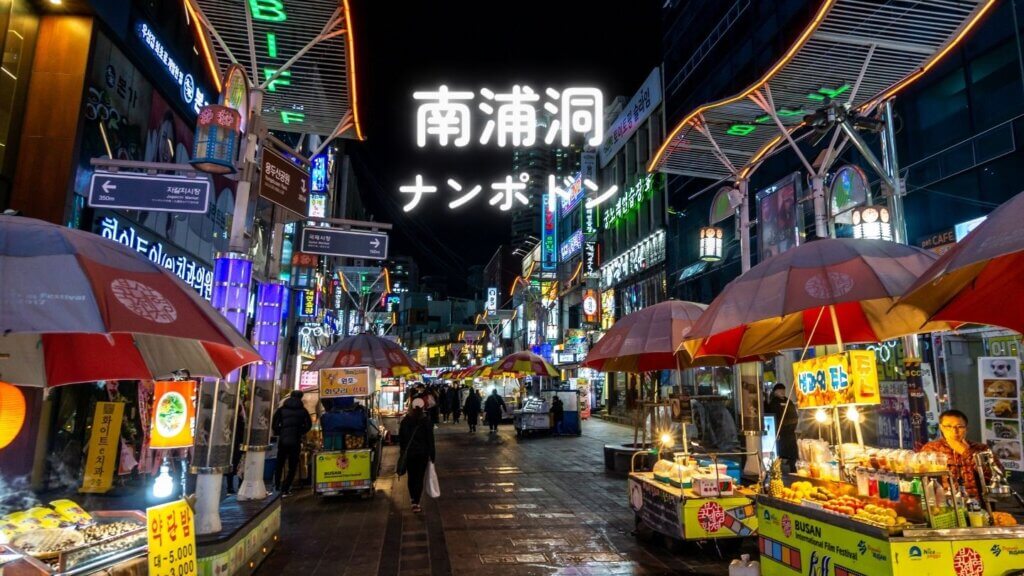
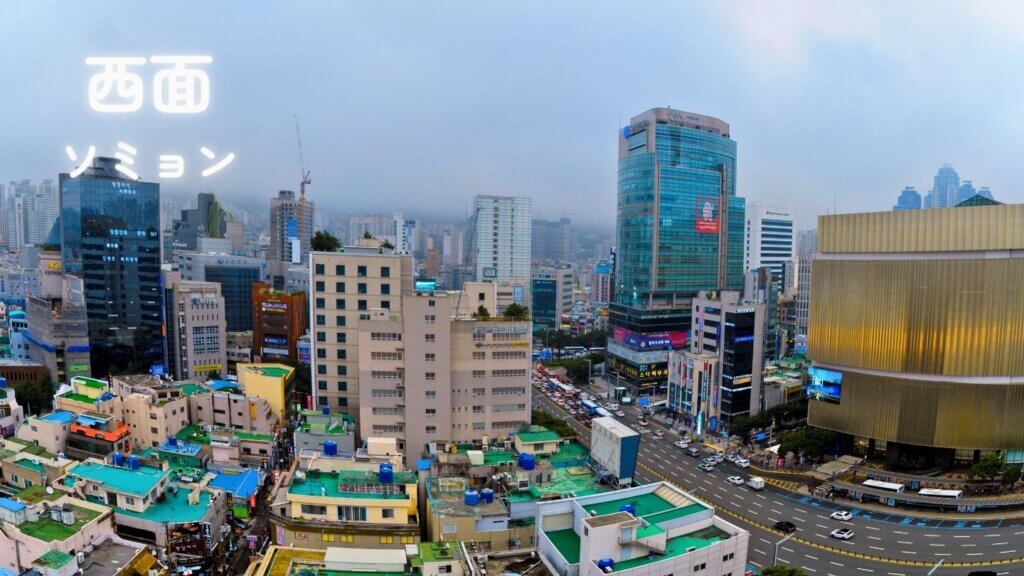
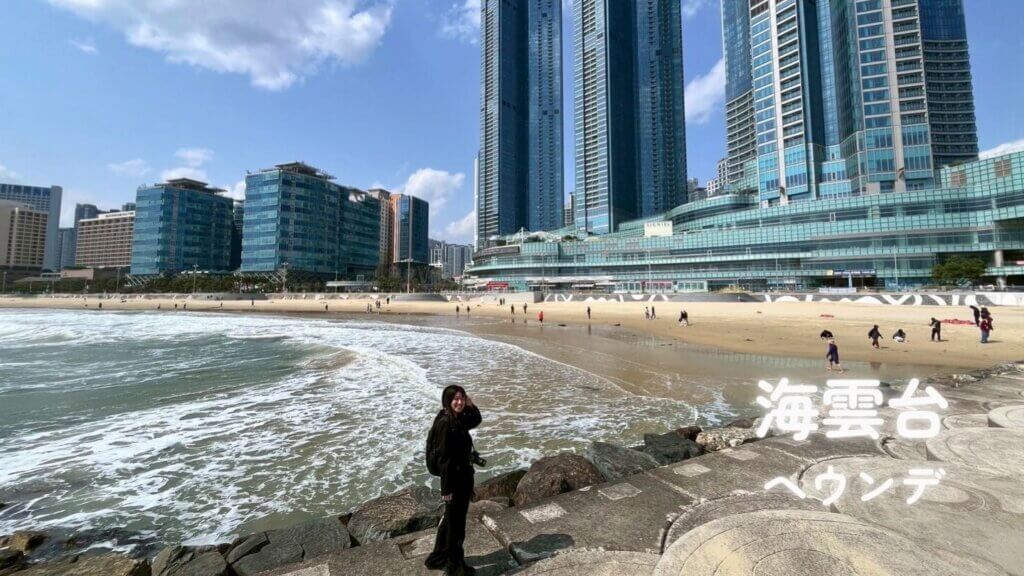
Three Key Districts: Nampo-dong, Seomyeon, and Haeundae
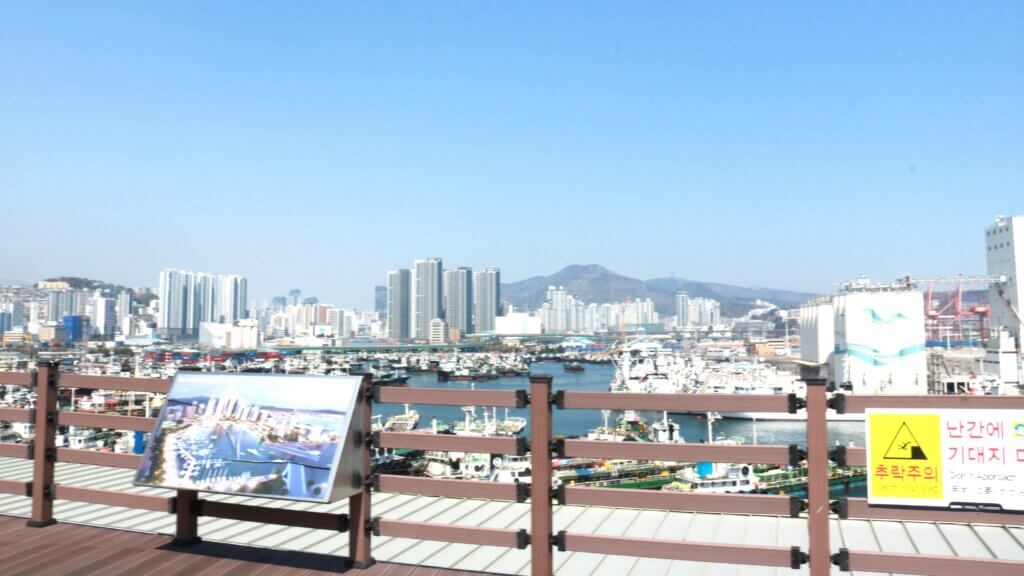
Busan presents a diverse urban character through three major districts: the historic downtown area of Nampo-dong, the new city center of Seomyeon, and the resort-oriented district of Haeundae. From the sea to the mountains, the city is blessed with rich natural surroundings, creating a distinctive urban landscape that combines waterfront scenery with a dynamic city environment.
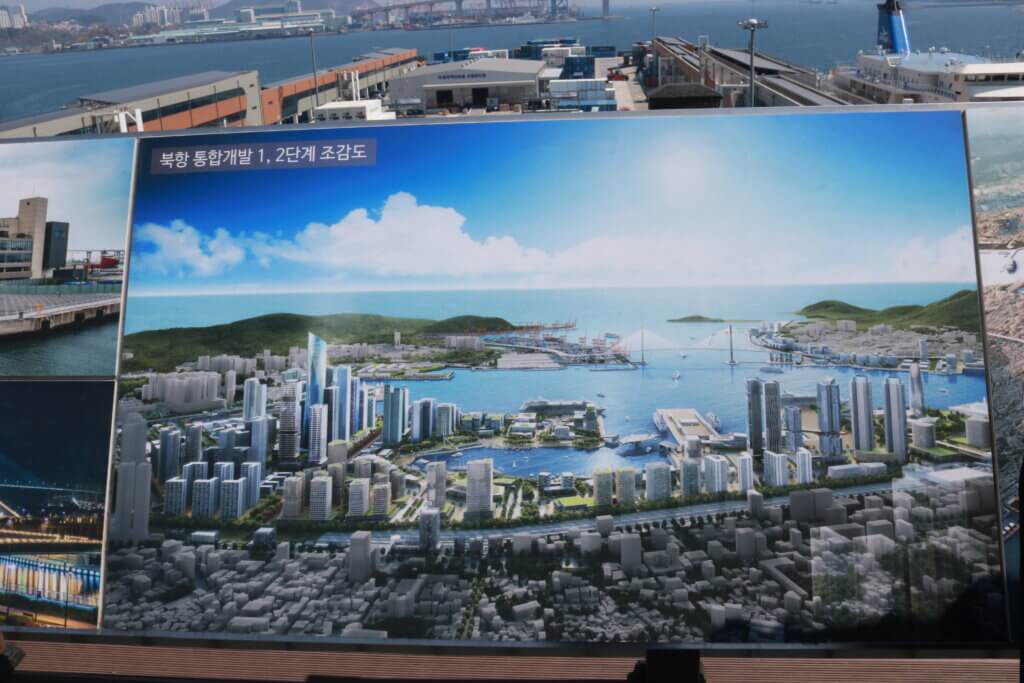
Near Busan Station, the North Port area—once a hub for cargo handling—has been undergoing a waterfront redevelopment project since 2008 under a large-scale urban regeneration plan. The project aims to transform the area into a new MICE hub through the development of a large mixed-use complex incorporating shopping centers, hotels, exhibition halls, theaters, and an international convention center.
Haeundae, in particular, plays a central role in Busan’s MICE strategy. Within a five-kilometer radius centered on BEXCO, a concentration of hotels, commercial facilities, beaches, and related amenities supports large-scale events. Launched in 2020, the “HAVENUE MICE Zone” combines the name Haeundae with the word Avenue, reflecting a district-wide approach to international MICE marketing. According to the World Meeting Statistics published by Union of International Associations, Busan ranked 14th in Asia in the 2024 convention city rankings, highlighting the city’s strong potential as a MICE destination.
Welcome to Busan, Where Port, Air, and Rail Networks Converge
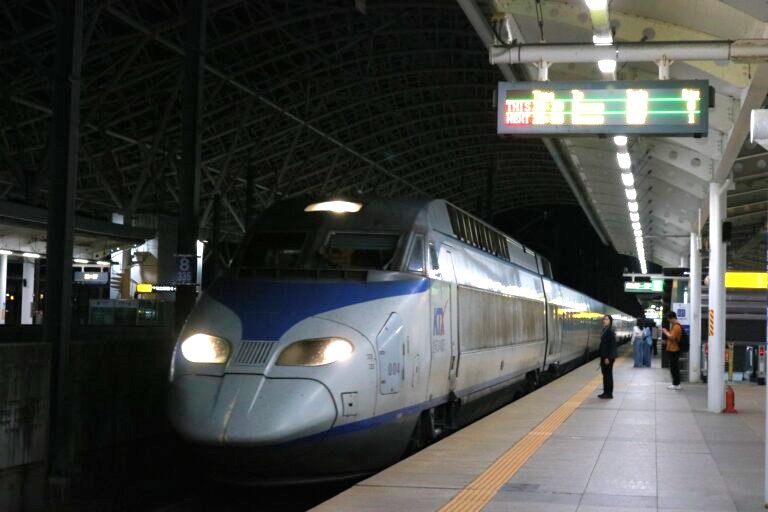
Busan is characterized by its highly developed transportation infrastructure, including high-speed rail, aviation, and maritime routes. From Japan, the city can be accessed via Gimhae International Airport and the Busan International Ferry Terminal. From the capital city of Seoul, Busan is approximately 2 hours and 30 minutes away by Korea Train Express (KTX), offering a travel experience comparable in convenience and distance to the Tokyo–Osaka corridor in Japan.
Public transportation within the city continues to evolve. Bus services increasingly feature the new electric bus model “ELEC CITY TOWN” developed by Hyundai, providing a quiet and environmentally friendly ride. Electric sedans are also becoming standard for taxis. During on-site reporting, taxis arranged via Uber Taxi arrived within five minutes, demonstrating the efficiency of urban mobility services.
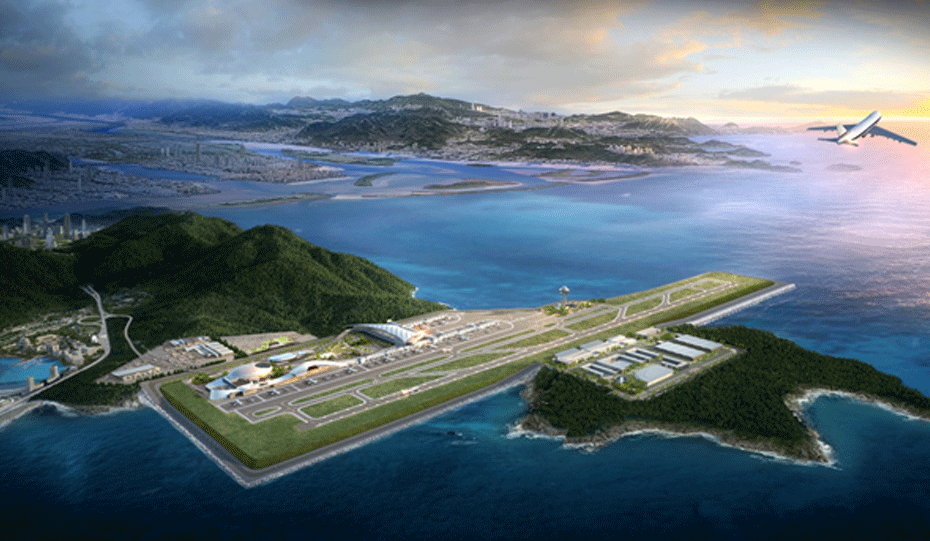
Looking ahead, a new airport is scheduled to open in approximately five years, with a significant increase in capacity expected for both international and domestic flights. This development is anticipated to further enhance Busan’s accessibility and strengthen its position as a major gateway city.
Overview of Major MICE Facilities
Facilities marked with ★ indicate those where interviews were conducted.
Locations can be checked via Google Maps.
Major Exhibition and Convention Facilities
★ Busan Port International Exhibition & Convention Center (BPEX)
Key Highlights
- Located within the Busan Port International Passenger Terminal Building, just a 10-minute walk from Busan Station
- Well suited for small- to mid-sized meetings, conferences, and academic events
- A convention center rooted in Busan’s historic urban core, with a focus on maritime and port-related industries
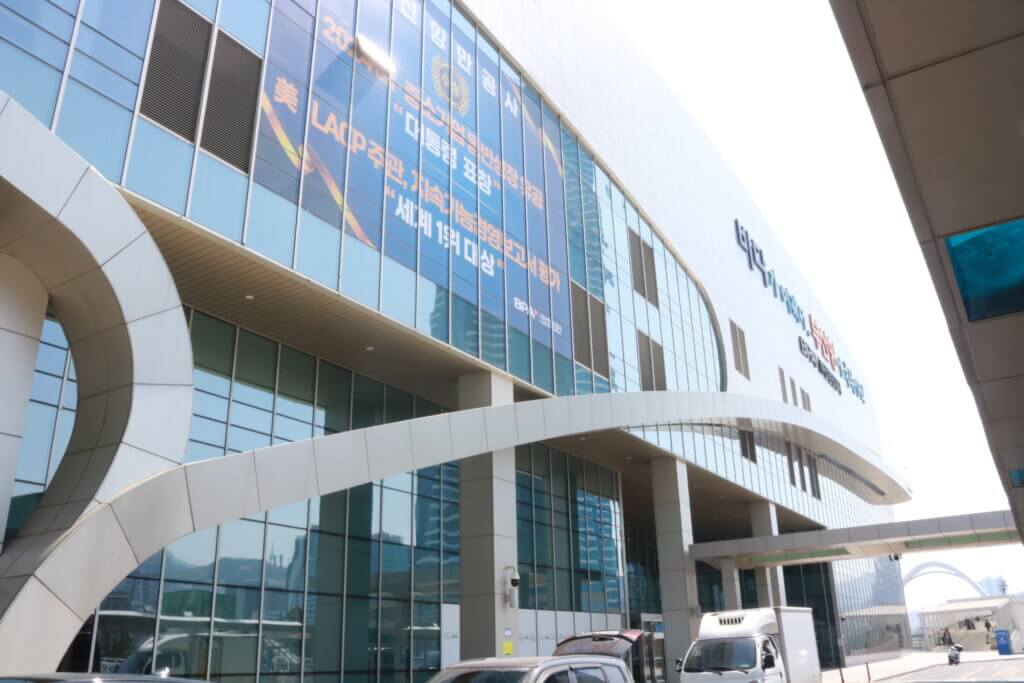
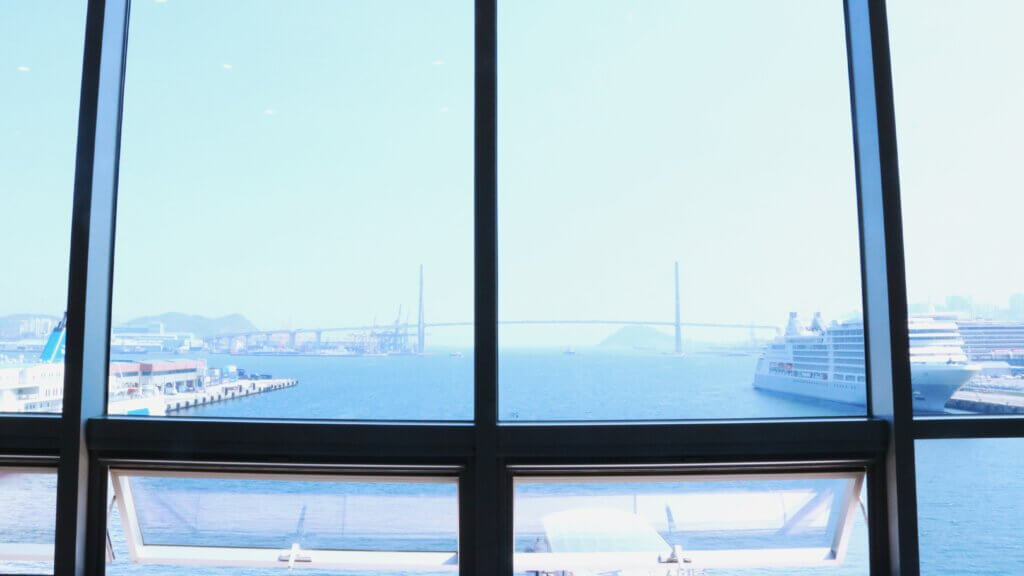
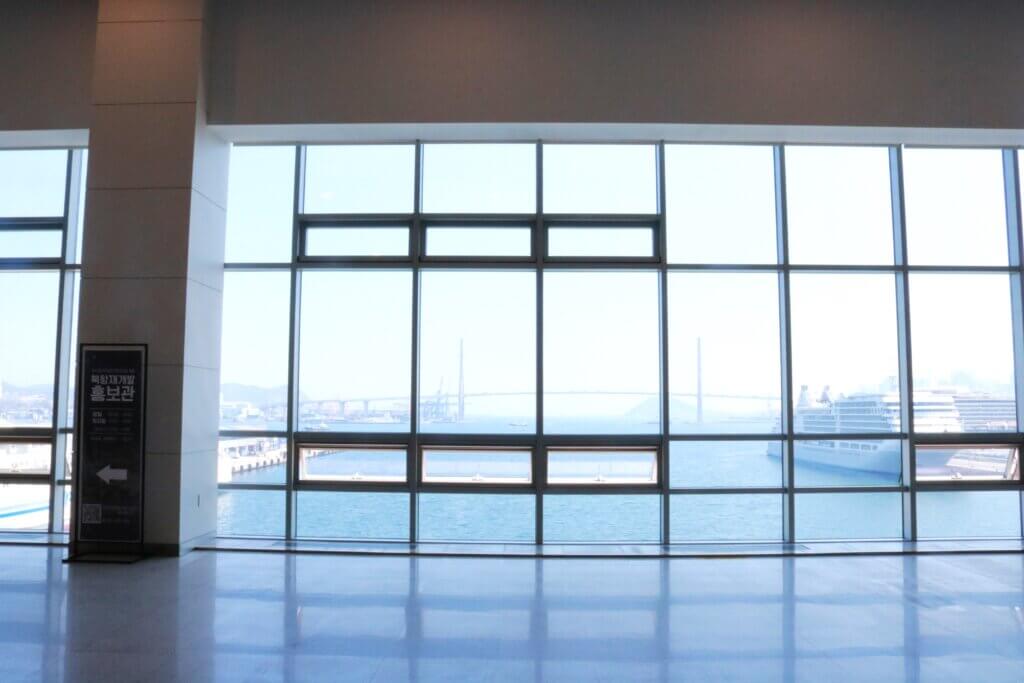
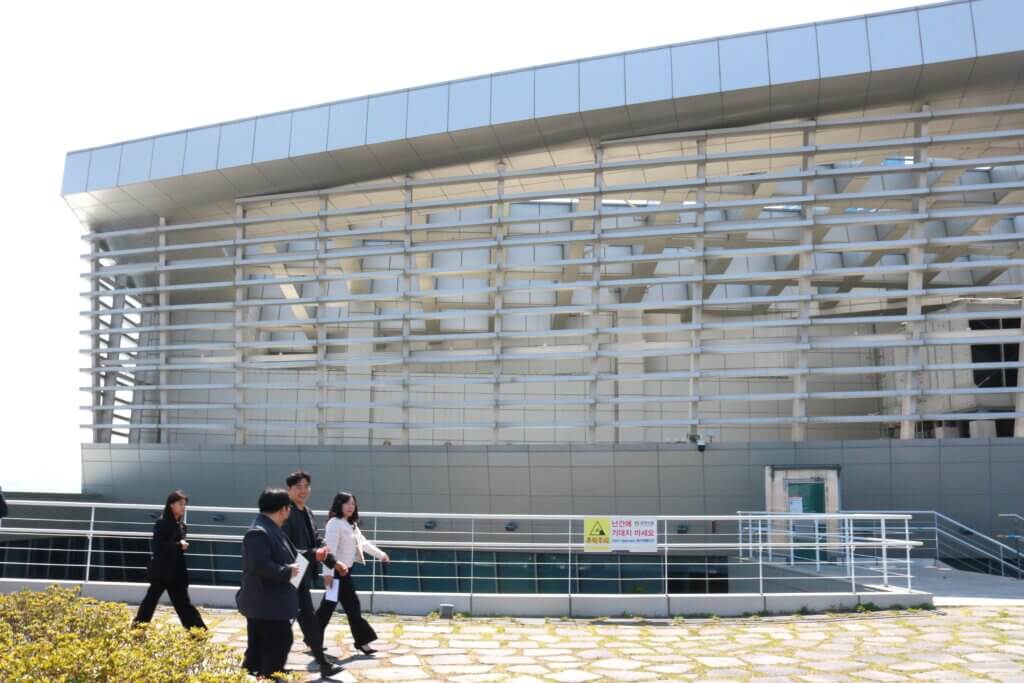
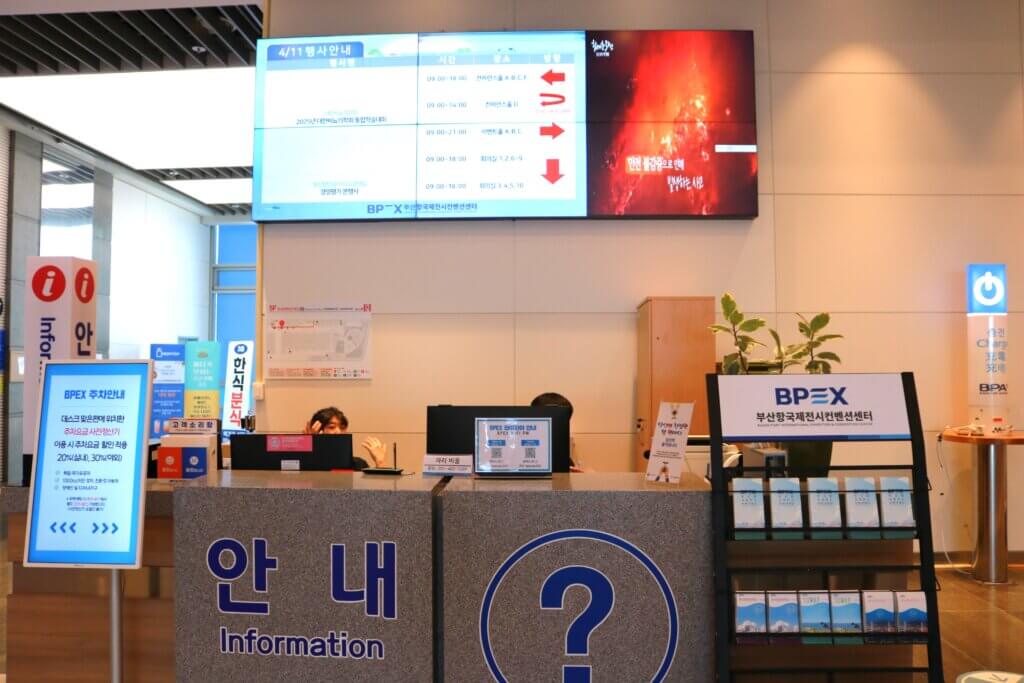
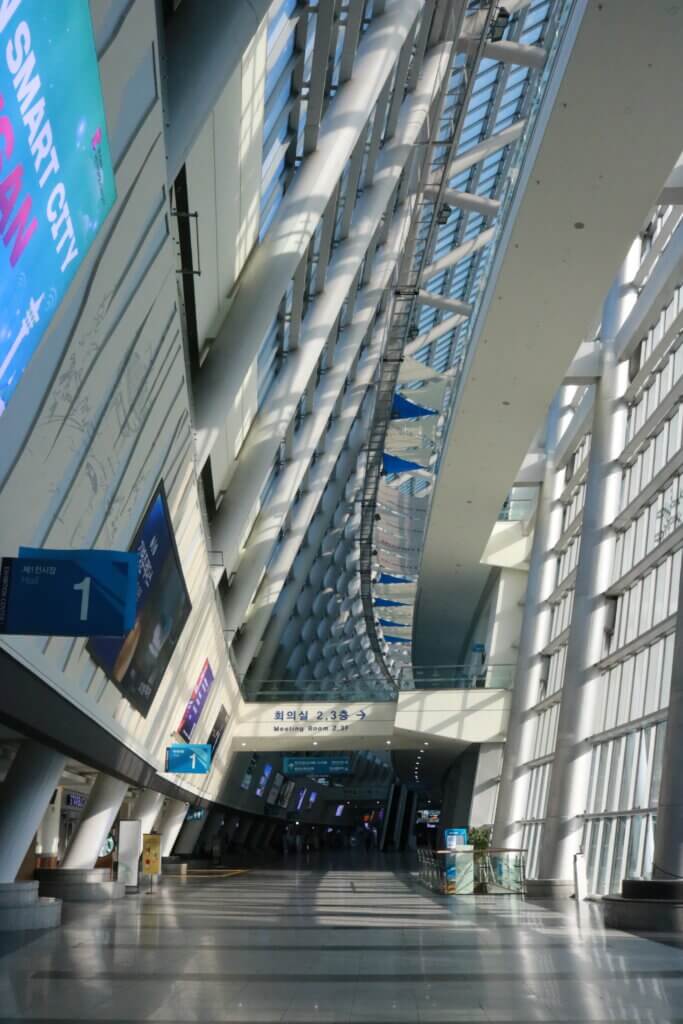
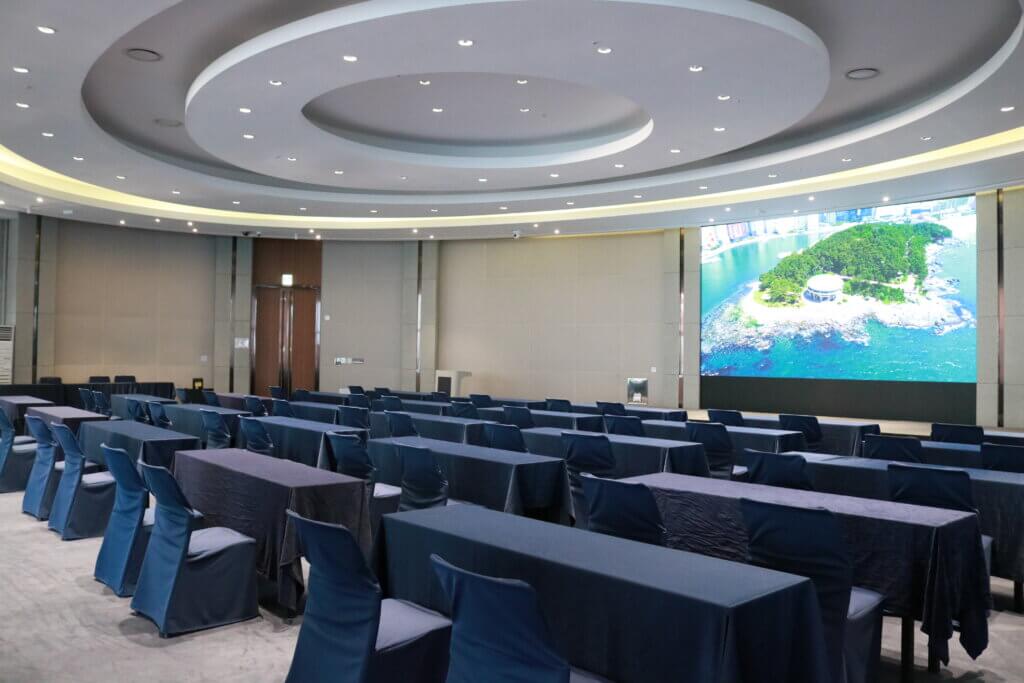
Situated on the top floor of the Busan Port International Passenger Terminal—where ferry users and tourists frequently pass through—Busan Port International Exhibition & Convention Center opened in 2016 and offers modern, well-maintained facilities. Large windows overlook the harbor, allowing users to experience the atmosphere of the port, a feature that has been well received by event organizers and participants alike.
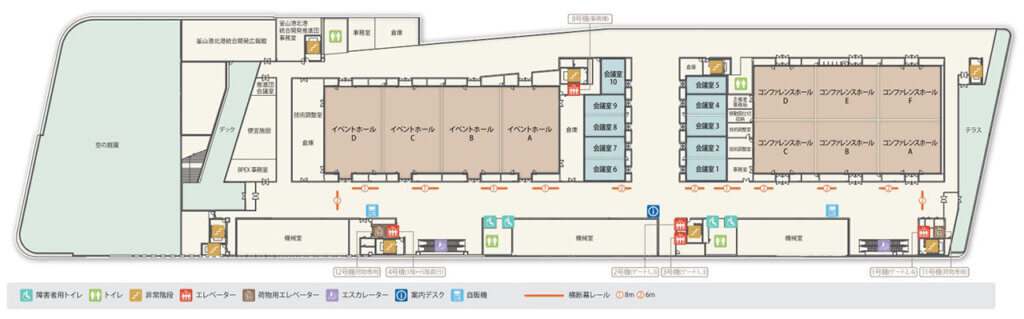
Conference Hall (1,657㎡)
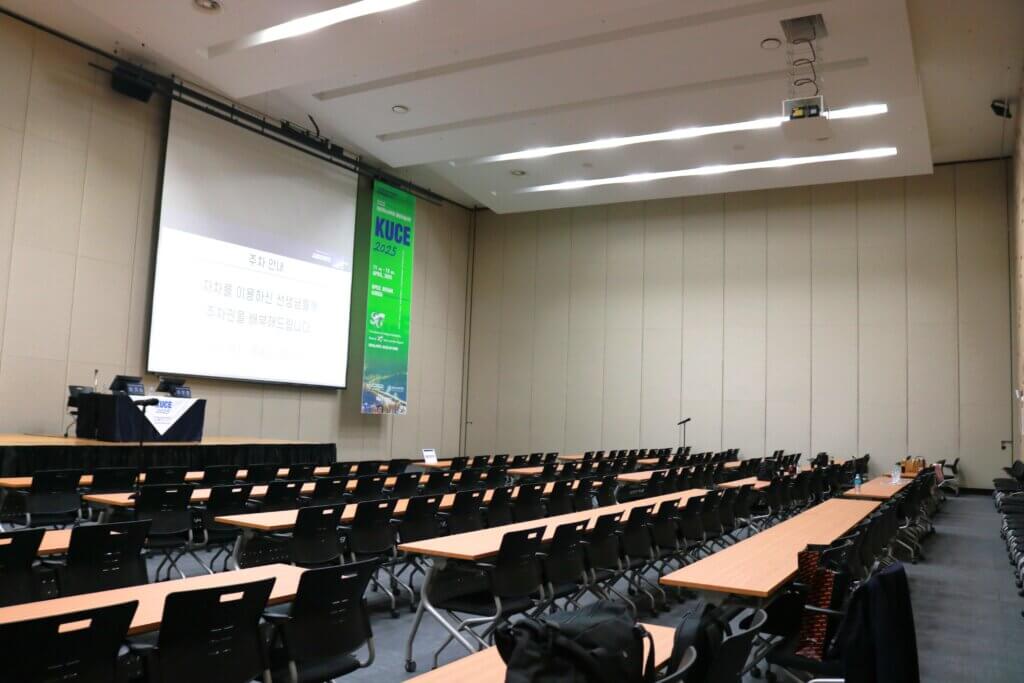
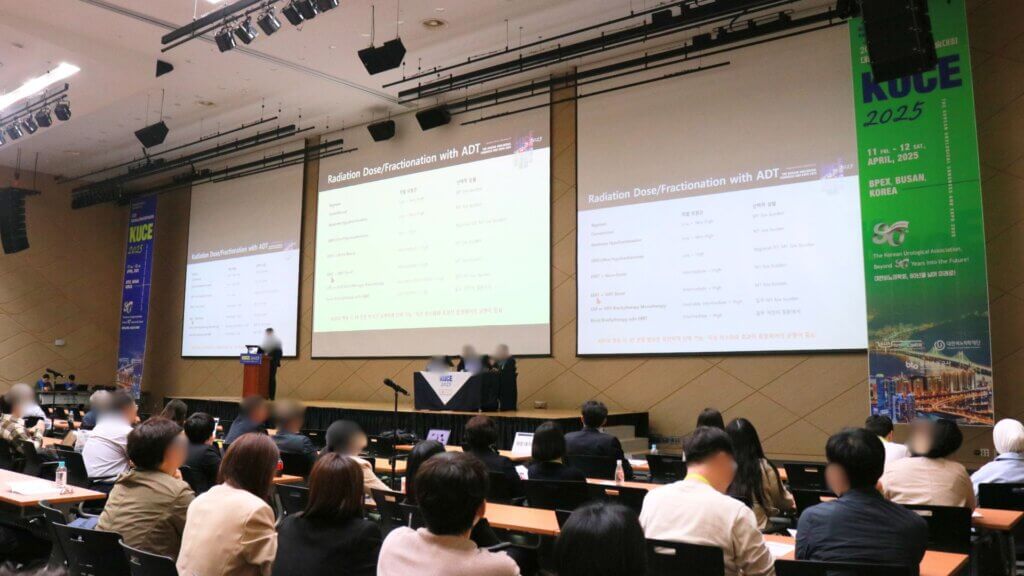
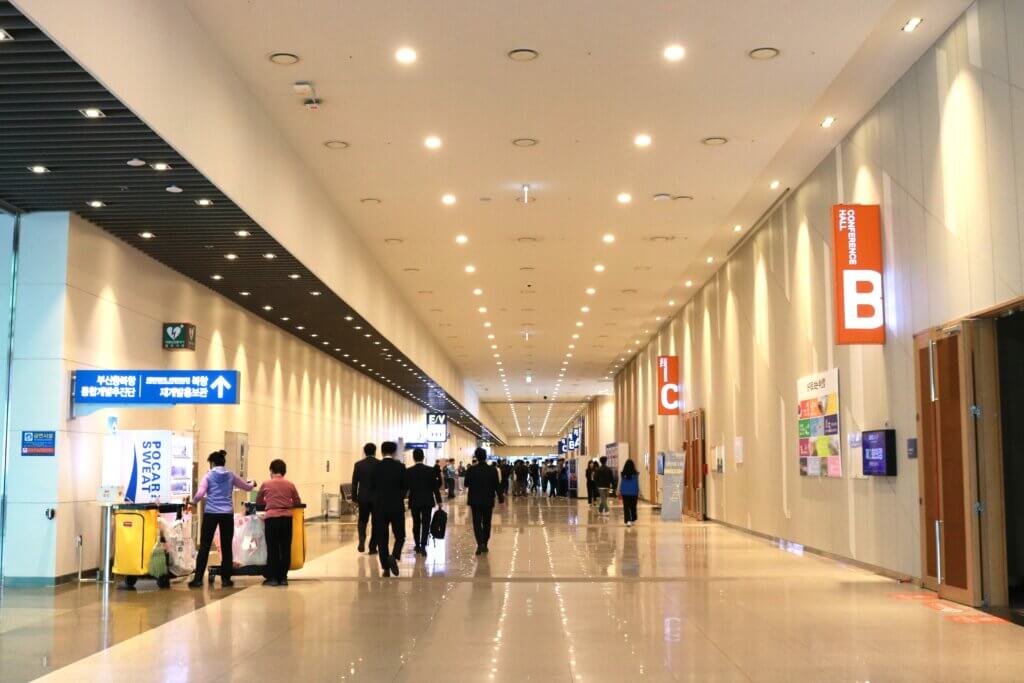
The hall accommodates up to 1,840 participants in a theater-style layout and up to 920 participants in classroom or banquet-style settings. It can be divided into as many as six separate rooms and is equipped with built-in screens. On the day of the site visit, the venue was being used for a medical conference. The seaside corridor adjacent to the hall was utilized for poster sessions and networking activities, where participants exchanged views over drinks.
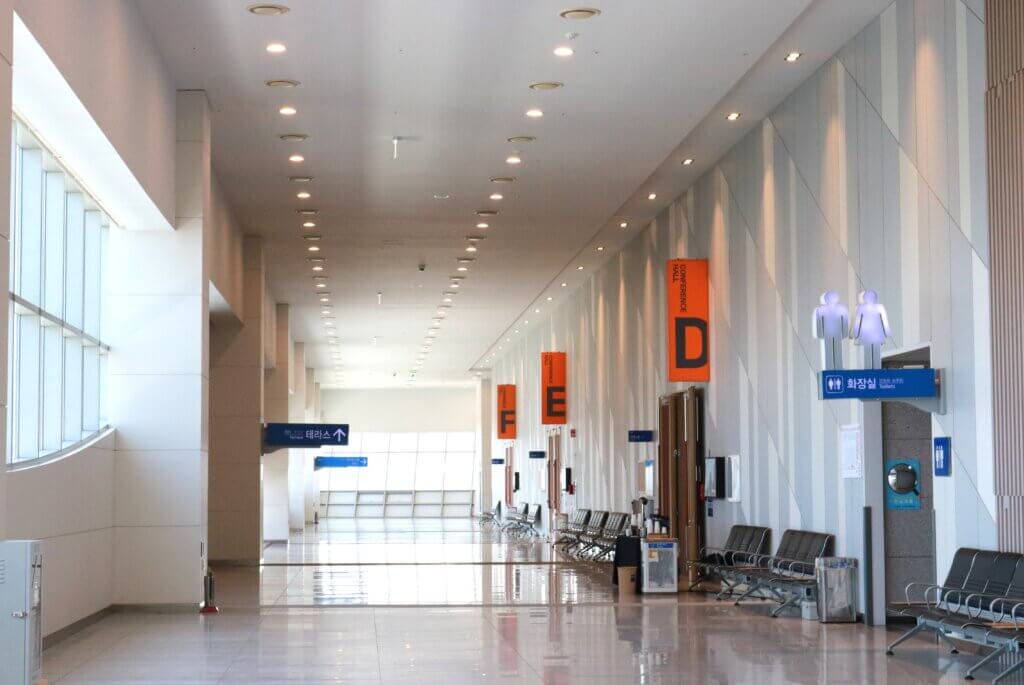
Meeting Rooms
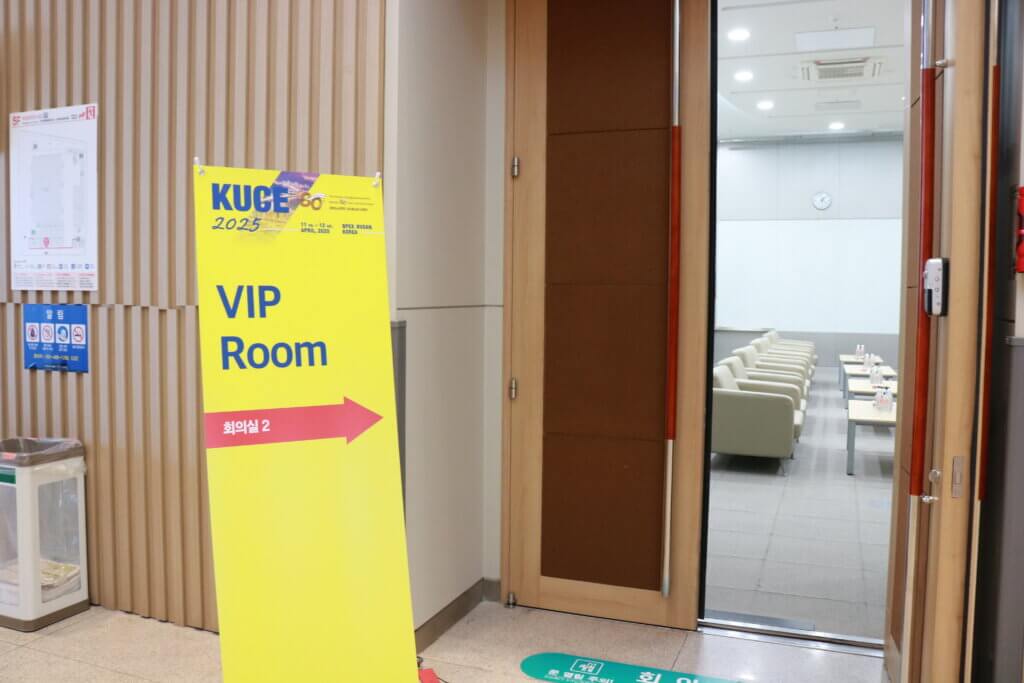
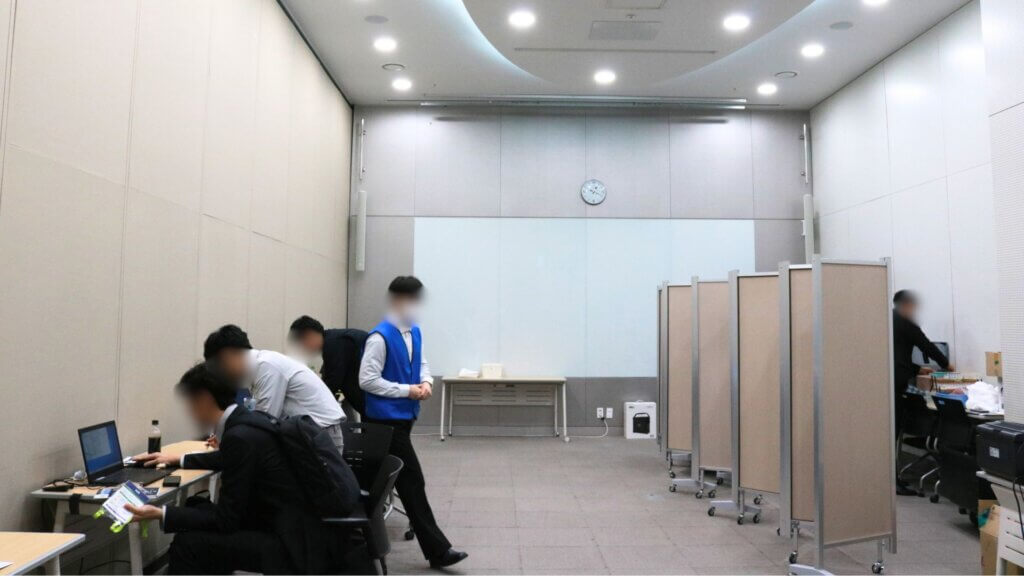
A wide central corridor runs through the area, with five meeting rooms on each side, for a total of ten rooms. Two adjacent rooms can be combined, allowing flexible layouts to accommodate a wide range of needs—from small workshops to larger breakout sessions—depending on participant numbers and event objectives. During the site visit, some of the rooms were being used as press rooms and speaker preparation areas.
Event Hall (1,710㎡)
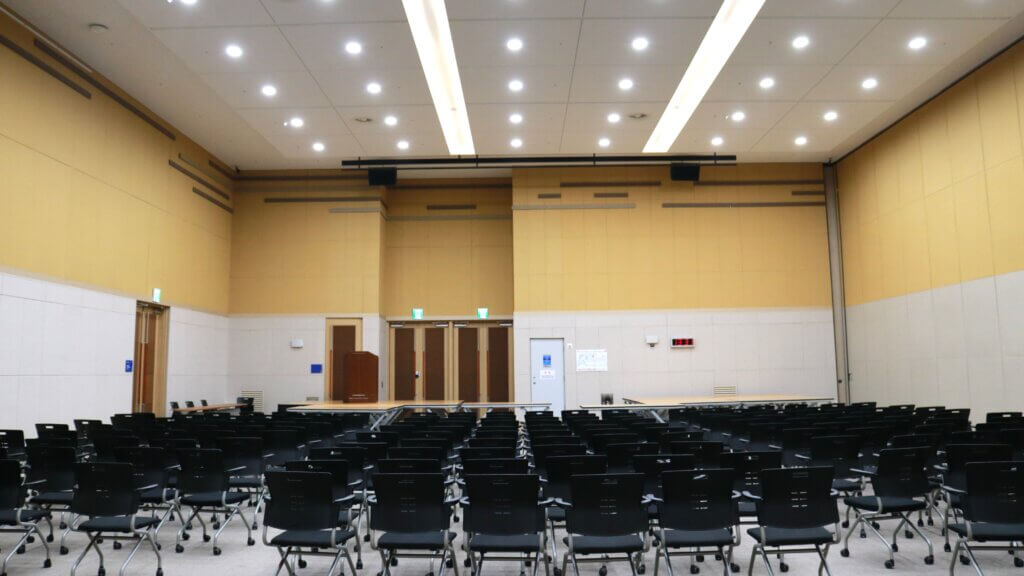
Each hall accommodates up to 510 participants in a theater-style layout and up to 250 participants in classroom or banquet-style settings. When the four halls (A–D) are combined, the space can host up to 2,030 participants in a theater-style configuration or up to 1,000 participants in classroom or banquet-style arrangements. The venue is well suited for exhibitions, trade shows, and performances.
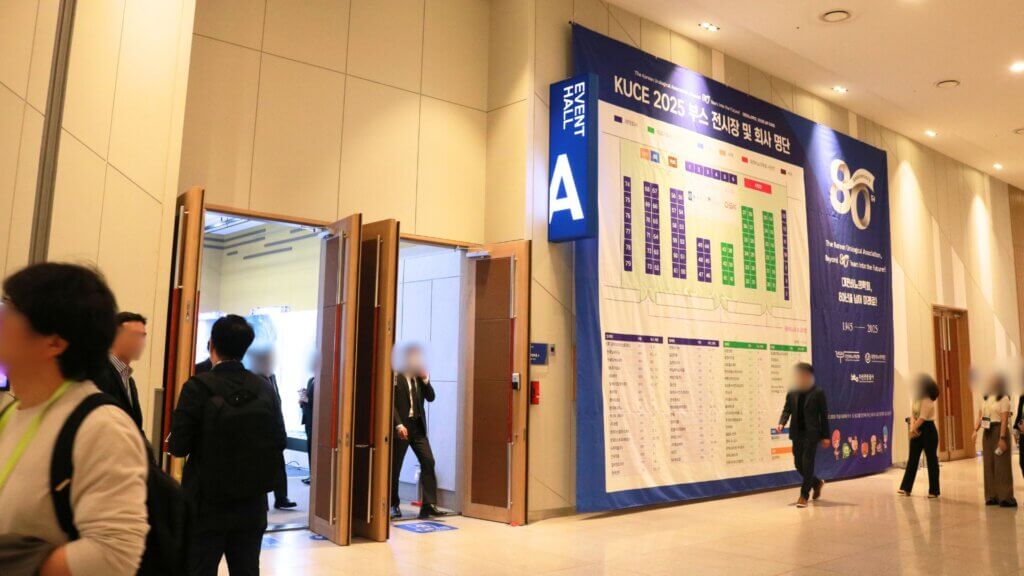
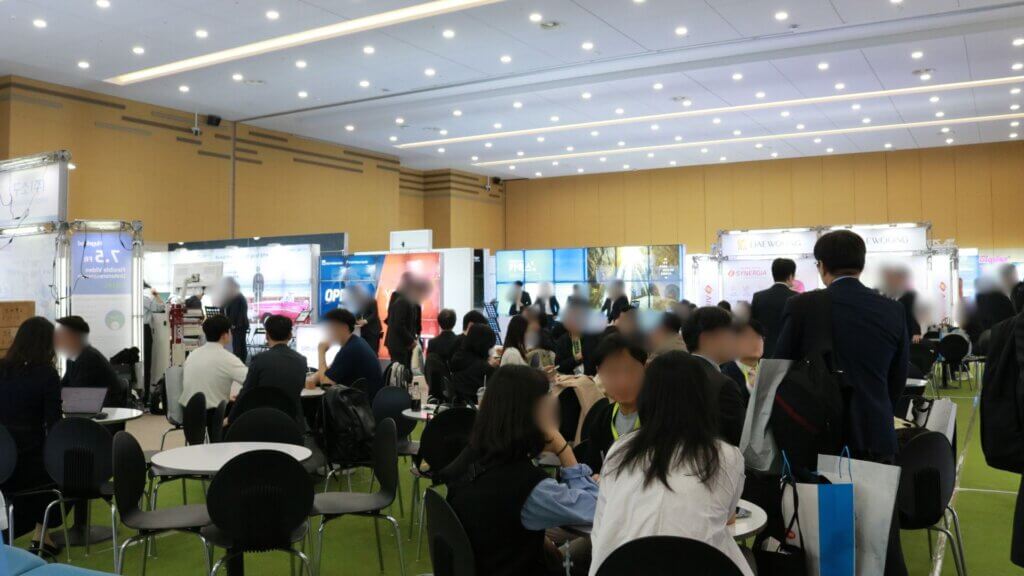
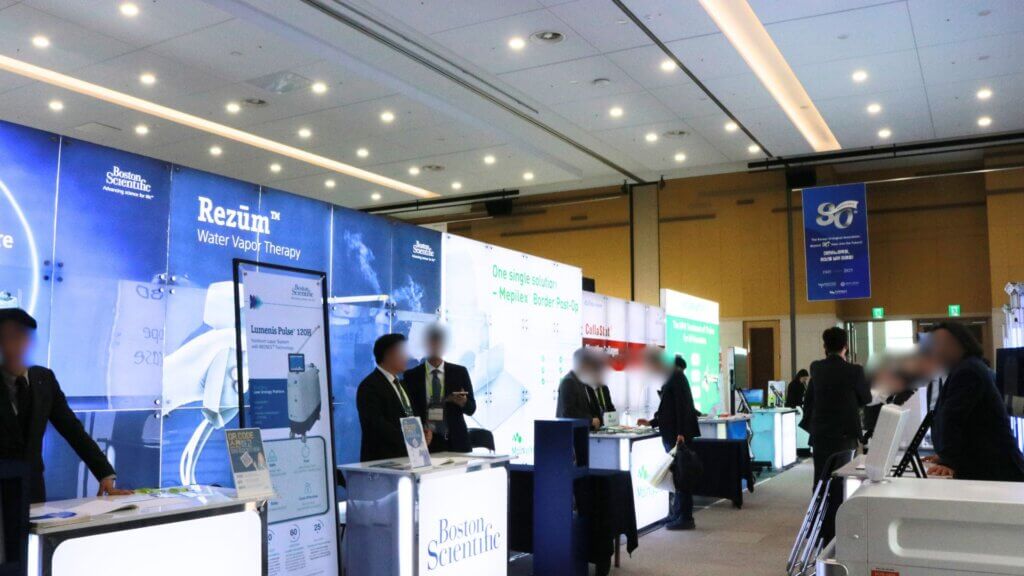
Sky Garden and Terrace
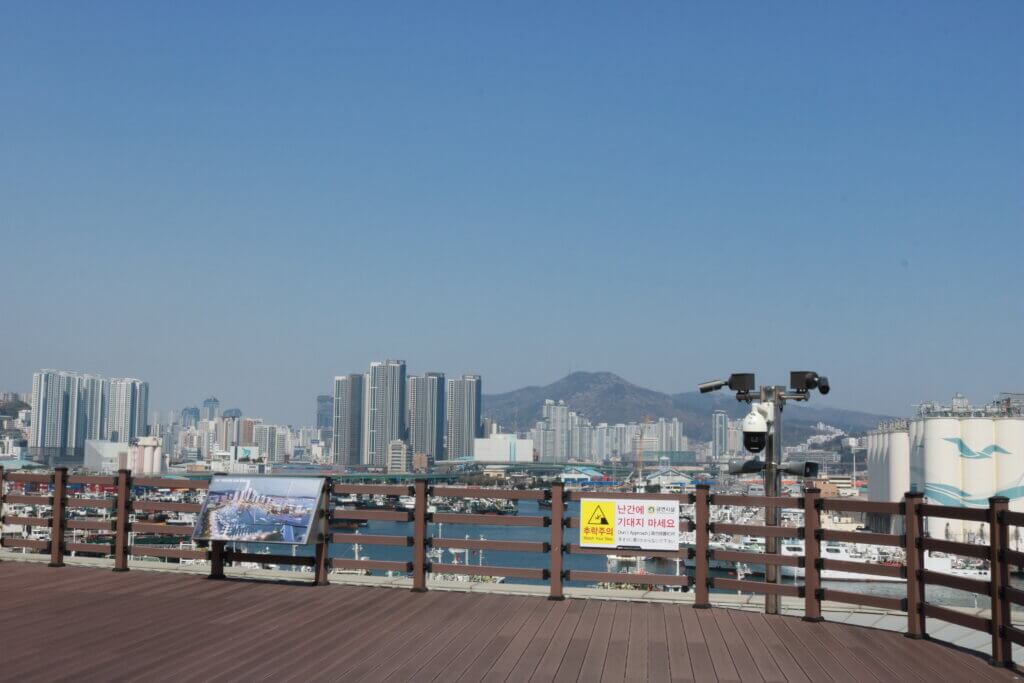
Busan Port International Exhibition & Convention Center is one of the core facilities within the Busan North Port Redevelopment Project. From the Sky Garden and terrace, visitors can overlook the ongoing redevelopment area, offering a clear view of the district’s transformation. With open sightlines and a comfortable outdoor setting, the terrace is well suited for coffee breaks between sessions.
Inside the facility, restaurants, cafés, and a convenience store operated by Seven-Eleven are available. This on-site mix allows event participants and organizers to easily accommodate a range of needs—from light refreshments and lunch to last-minute purchases—during the course of an event.
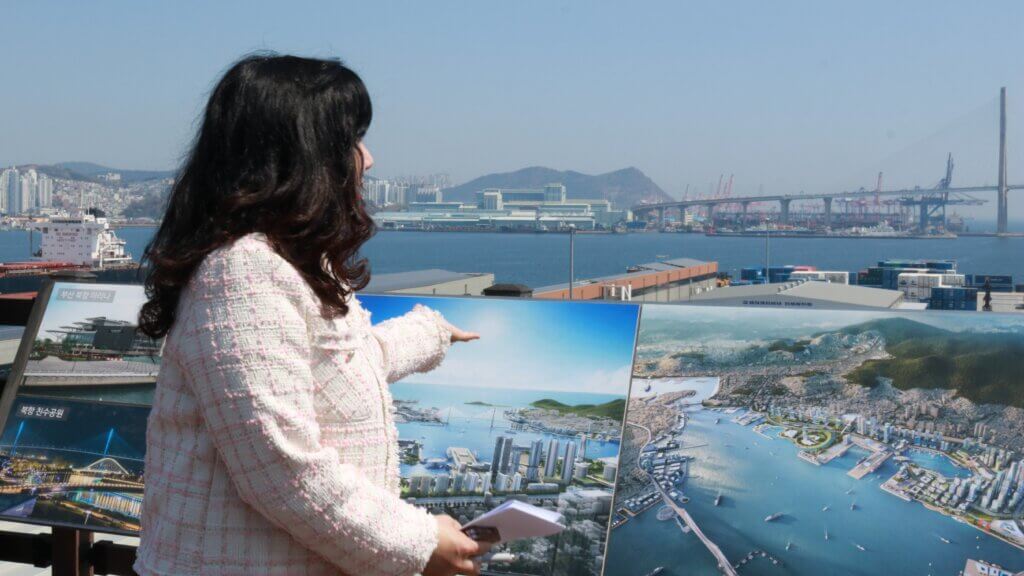
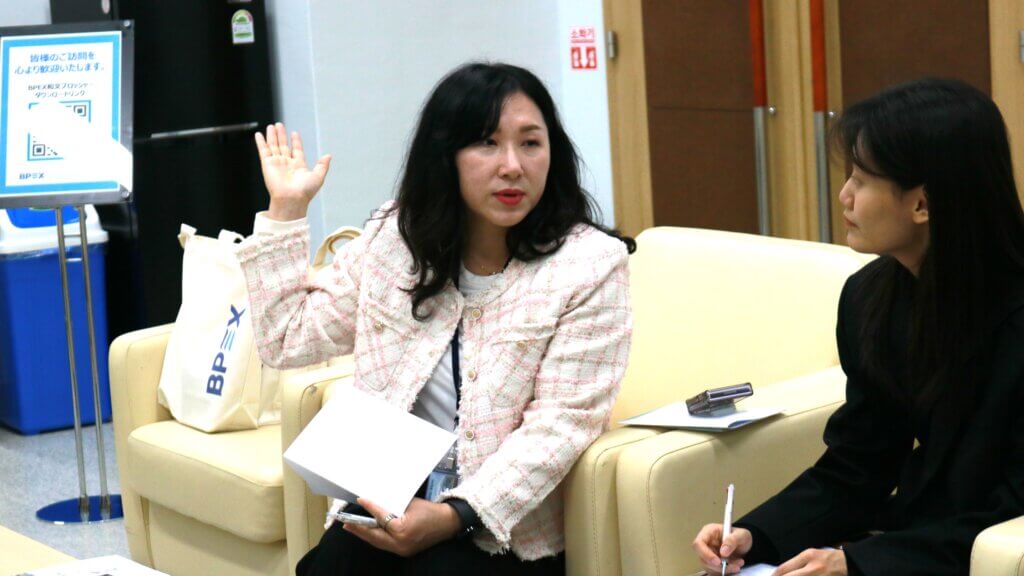
Interview: Insights from Lynn Lee, Director of ★ Busan Port International Exhibition & Convention Center (BPEX)
Q1. Why was the convention facility developed on the fifth floor of the international passenger terminal?
During the planning phase of the terminal, determining how to utilize the fifth floor was a key consideration. As there had been no convention facilities in Busan’s historic urban area, we concluded that this location would be an appropriate fit. While the facility is not as large as BEXCO, one of our strengths lies in its scale, which is well suited to small- and mid-sized events.
Q2. What aspects have users been most satisfied with?
- Ocean views
- Well-maintained facilities
- Ease of access
- Cost performance
Many of our users are repeat clients. Those who have used the facility often recommend it to other potential users. The points most frequently cited include the ocean-view location and the fact that the facility remains in excellent condition, as it opened in 2016. Access is also highly rated: the venue is located immediately adjacent to the ferry terminal, about a 10-minute walk from Busan Station via the pedestrian deck, and is easily accessible from Seoul via the KTX. In addition, usage fees have not been increased since opening, which has contributed to satisfaction in terms of pricing.
Q3. A message for readers in Japan
BPEX is managed and operated by the Busan Port Facility Management Center under commission from the Busan Port Authority. As a facility specializing in maritime and port-related themes, events organized in collaboration with relevant Korean organizations may be eligible for discounts of up to 30%. With convenient access and close proximity to Japan, we hope readers will consider BPEX as a venue option.
Busan Port International Exhibition & Convention Center (BPEX)
Access:
10-minute walk from Busan Station (KORAIL)
15-minute walk from Choryang Station (subway)
Direct access from the Busan Port International Passenger Terminal (bus stop)

Address:
5F, Busan Port International Passenger Terminal,
206 Chungjang-daero, Dong-gu, Busan (Choryang-dong), South Korea

Official website:https://www.bpex.co.kr/index.nm?lang=jp
VR:https://www.bpex.co.kr/vr/air02.html
★ Busan Exhibition & Convention Center (BEXCO)
Key Highlights
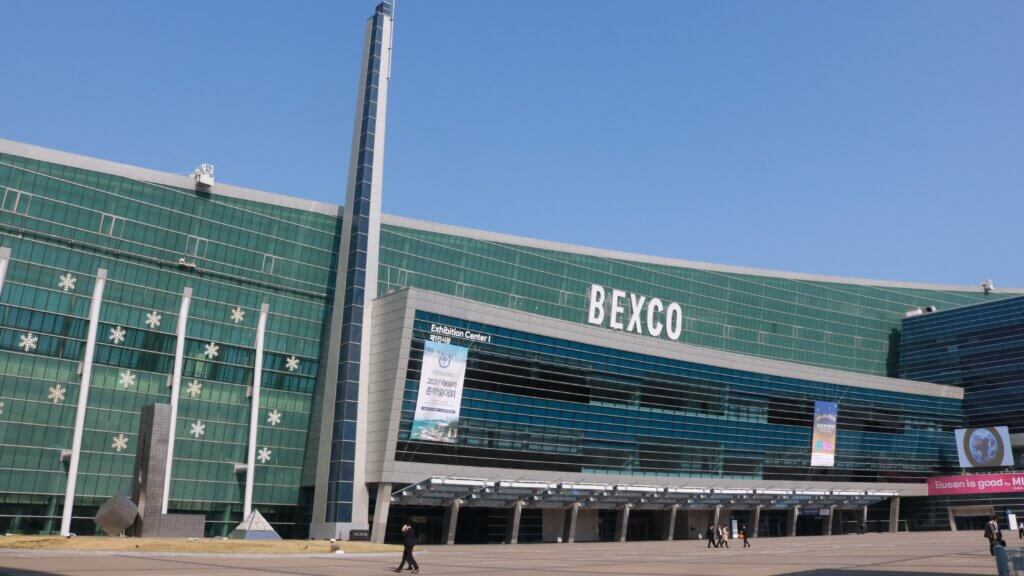
- An international-scale exhibition and convention center featuring approximately 50,000 m² of exhibition space, 52 meeting rooms, and a large auditorium with seating for up to 4,000 participants
- Hosts more than 1,200 exhibitions, conferences, and events annually
- Well-developed surrounding infrastructure, with business hotels accommodating up to 1,500 guests and large shopping malls located nearby
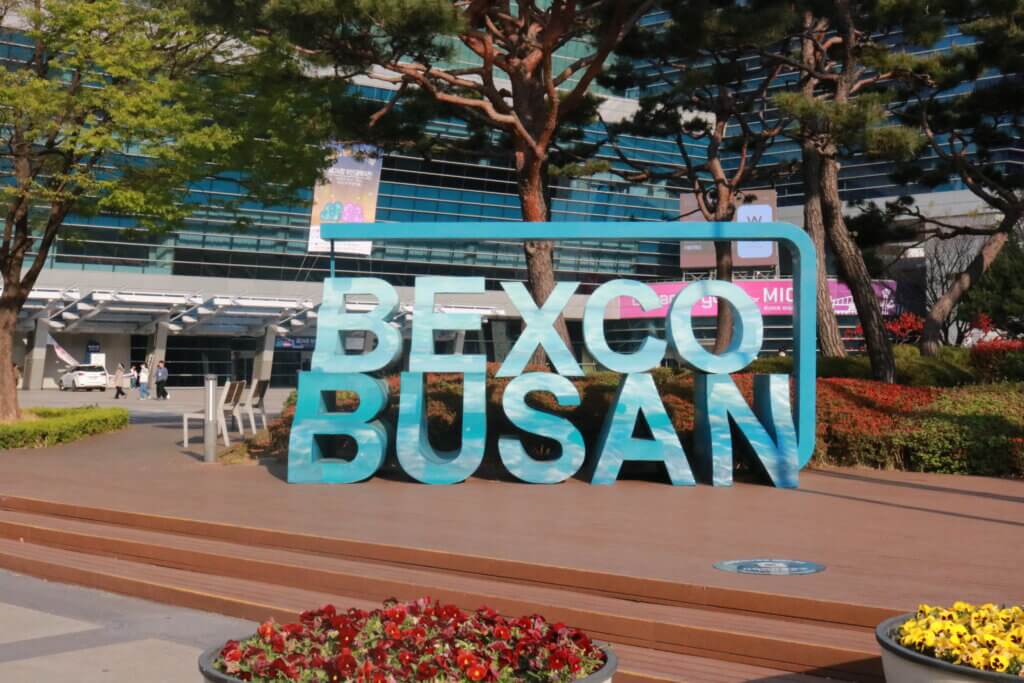
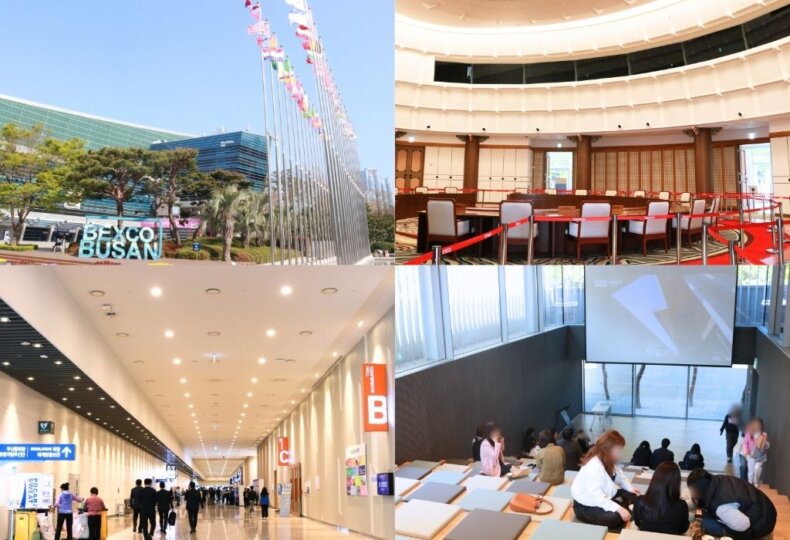
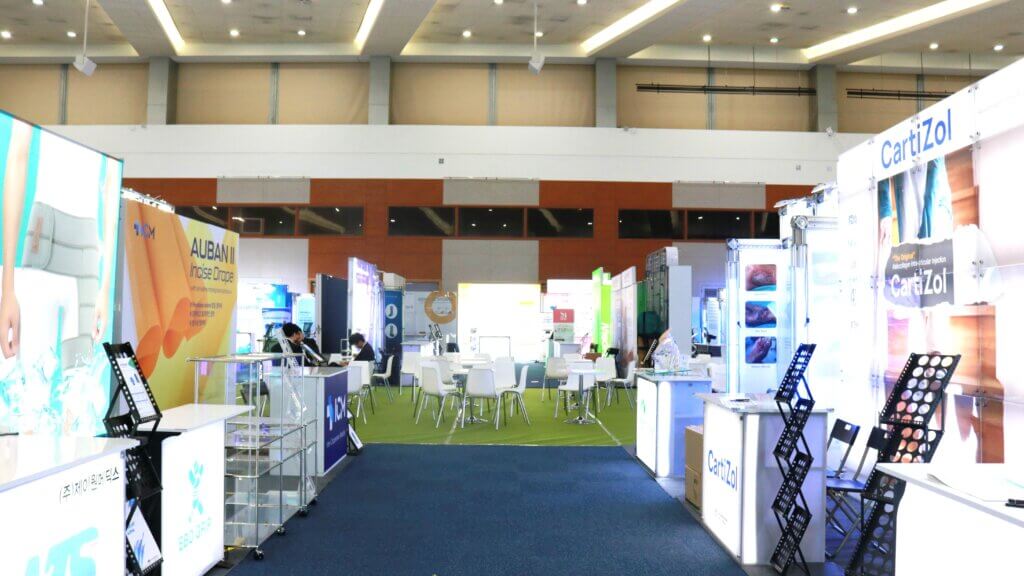
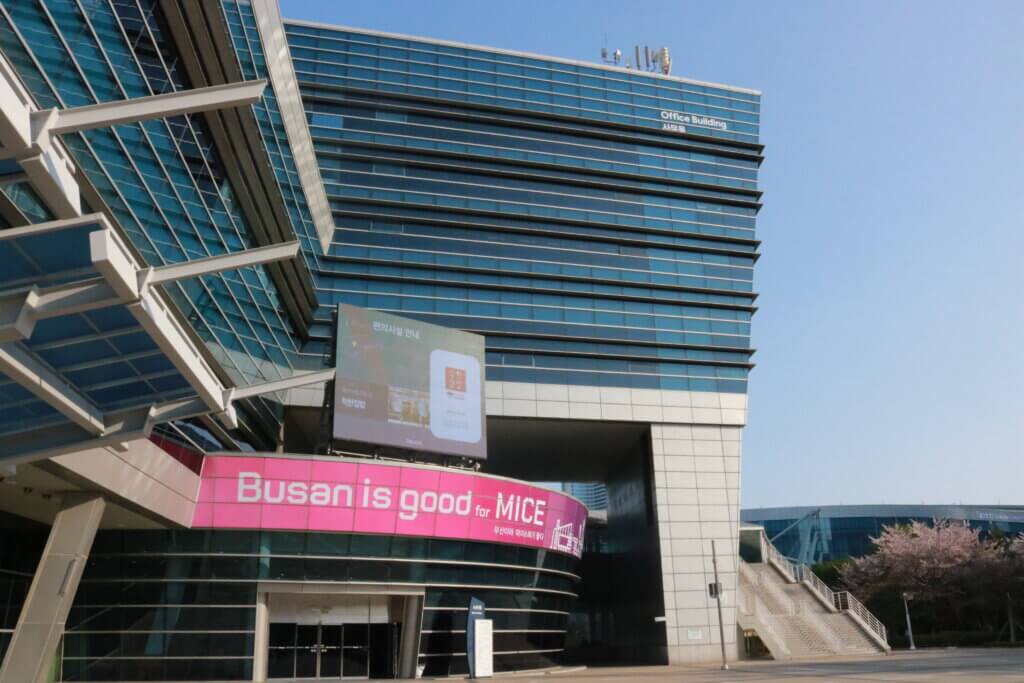
Commonly known as “BEXCO,” the Busan Exhibition & Convention Center is one of Northeast Asia’s leading convention centers, equipped to host international exhibitions and conferences.
A wide range of global events are held at the venue throughout the year. Its coastal location further enhances Busan’s appeal as a gateway for business, culture, and tourism in Northeast Asia.
The facility comprises an auditorium, 55 meeting rooms of various sizes, Exhibition Hall 1 with approximately 26,500 m² of exhibition space, and Exhibition Hall 2 with approximately 20,000 m². This versatile configuration allows the venue to accommodate exhibitions, corporate meetings, concerts, and sporting events. All buildings are connected by skywalks, enabling seamless movement between halls even in rainy weather.
BEXCO is well served by public transportation, with nearby subway access via Centum City Station and BEXCO Station, as well as multiple bus stops, allowing easy access from across the city. Adjacent to the venue is the Centum Premier Hotel, along with a cluster of business hotels offering a total of approximately 1,500 guest rooms. Within the complex, cafés, dining areas, and convenience stores are available. In addition, Shinsegae Department Store—listed in the Guinness World Records—and Lotte Department Store are both within a five-minute walk, providing ample options for shopping and dining between events.
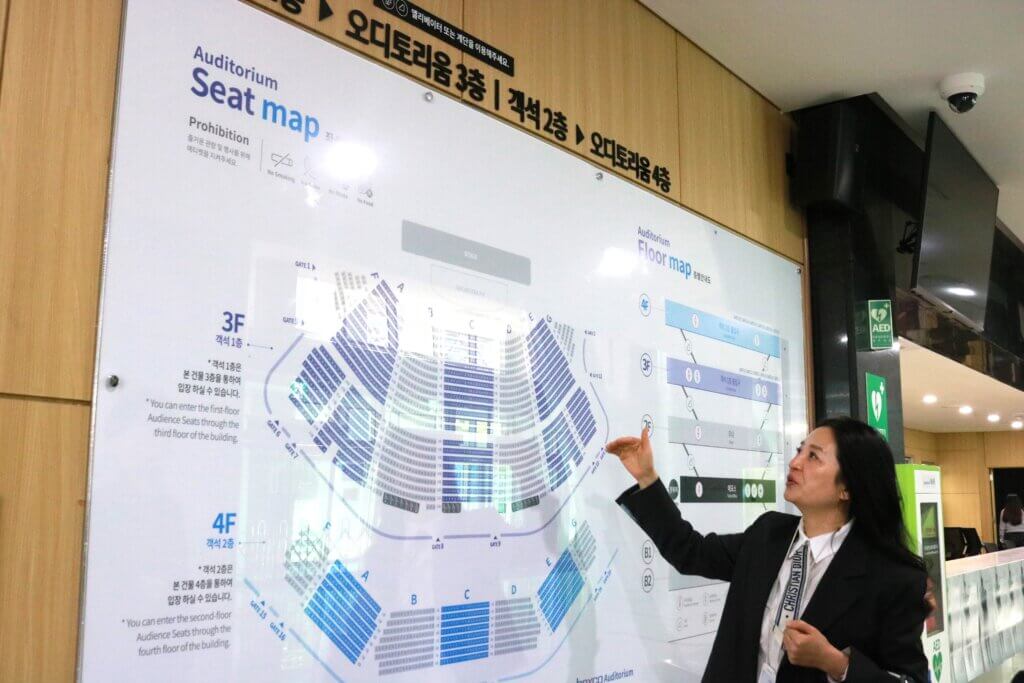
BEXCO Auditorium (4,002 Seats)
The auditorium at Busan Exhibition & Convention Center is the second-largest multipurpose hall in South Korea, following Seoul. The seating is arranged across four tiers, with a design that integrates the stage and audience area to create a sense of unity within the space.
Equipped with state-of-the-art sound and lighting systems, the auditorium is suitable not only for lectures and conferences but also for cultural performances such as concerts and award ceremonies. During the site visit, a rehearsal was underway, providing an opportunity to observe the venue’s acoustic performance firsthand.
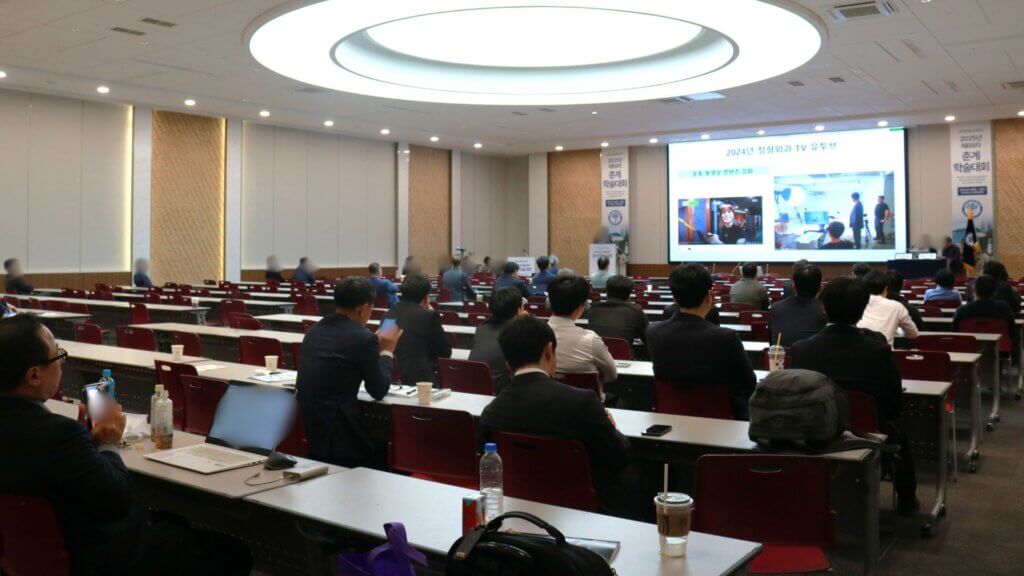
Convention Halls (1,440㎡–2,082㎡)
The three-story convention hall complex at Busan Exhibition & Convention Center comprises a total of 22 meeting rooms. On the first floor, a 1,440 m² space—configured as ten rooms of 144 m² each—can be flexibly arranged using movable partitions. Each room accommodates up to 150 participants, while combining all ten rooms allows for a maximum capacity of 1,440 participants. Each room is equipped with electric screens.
The second floor similarly offers a 1,440 m² area, which can be divided into up to 11 rooms, accommodating up to 1,440 participants in total. The lobby areas can be utilized for registration desks and coffee breaks.
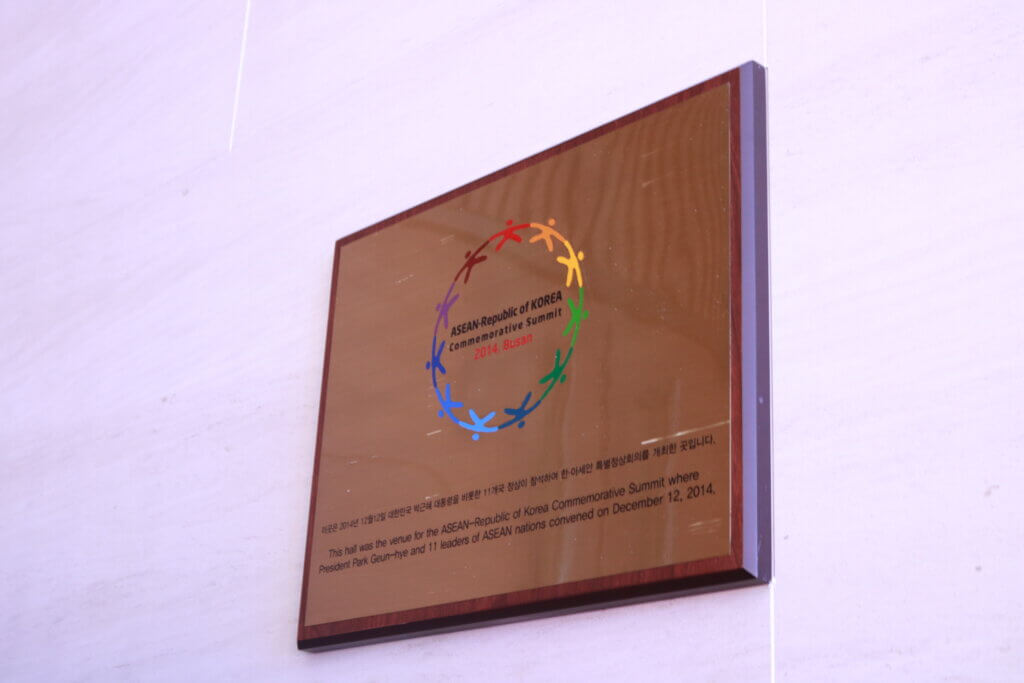
Notably, Room 205 has hosted three leaders’ meetings, including sessions related to APEC in 2005, giving it particular historical significance.
On the third floor, the Grand Ballroom offers 2,082 m² of space with a maximum capacity of up to 2,400 participants. The ballroom is equipped with an 11-language simultaneous interpretation system and a stage. On the day of the site visit, exhibition setup was underway. The space is suitable for international conferences, seminars, and academic conventions.
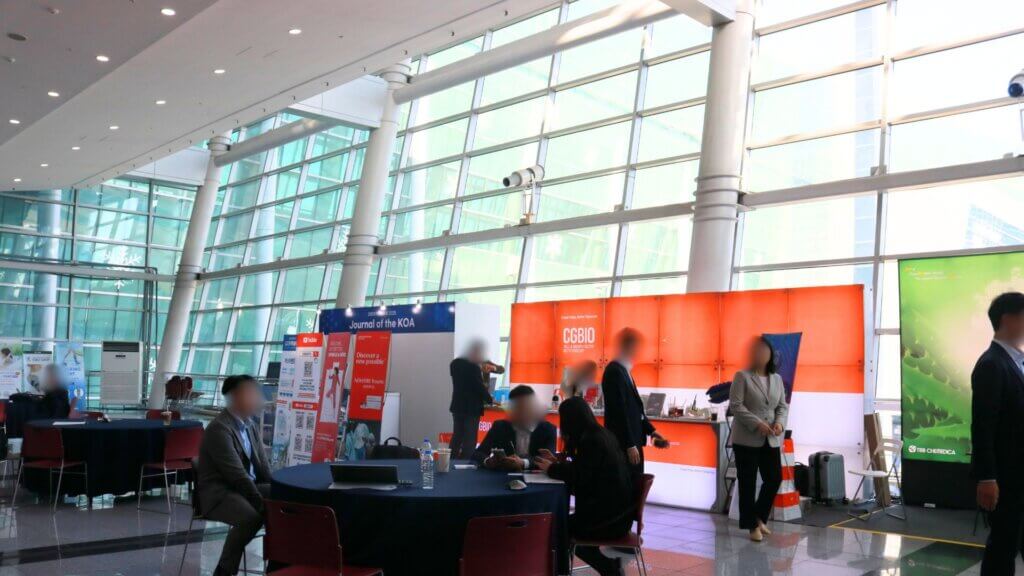
On the third floor, the Grand Ballroom offers 2,082 m² of space with a maximum capacity of up to 2,400 participants. It is equipped with an 11-language simultaneous interpretation system and a stage. On the day of the site visit, exhibition setup was underway. The venue is suitable for international conferences, seminars, and academic conventions.
Exhibition Hall 1 (26,508㎡)
Exhibition Hall 1 offers a pillar-free, single-level space equivalent in size to approximately three soccer fields. Using movable partitions, the hall can be divided into Halls 1, 2, and 3, allowing flexible configurations for events ranging from small to large scale.
A total of 15 meeting rooms are located on the second and third floors, each accommodating up to 120 participants in a theater-style layout. These rooms are frequently used for international conferences, academic conventions, and corporate seminars.
Exhibition Hall 2 (approximately 19,872㎡)
Opened in 2012, Exhibition Hall 2 provides approximately 20,000 m² of exhibition space and is complemented by 13 meeting rooms. The first floor functions as a large-scale exhibition hall, while the third floor combines additional exhibition space with meeting rooms. This configuration supports a wide variety of events, ranging from B2B trade shows to B2C exhibitions.
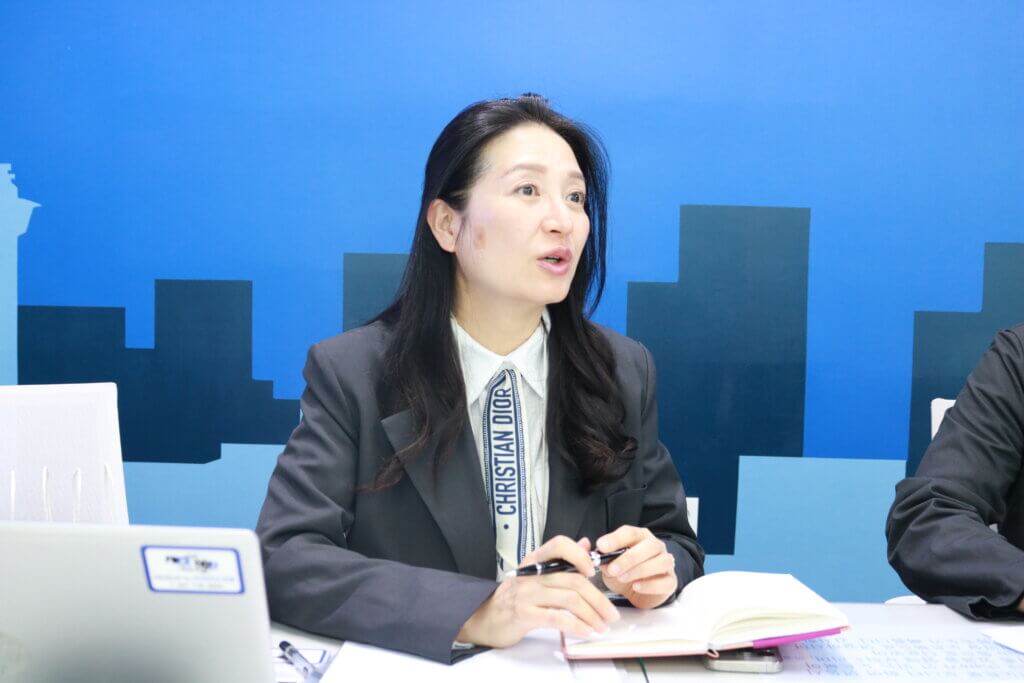
Interview: Insights from Jung-moon Paeng, General Manager of ★ Busan Exhibition & Convention Center (BEXCO)
Q1. What types of events are most commonly held at BEXCO?
Approximately 1,200 exhibitions and conferences are held annually at Busan Exhibition & Convention Center, with the majority focused on business-related fields. The venue supports a wide range of events, from industry trade fairs and corporate events to international conferences, serving both B2B and B2C audiences.
Q2. Which areas would you like to focus on more in the future?
One key priority is the expansion of large-scale exhibitions that are directly organized and operated by BEXCO. Examples include trade shows such as boat shows, auto shows, and drone exhibitions, which we are actively planning and hosting. We also place emphasis on specialized industry exhibitions, including “Marine Week,” which focuses on shipbuilding and maritime industries, and the international game exhibition “G-STAR.”
At the same time, we are expanding events that are open to the general public, such as K-Pet Fair, art fairs, and exhibitions related to interior design and food. In addition, we are strengthening our efforts to attract international conferences, corporate meetings, concerts, musicals, and sporting events.
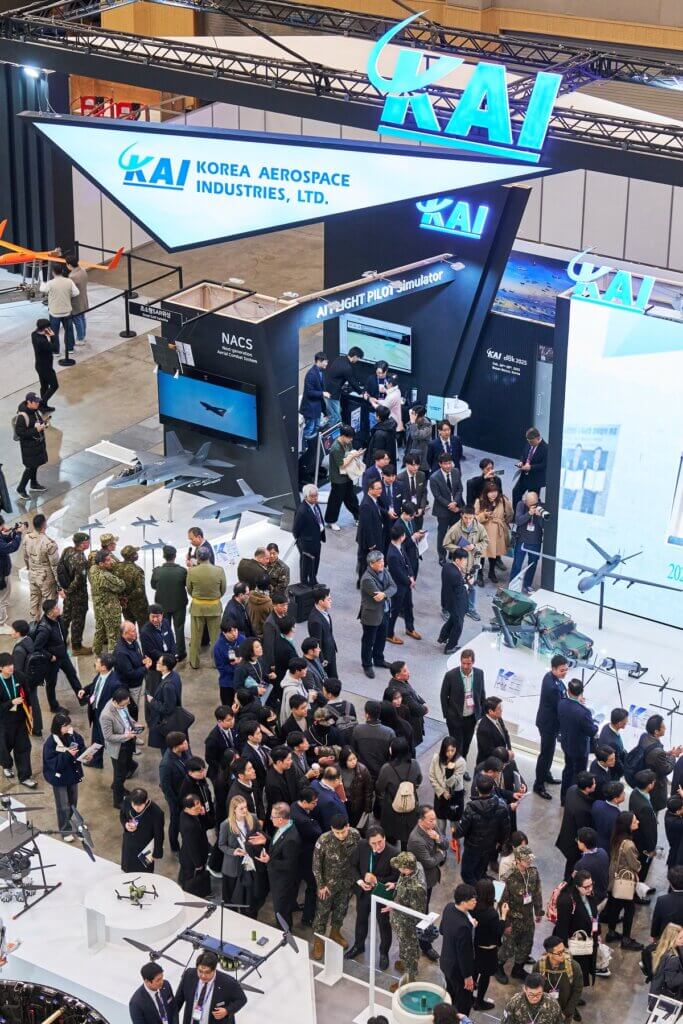
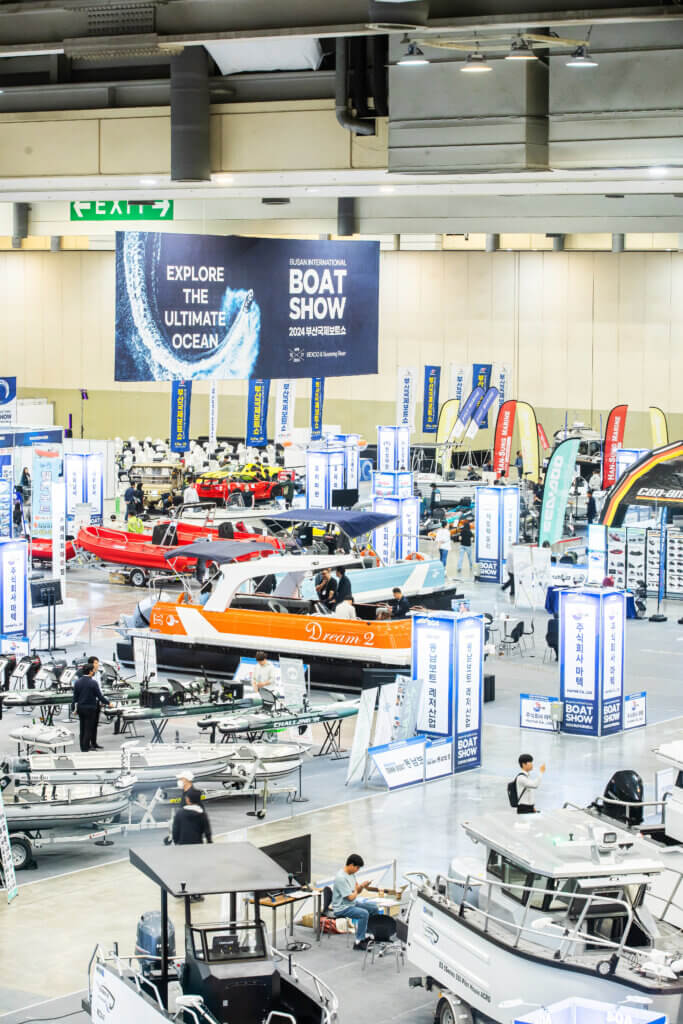
Q3. Are there Japanese companies exhibiting or organizing events at BEXCO? Is there interest in attracting participants from Japan?
We have a strong interest in attracting Japanese companies. In May of this year, we entered into a partnership with PACIFICO Yokohama, through which we have been promoting human resource exchange and public relations cooperation. We are also actively working to attract Japanese companies and buyers to events held at BEXCO.
Q4. A message for readers in Japan
Busan is located just one to two hours by air from Japan and shares many cultural similarities. By participating in B2B and B2C exhibitions held at BEXCO, we believe Japanese companies and visitors can discover new business opportunities and expand their professional networks. We hope many readers from Japan will consider taking part in events hosted at BEXCO.
Busan Exhibition & Convention Center (BEXCO)
Access:
3-minute walk from Centum City Station (subway)
6-minute walk from BEXCO Station (Donghae Nambu Line / KORAIL)

Address:
55 APEC-ro, Haeundae-gu, Busan, South Korea

Official Website:www.bexco.co.kr
Key Unique Venues
★ Nurimaru APEC House
Key highlights
- A historic venue constructed for the 2005 APEC Leaders’ Meeting
- A location surrounded by sweeping ocean views, with sunsets that are particularly striking
- One of Korea’s leading international conference venues, combining traditional aesthetics with state-of-the-art facilities
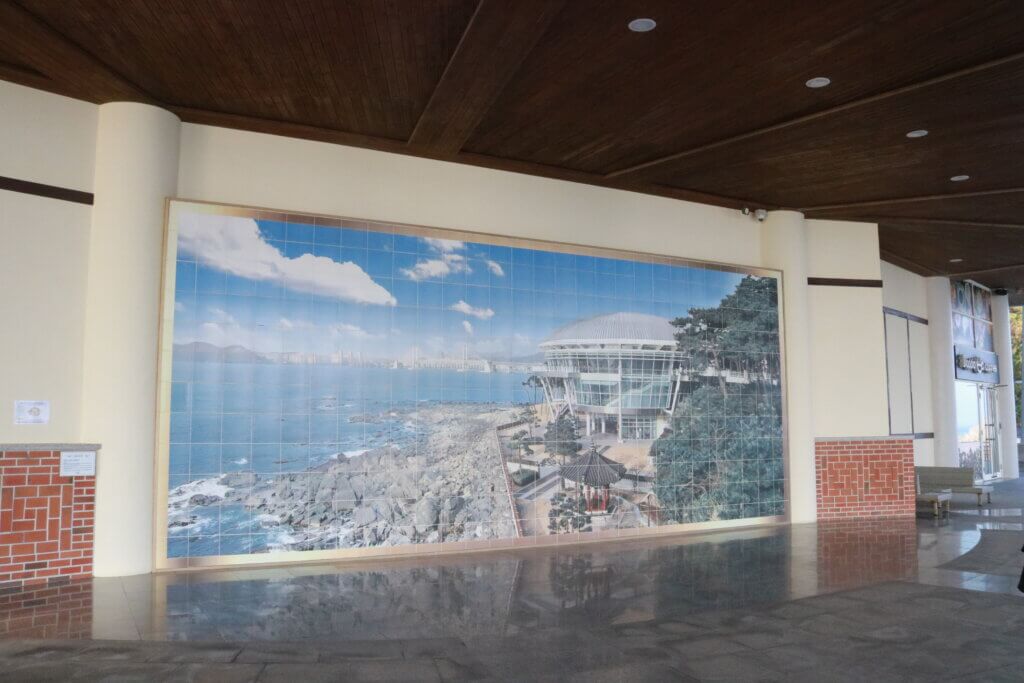
Located at the tip of a forested peninsula extending west of Haeundae Beach, Nurimaru APEC House is characterized by its circular, glass-walled architectural design. Surrounded by both sea and greenery, the site was considered an ideal location for VIP security during the summit period.
The venue was originally built for the 2005 APEC Summit and later hosted the ASEAN–Republic of Korea Commemorative Summit in 2014, further strengthening its track record as a high-profile international conference venue. Today, Nurimaru APEC House is open to the public as a museum, where visitors can learn about past summits and international diplomacy conducted at the site.
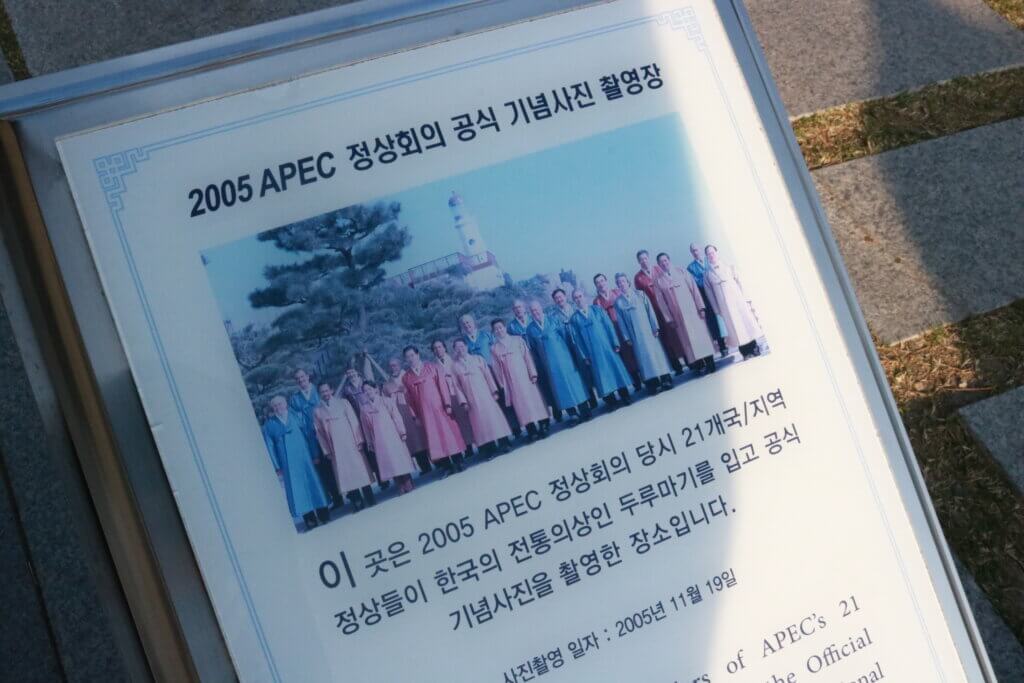
Second Floor: Conference Room and Outdoor Terrace
The second floor accommodates up to 240 participants and can be arranged in standing reception, classroom, or theater-style layouts, depending on the purpose of the event. Catering services equivalent to five-star hotel standards are available. The conference room offers a panoramic ocean view, with the sea stretching across the entire field of vision. In the late afternoon, the scenery is particularly striking, as the ocean turns a deep red at sunset, creating an atmosphere reminiscent of a private beach reserved exclusively for participants.
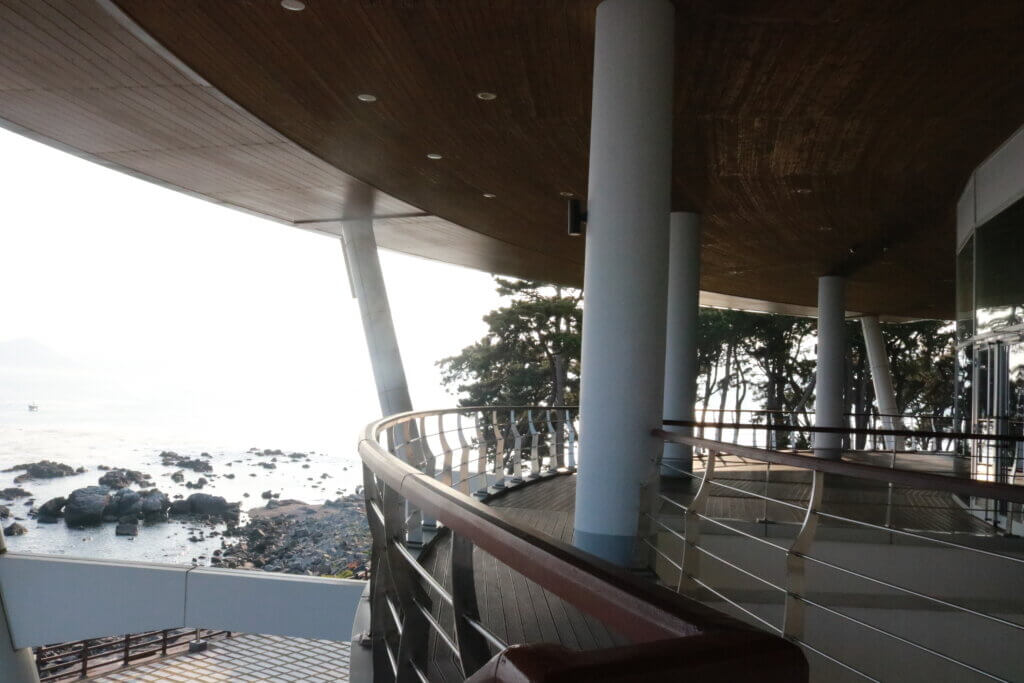
Third Floor: APEC Leaders’ Meeting Room (Open to the Public)
This area is open to the public free of charge. Panel displays introduce an overview of APEC and trace its history. The traditional Korean garments known as durumagi, worn by the leaders at the time of the summit, are exhibited alongside photographs from the event. The leaders’ meeting room itself has been preserved in its original layout from 2005. A closer look reveals a range of Korean design elements incorporated throughout the space, reflecting both cultural heritage and ceremonial significance.
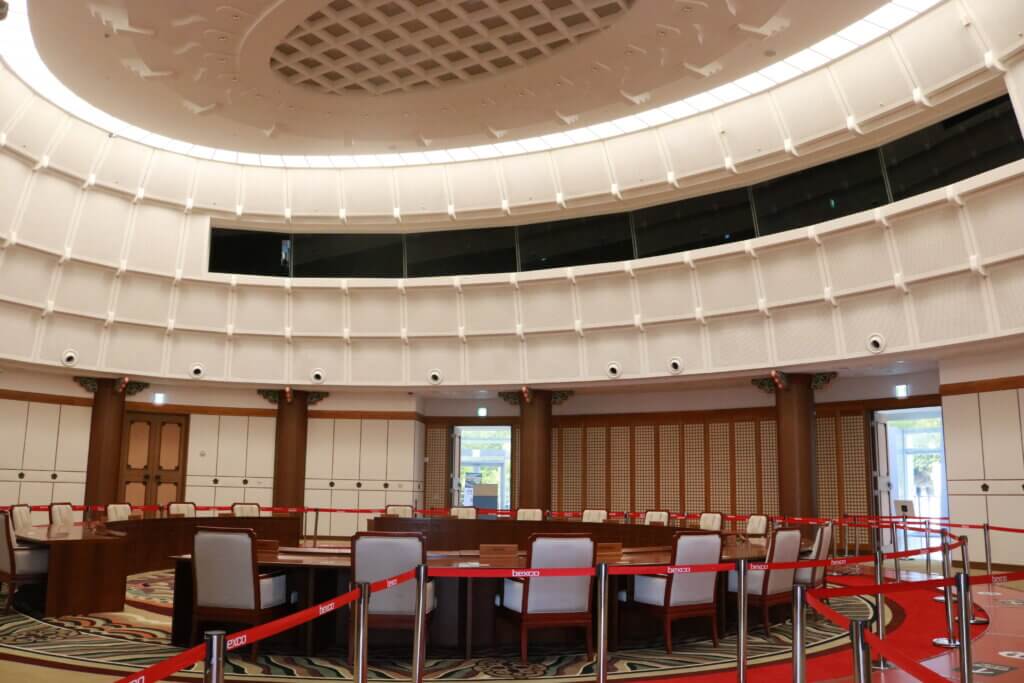
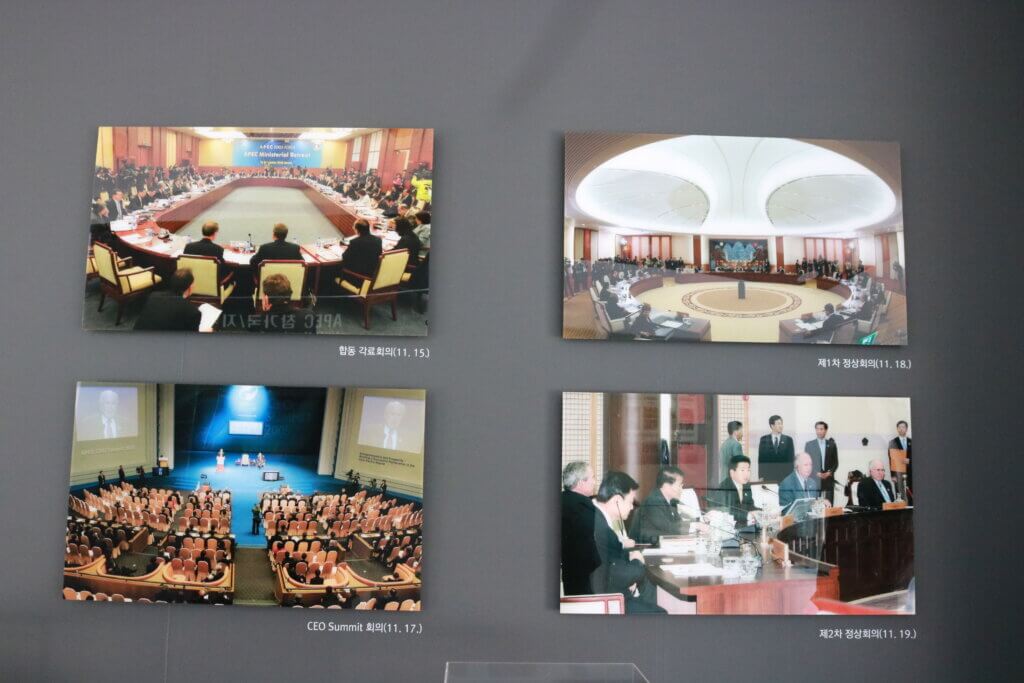
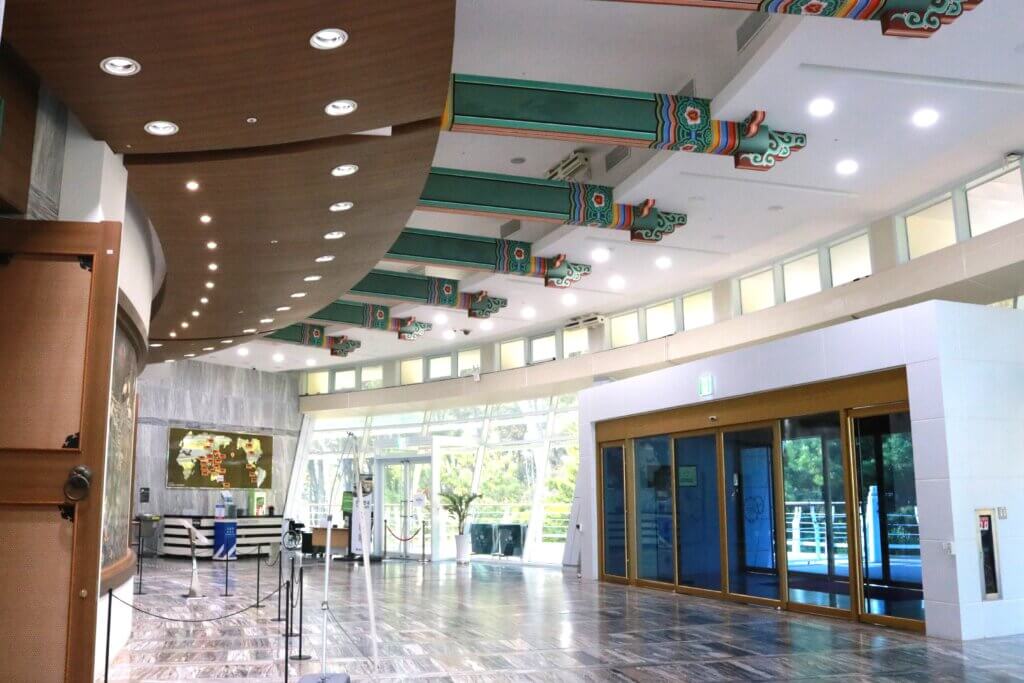
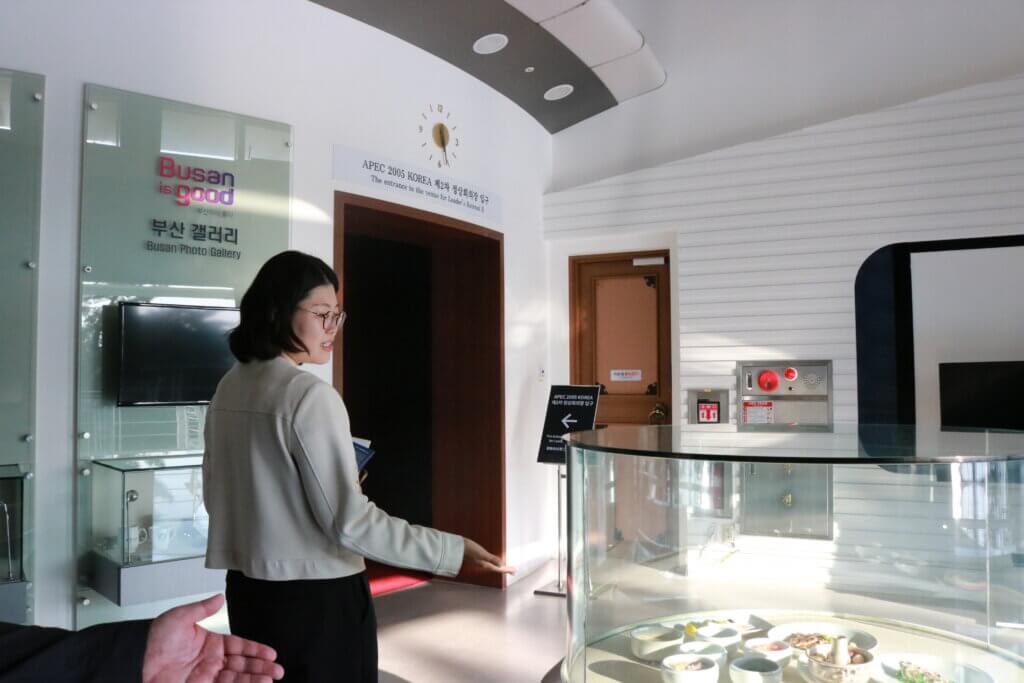
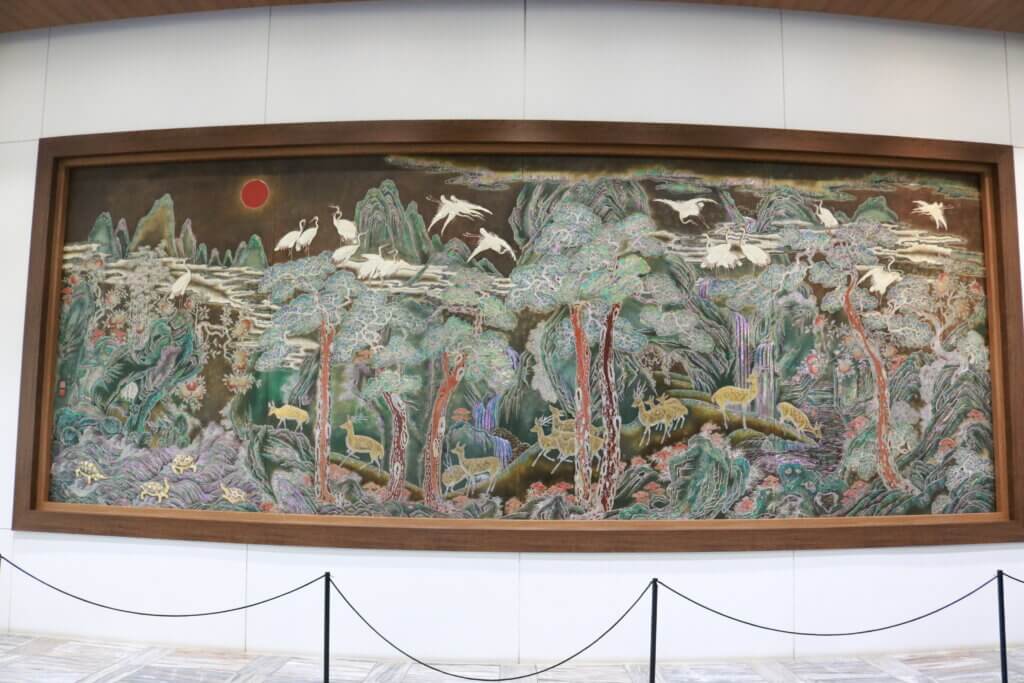
The space is adorned with a Sipjangsaengdo (Painting of the Ten Symbols of Longevity). Based on the traditional concept of the ten elements believed to grant long life and immortality, the artwork is decorated using mother-of-pearl inlay lacquerware. The piece measures 2.2 meters in height and 6 meters in width.
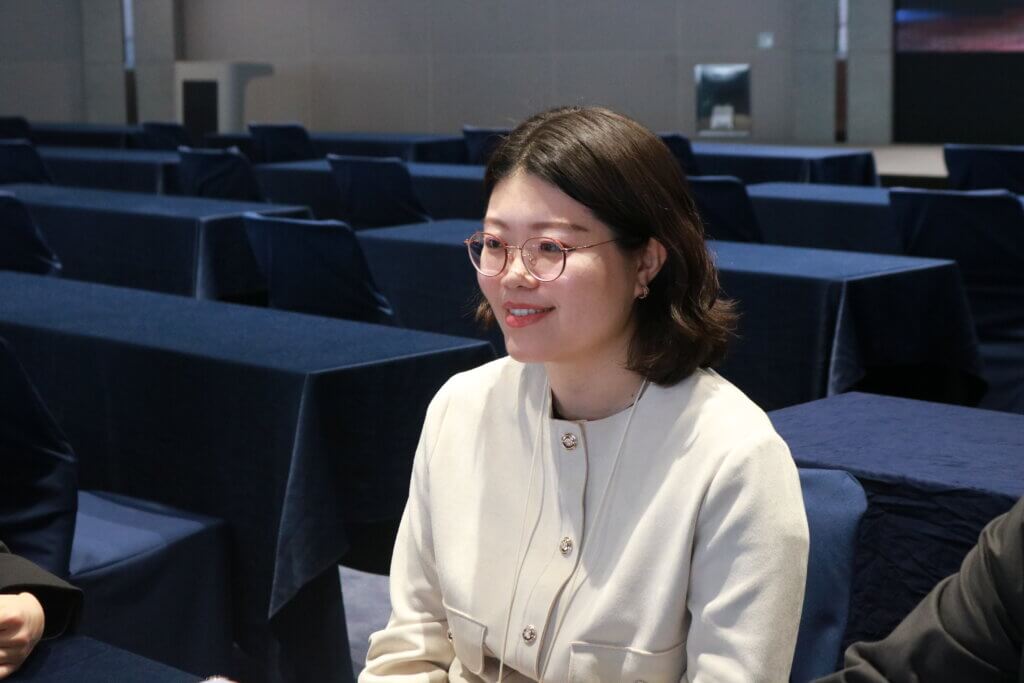
Interview: Insights from Manager Gayeong Cho
Q1. What types of events are most commonly held at the venue?
The venue is frequently used for government-related events such as summit meetings and gala dinners, as well as VIP receptions for corporate clients and small-scale executive sessions. One of its key strengths is the ability to host events that go beyond conventional business meetings. It is also often selected as a satellite venue for large-scale events held at BEXCO.
Q2. What does Nurimaru APEC House represent for the people of Busan?
Since the APEC Summit was held in 2005, Nurimaru APEC House has become a landmark that attracts approximately 670,000 visitors annually. For local residents, it is a source of pride for Busan, and it is widely recognized as an internationally known tourist attraction.
Q3. A message for readers in Japan
Busan is located just one to two hours away from Japan by air. I personally like Japan as well and am planning to visit Osaka this autumn. Busan is a beautiful city, offering a history, culture, and diverse content that are distinct from Seoul, shaped by its identity as a port city. By attending meetings and conventions here, visitors can enjoy a truly special experience in Busan. With well-developed MICE facilities and infrastructure, including BEXCO, as well as rich tourism resources, we sincerely look forward to welcoming you to Busan.
Nurimaru APEC House
Access:
Get off at Dongbaekseom Entrance (bus)
Approximately 13 minutes on foot from Dongbaek Station (subway)

Address:
116 Dongbaek-ro (Dongbaekseom), Haeundae-gu, Busan Metropolitan City

Official Website:https://www.busan.go.kr/nurimaru/japanese.jsp
DOMOHEON (Complex Cultural Space)
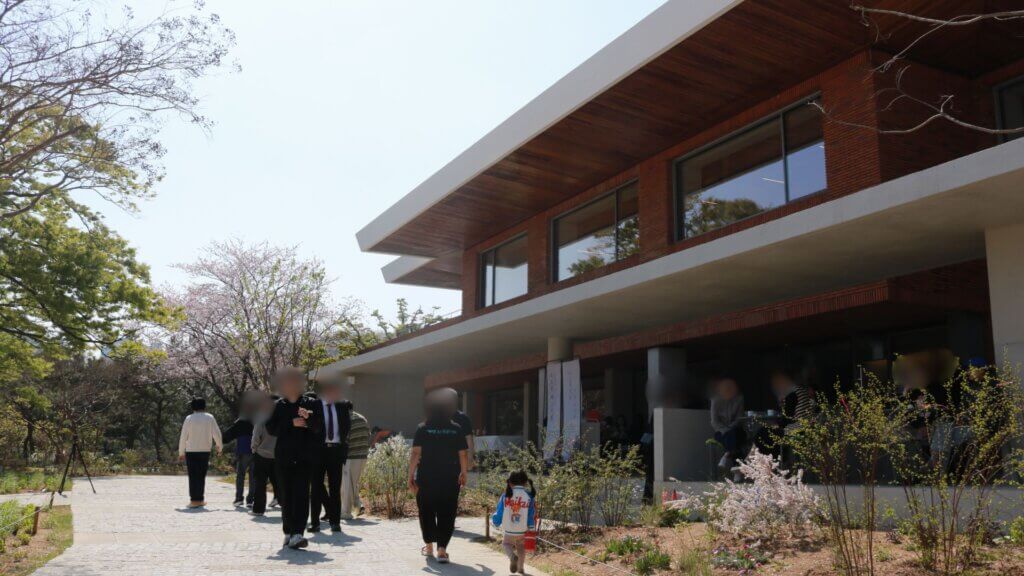
Key Highlights
- A popular gathering place for local residents, consistently active and well attended
- A stately residence formerly used as a presidential retreat outside Seoul
- A well-maintained garden where open lawns and dappled sunlight create a calm, welcoming atmosphere
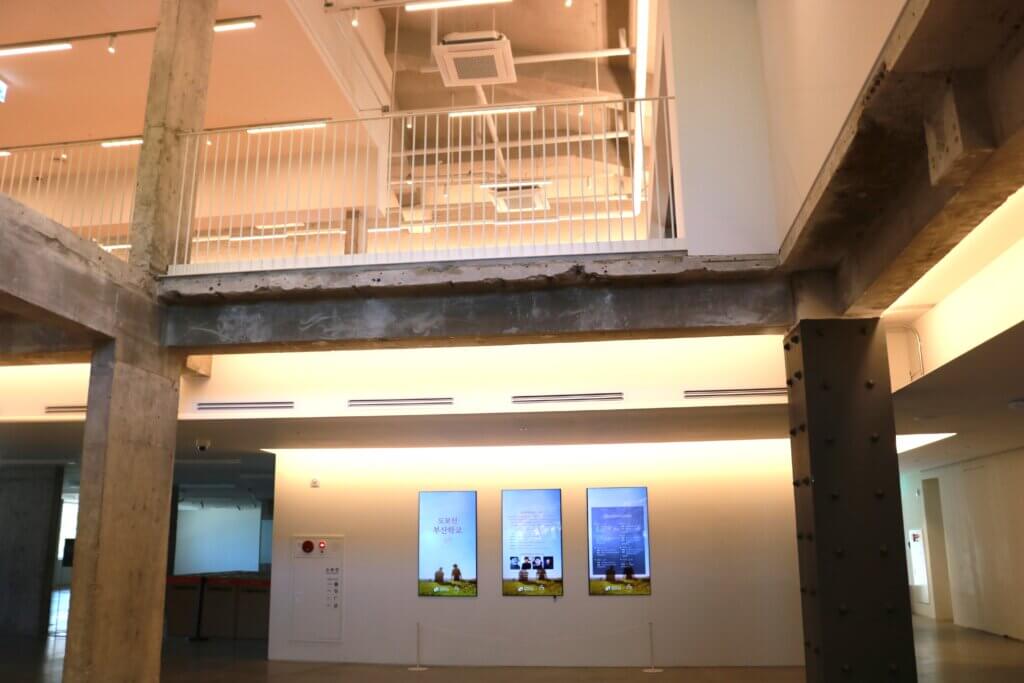
Passing through a gate in a quiet residential neighborhood and walking up a gentle slope, visitors arrive at a stately mansion known as DOMOHEON (Complex Cultural Space). Originally built in 1984, the property served for many years as an official provincial residence for successive presidents of the Republic of Korea, as well as a mayoral residence. In September 2024, it was reborn as DOMOHEON, a cultural complex open to the public.
The site is also known as a filming location for the Korean drama Reborn Rich, where it was used as the residence of Chairman Jin Yang-cheol, “Jeongsimjae.”
Today, DOMOHEON functions as a multi-purpose cultural hub, equipped with flexible cultural spaces, a shared office, lecture halls, and meeting rooms. Its setting and facilities make it well suited for gatherings of various kinds, and it regularly hosts cultural programs such as art exhibitions and small-scale gallery talks.
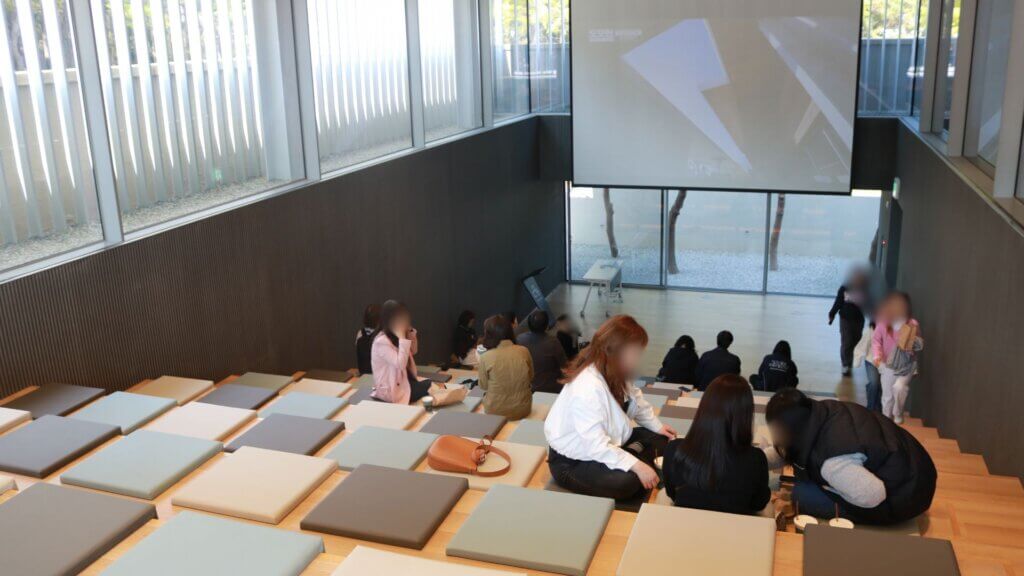
From the first to the second floor, a grand staircase doubles as tiered seating, creating a distinctive lecture space. The high ceilings and large openings give the area a strong sense of openness. It can accommodate a standard classroom-style setup, while also lending itself well to more casual talks where light refreshments are brought in.
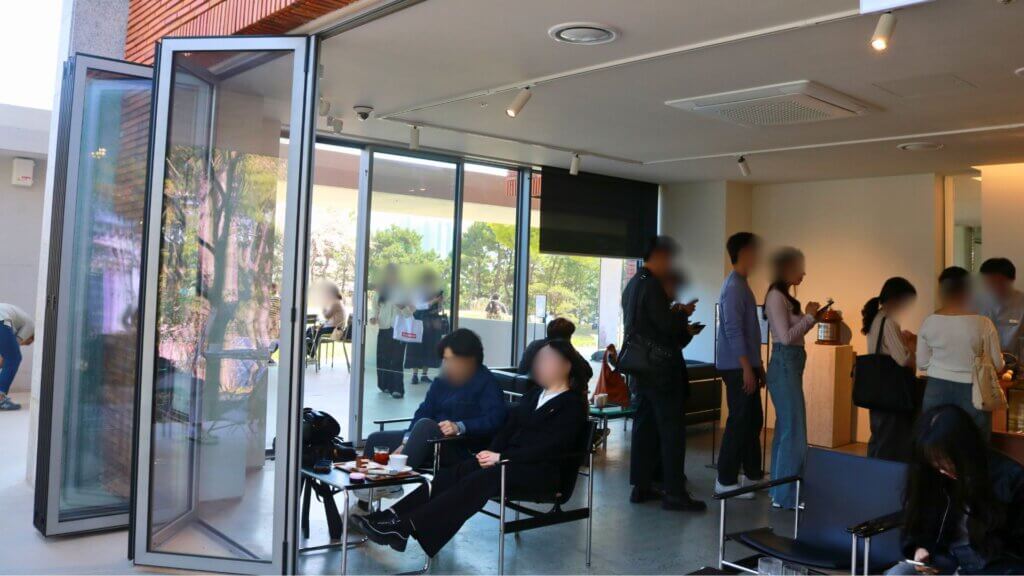
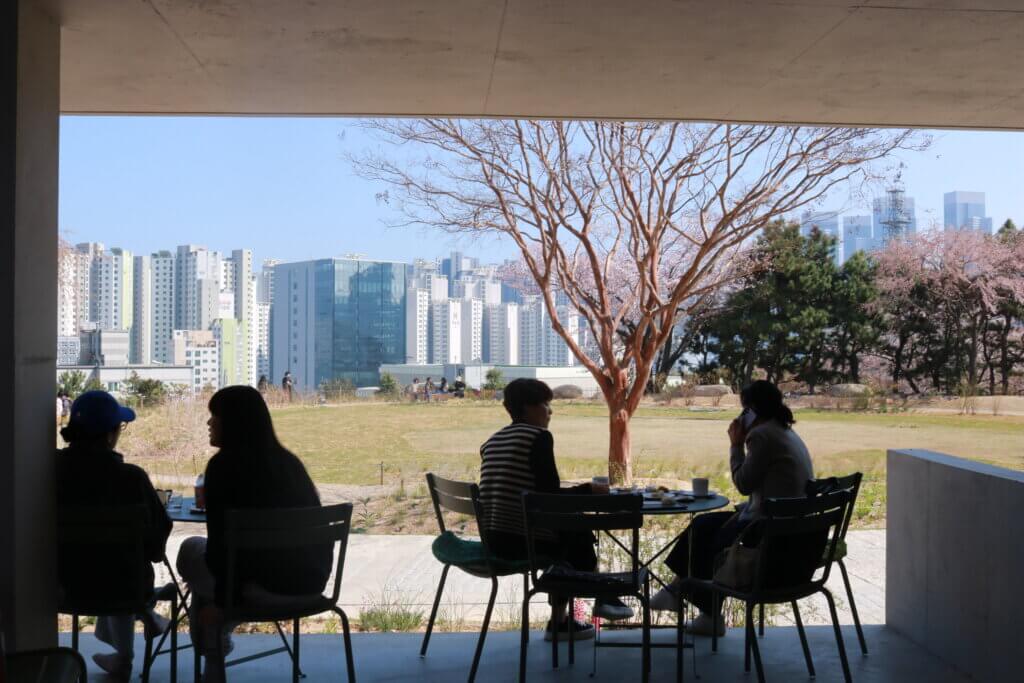
One of the most lively spots within the facility is momos coffee. The specialty coffee served here is brewed by a barista who became the first Korean to win the World Barista Championship in 2019, and is known for its rich aroma and depth of flavor. As a place to experience Busan’s coffee culture, it has become popular with both local residents and visitors. The café is closed on Mondays.
Particular attention should also be paid to the outdoor space. Designated as Busan’s first “life garden,” the grounds feature well-maintained lawns and gentle sunlight filtering through the trees, creating a notably comfortable atmosphere. The garden can be used as a backdrop for parties or receptions, adding an open-air element to events. The site has also hosted conferences such as “Gastro Domo: FUTURE OF BUSAN 2025,” which brought together influential chefs from the culinary world.
The facility is open from 10:00 to 18:00 on weekdays, and from 10:00 to 21:00 on weekends. For details regarding use and availability, inquiries should be made directly to the venue.
DOMOHEON
Access:
Namcheon Station (railway): approximately 10 minutes on foot
Domoheon shuttle bus: approximately 7 minutes (boarding in front of Exit 1 at Namcheon Station)

Address:
60 Arangsan 7beon-gil, Suyeong-gu, Busan, Republic of Korea

Official Website:https://www.busan.go.kr/domoheon
Busan Cinema Center
Key Highlights
- Widely known as the venue for the opening and closing ceremonies of the Busan International Film Festival
- Features one of the world’s largest cantilevered roofs, creating a dramatic and atmospheric scene after dark
- Equipped with a standing space accommodating up to 6,000 people and a large-scale outdoor screen, enabling a wide range of event formats
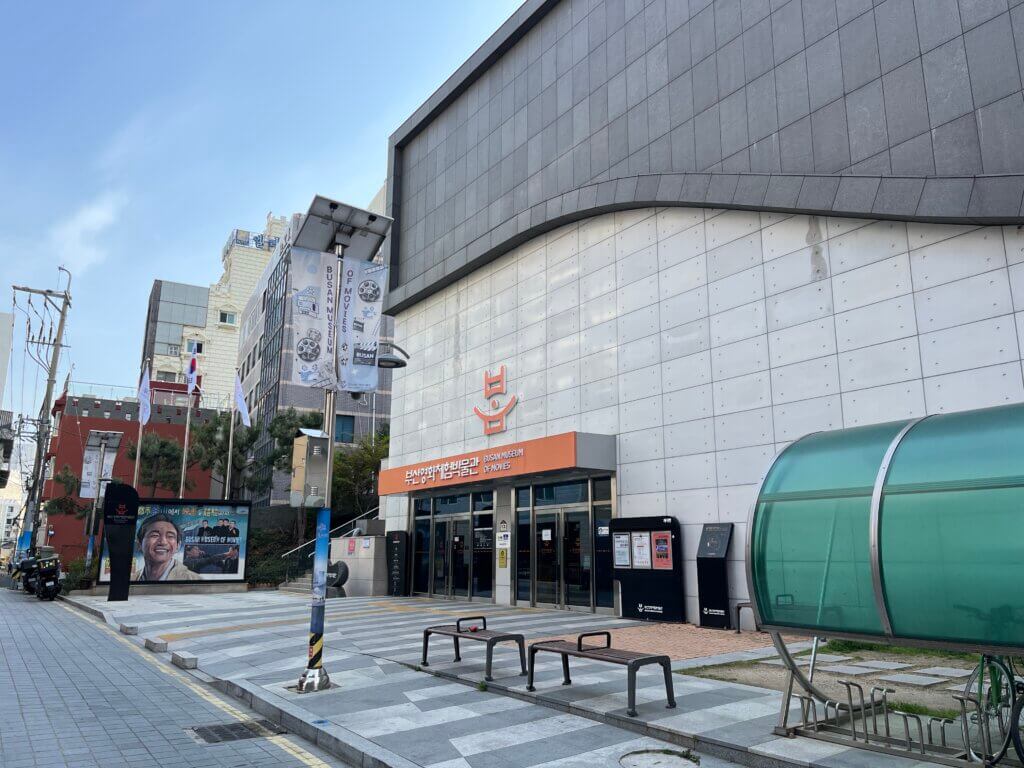
Widely recognized as the main venue of the Busan International Film Festival, the Busan Cinema Center is a large-scale cultural complex comprising nine floors above ground and one basement level, with a total floor area of 54,335㎡. Its iconic white “Big Roof” is illuminated at night with projection mapping, creating a striking visual presence. Since opening in 2011, the facility has received numerous accolades, including designation as part of UNESCO’s Creative Cities Network (Film) and selection as a “Korea Unique Venue,” establishing it as one of South Korea’s leading cultural and arts institutions.
The complex includes convention halls, office spaces, outdoor screening areas, and related facilities. In addition to hosting the opening and closing ceremonies of the Busan International Film Festival, it is also well suited for incentive travel programs and a wide range of MICE events. Outside festival periods, the venue regularly offers film screenings and performances, while also displaying various film-related archives, allowing visitors to enjoy high-quality visuals and sound at accessible prices.
The City of Busan has articulated a clear strategy for the development of its film and visual content industry, which is outlined below.
Building on the Busan International Film Festival, which has grown into one of Asia’s leading film festivals, the city positions the film and content industry as a key future growth sector. Through this strategy, Busan aims not only to strengthen its regional economic base but also to establish itself as an international hub for film and visual culture.
In addition to the Busan International Film Festival, the city hosts a wide range of content-related events, including the Busan International Advertising Festival, Busan International Short Film Festival, Busan International Kids & Youth Film Festival, and the G-STAR International Game Exhibition. These events are complemented by professional markets such as the Busan Contents Market and the Asian Film Market, contributing to the expansion of the professional talent base in the audiovisual field. Looking ahead, Busan plans to further develop a comprehensive, one-stop ecosystem covering investment, planning, production, and distribution, positioning the city as a central hub for the production and circulation of film and visual content.
Busan Cinema Center
Access:
Centum City Station (Subway) – 9-minute walk
Busan Cinema Center / KNN Broadcasting Station (Bus stop) – 8-minute walk

Address:
120 Suyeonggangbyeon-daero, Haeundae-gu, Busan, Republic of Korea

Official Website:http://www.dureraum.org/bccen/main/main.do?rbsIdx=1
Major Hotels
Lotte Hotel Busan
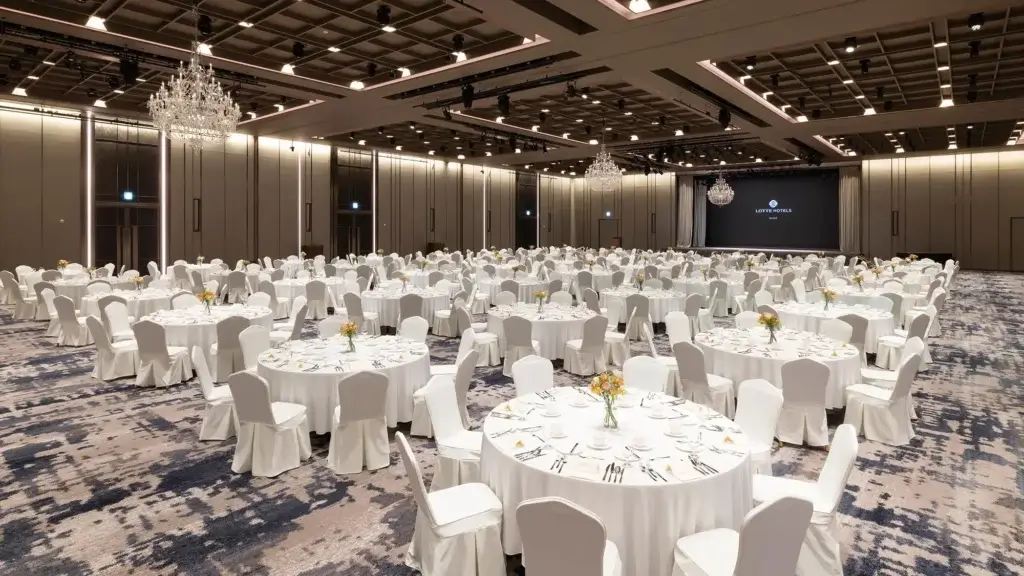
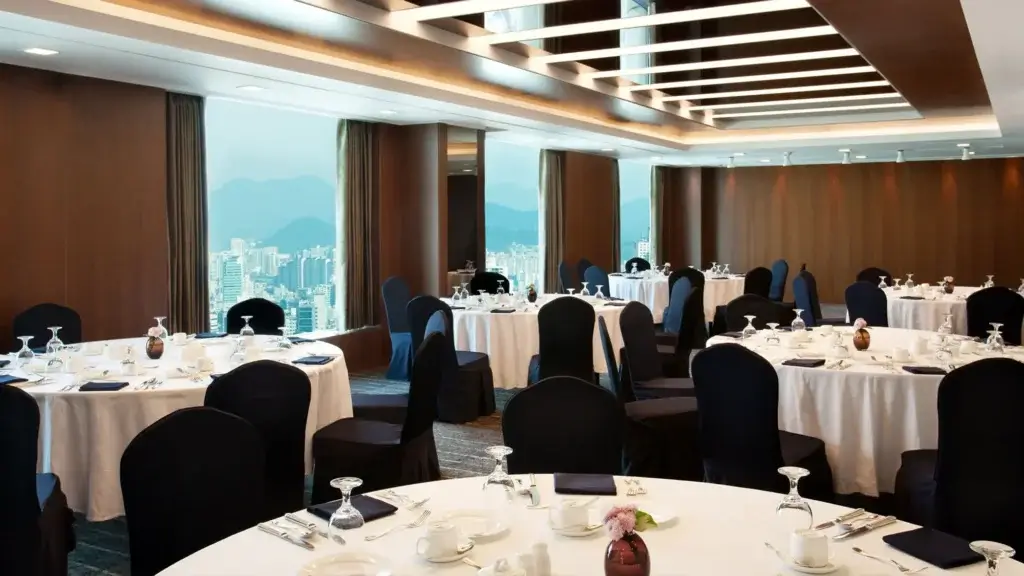
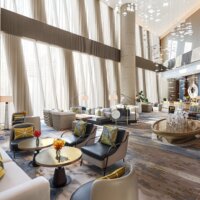
As one of Busan’s most prestigious luxury hotels, Lotte Hotel Busan is located in Seomyeon, the city’s central commercial district, approximately a 15-minute drive from Busan Station. The hotel offers 650 guestrooms and enjoys convenient access to key destinations across the city, including Busan City Hall, Busan Citizens Park, Gwangan Bridge, and Gukje Market, making it well suited for both business and leisure stays.
The guestrooms have been renovated to reflect a refined, contemporary lifestyle, creating a modern and sophisticated atmosphere. The Club Lounge provides attentive, high-quality service designed to support productive business stays. Guests can also enjoy city views from the swimming pool, while the renovated year-round outdoor heated pool and the casual dining venue Blue Haven offer an urban retreat for relaxation.
In addition, the hotel’s refurbished banquet facilities are equipped to accommodate a wide range of functions, from formal family gatherings and luxury weddings to large-scale business events. A diverse selection of dining options, including Korean, Chinese, and Japanese restaurants as well as a buffet, is available on site, along with a casino exclusively for international guests. In Busan, a city defined by its sea and port heritage, Lotte Hotel Busan provides an environment that supports both successful business engagements and a fulfilling travel experience.
Lotte Hotel Busan
Access:
Approximately a 3-minute walk from Seomyeon Station (subway)

Address:
772 Gaya-daero, Busanjin-gu, Busan, South Korea

Official Website:https://www.lottehotel.com/busan-hotel/ja
Busan Tourism Organization: Supporting Tourism and MICE in Busan
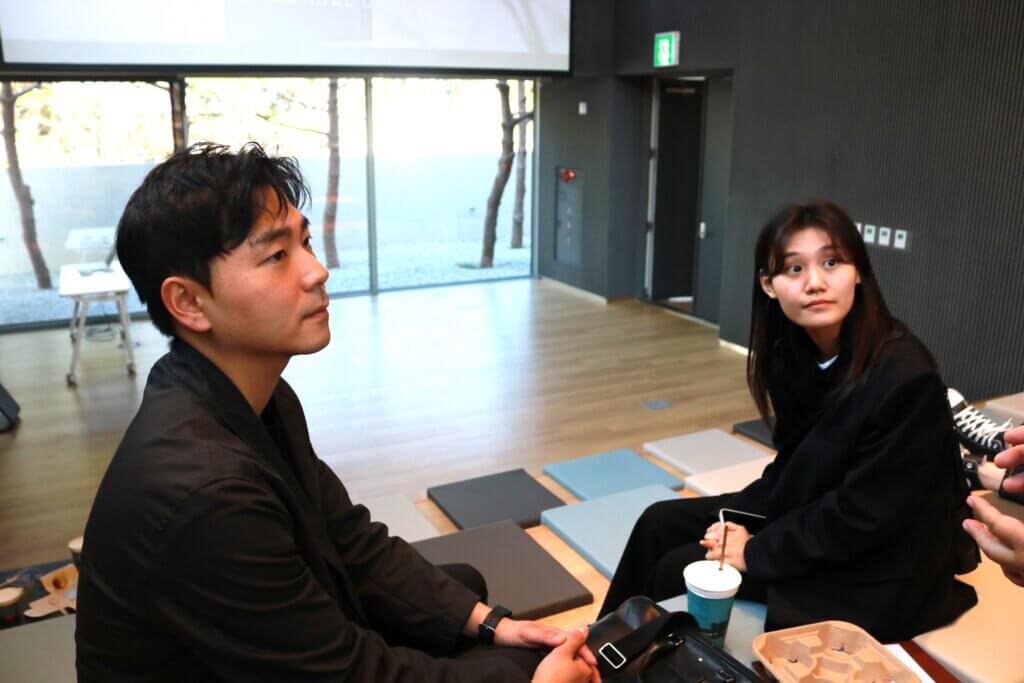
When looking for information on tourism in Busan, many people rely first on “Visit Busan.” Through its website and social media channels, it provides concise and accessible information on attractions, local cuisine, and seasonal events, making it a go-to reference before visiting the city. Visit Busan is operated by the Busan Tourism Organization, which plays a central role not only in promoting Busan as a tourist destination but also in supporting MICE activities.
During this coverage, despite the short notice, the Busan Tourism Organization provided extensive support, coordinating between Osaka and Busan, arranging appointments with MICE facilities, guiding us on site, and assisting with interpretation. Their responsiveness and coordination highlighted the organization’s strong commitment to international collaboration.
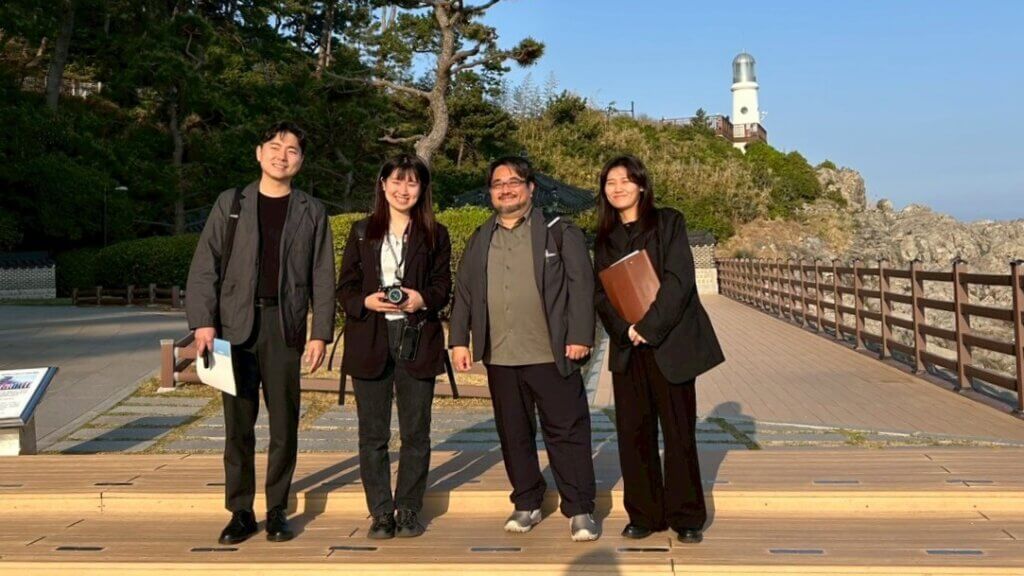
Many of the staff members are fluent in Japanese, English, and Chinese, and share a clear enthusiasm for promoting Busan globally by leveraging their language skills. One staff member, Miri Choi, shared that her dedication to Busan runs so deep that she could not imagine working in any other city.
Currently, the organization is actively engaged in campaigns to attract international visitors in conjunction with Expo 2025 Osaka, Kansai. For anyone seeking advice on tourism or MICE opportunities in Busan, the Busan Tourism Organization serves as a reliable and knowledgeable point of contact.
Editor’s Note: Korea’s MICE Industry as a Global Stage for Women Leaders
All of the professionals we met during this reporting trip were women leaders, each playing an active role in PR, operations, and strategic development at MICE facilities. Their confidence and professionalism left a strong impression, reaffirming that the MICE industry offers women a field in which to build international careers and take on leadership roles on a global stage.
Busan’s appeal as a MICE destination lies above all in its excellent accessibility, the overall attractiveness of the city, and the depth of its venue infrastructure. With multiple transportation options—including air routes, international ferries, and the KTX high-speed rail—travel from Japan is straightforward and stress-free. Combined with a compact urban layout and a rich mix of business, culture, and leisure, Busan presents a compelling environment for meetings, conventions, and incentive travel alike.
For those considering international events in Asia, Busan stands out not only for its facilities, but also for the people driving its MICE ecosystem forward.

-
Hoshino Resorts’ Series of New Openings Toward 2026:Adaptive Reuse of Historic Buildings and New Travel Bases Rooted in Local Culture, with Potential for MICE Use
-
【February 2026】Notable Trade Shows and Events in Japan