Hoshino Resorts’ Series of New Openings Toward 2026:Adaptive Reuse of Historic Buildings and New Travel Bases Rooted in Local Culture, with Potential for MICE Use
Hoshino Resorts is planning the phased opening of eight new properties nationwide by 2026. These developments include consecutive openings in the Yokohama area and Japan’s first luxury hotel created through the adaptive reuse of a former prison designated as an Important Cultural Property. Each facility reflects the unique history and culture of its location and is expected to attract considerable attention.
This article introduces each of the upcoming properties in turn, while also examining their potential applications within the MICE sector.
※Information on HOSHINOYA Nara Prison was updated on January 20, 2026.
OMO5 Yokohama Bashamichi: A “360-Degree Sky Voyage” Overlooking the City of Yokohama
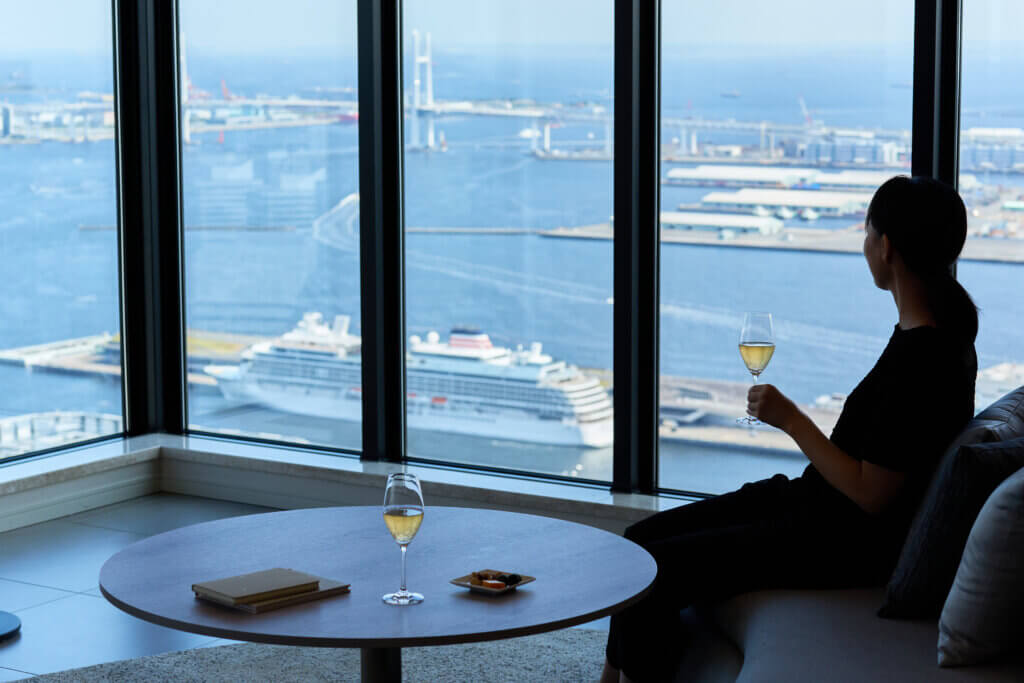
OMO5 Yokohama Bashamichi by Hoshino Resorts is scheduled to open on January 15, 2026, in Yokohama City. The hotel will occupy floors 46 to 51 of a super high-rise mixed-use building directly connected to Bashamichi Station. Its defining feature is the expansive view from a height of 154 meters, offering a 360-degree panorama of the port city of Yokohama.
The concept, described as a “360-degree Sky Voyage,” is reflected throughout the guestrooms and public spaces. From these areas, guests can experience panoramic views designed to evoke the sensation of traveling through the sky above the city.
Guestrooms Inspired by Ocean Voyages and Facilities for Extended Stays
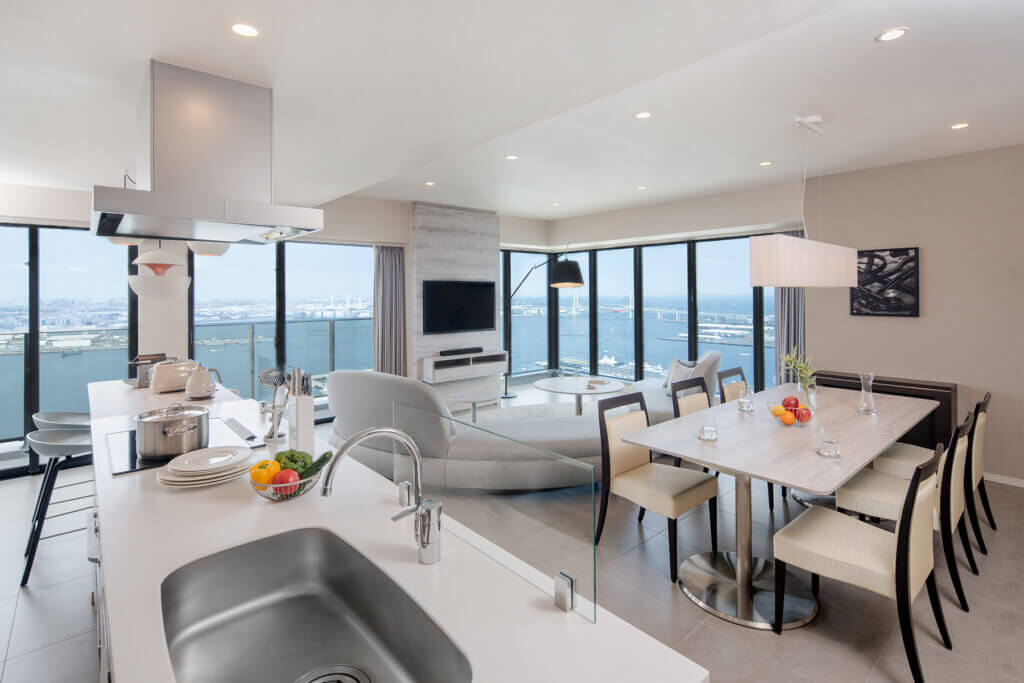
The guestrooms feature a warm design inspired by ship cabins, with details such as headboards supported by leather straps and brass-toned rails incorporated around the beds. All 175 rooms are equipped with kitchens and washer-dryer units, allowing the property to accommodate longer stays in a residential style.
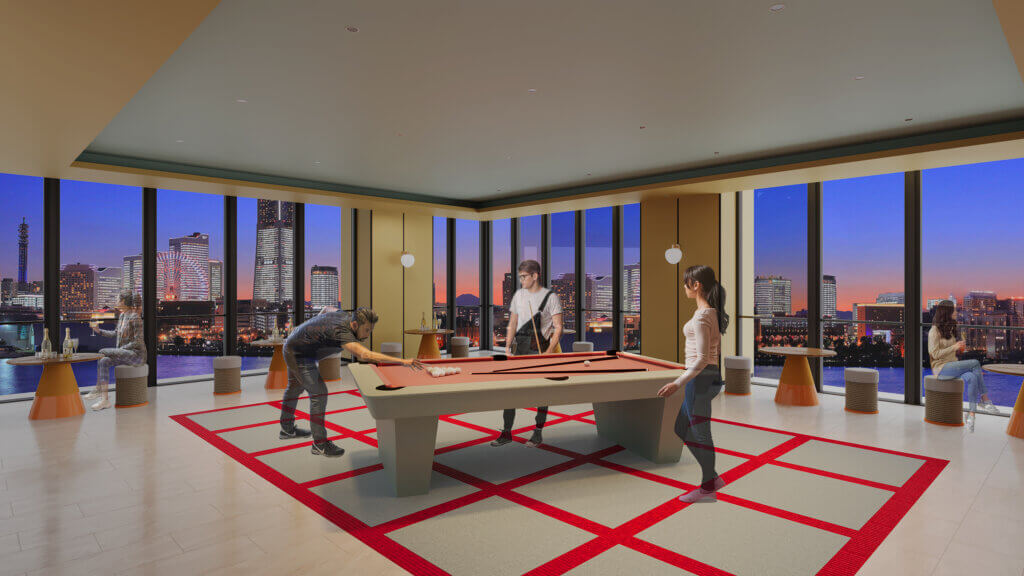
A variety of room types suitable for group travel are also available, including the OMO House Corner Suite, which offers a floor area of 136 square meters. The public space known as OMO Base is arranged in a gallery-style layout. Facilities include a reception area modeled after a ship’s bridge, a play zone where guests can enjoy billiards, and a night view deck with interior design that highlights the city skyline, presenting an experience reminiscent of time spent aboard a cruise ship.
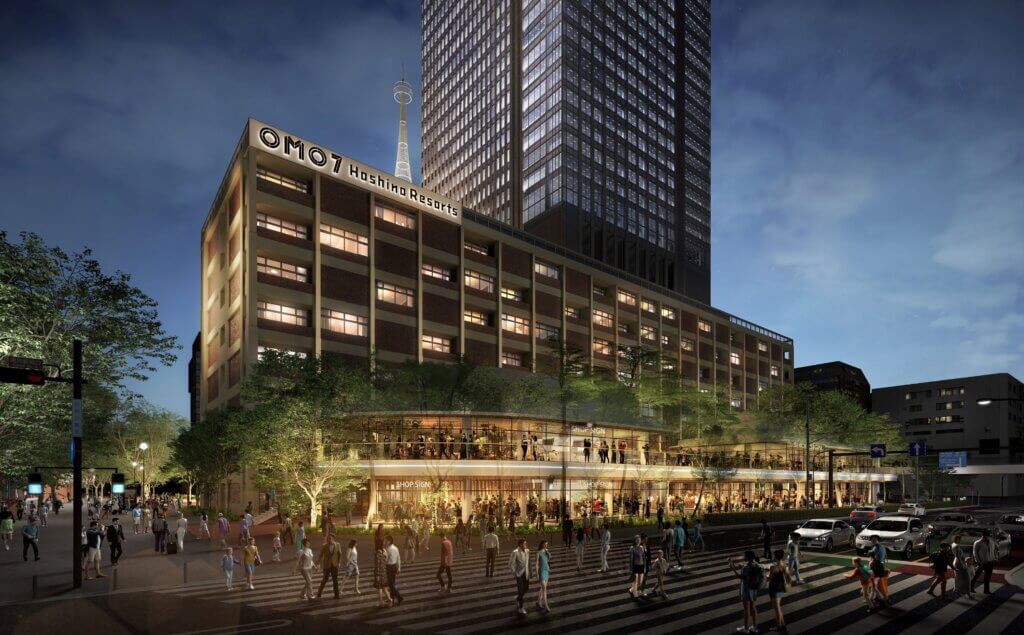
OMO7 Yokohama: A Legacy Hotel Created Through the Adaptive Reuse of the Former Yokohama City Hall
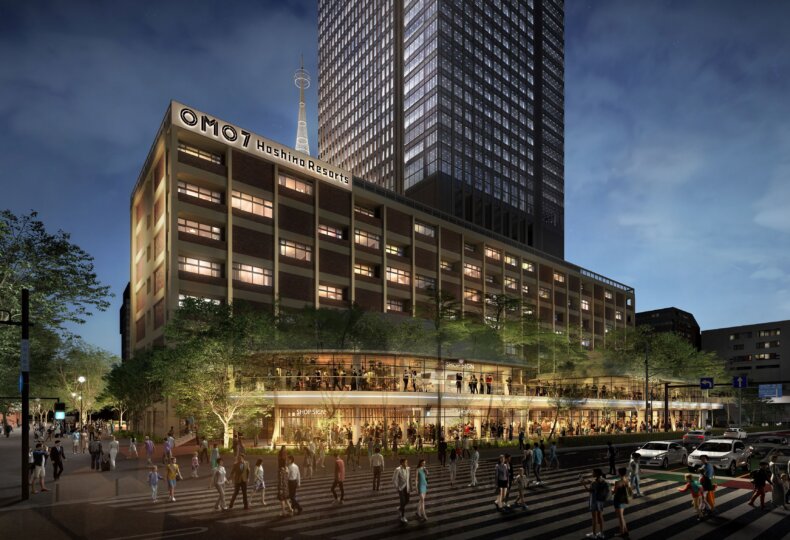
OMO7 Yokohama by Hoshino Resorts is scheduled to open on April 21, 2026, utilizing the former administrative building of Yokohama City Hall located in front of JR Kannai Station. The building was designed by Tōgo Murano, a leading architect of the Shōwa era, and served as a symbol of Yokohama’s municipal administration for more than 60 years.
As the first postwar building to be designated as a Yokohama City Certified Historic Building, the structure holds significant architectural and historical value. Hoshino Resorts is redeveloping the site as its first “legacy hotel,” positioning the project as an example of adaptive reuse that preserves and reinterprets an important civic landmark.
The concept, described as “Kibun Jōjō, Hama-ism,” combines Yokohama’s distinctive culture and energy—cultivated since the opening of the port—with a contemporary sensibility. The hotel aims to serve as a new base for urban tourism while carrying forward the city’s historical legacy.
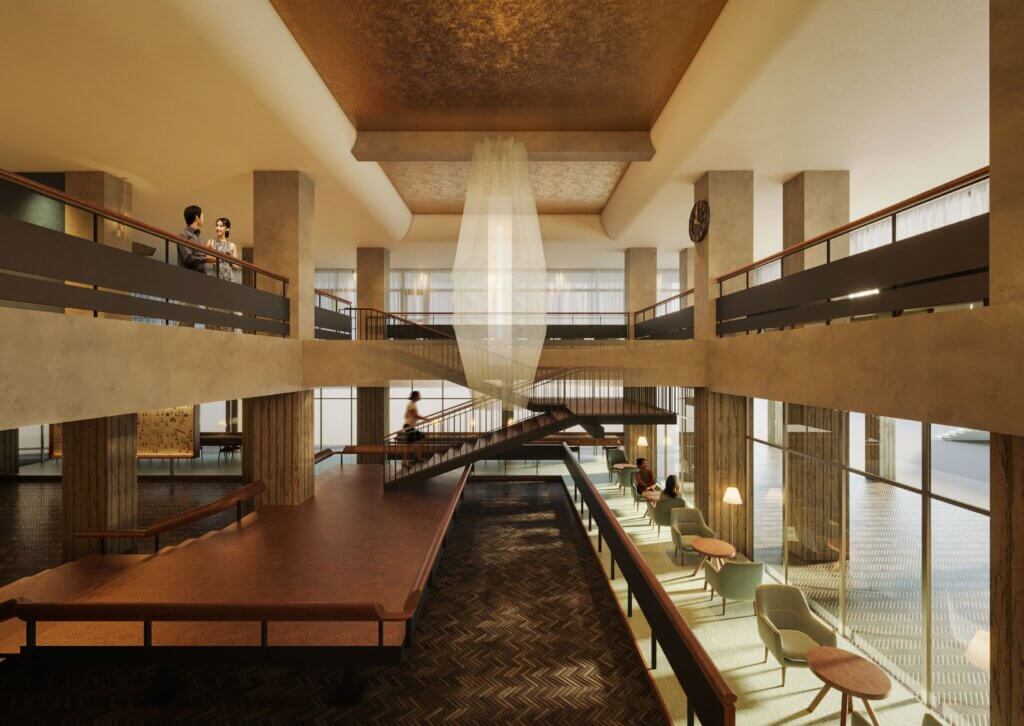
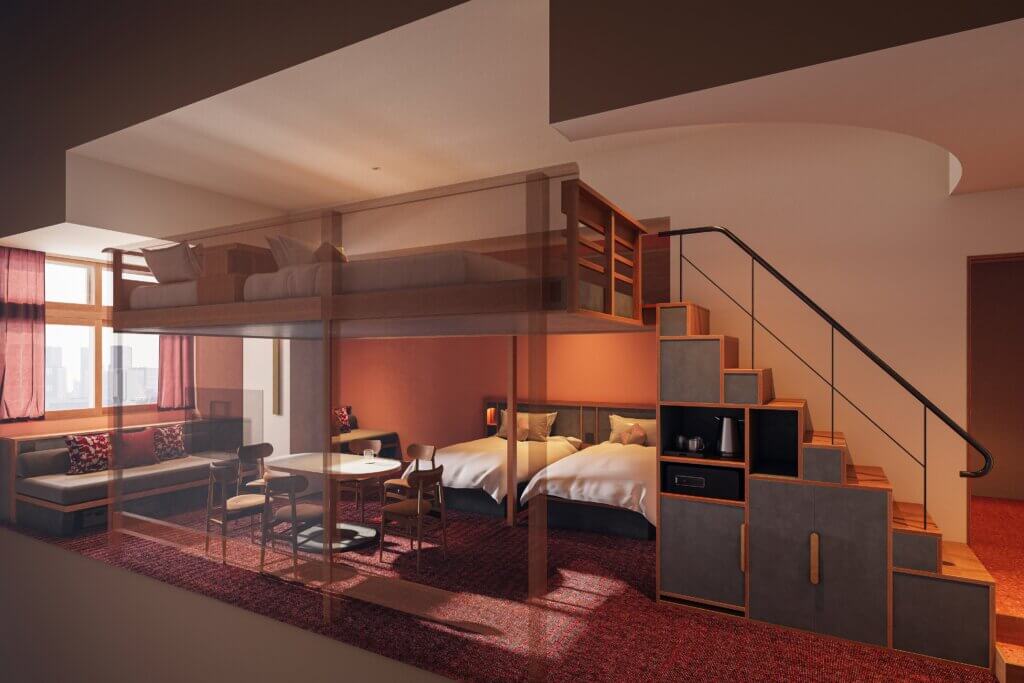
Spaces Inheriting Tōgo Murano’s Design and a Distinctive Culinary Offering
Within the hotel, design elements that inherit the architectural language of the former city hall are incorporated throughout the interior. On the first floor, the OMO Base features custom lighting inspired by the circular fixtures that once illuminated the former City Council main chamber. The grand staircase connecting the first and second floors is also being reconstructed to reflect the characteristic curves associated with the work of Tōgo Murano.
A guest-exclusive event titled “Kibun Jōjō, Hama Night” is scheduled to be held on the former city hall’s rooftop terrace, known as HAMAKAZE Terrace, where music and food will be offered as part of an evening program.
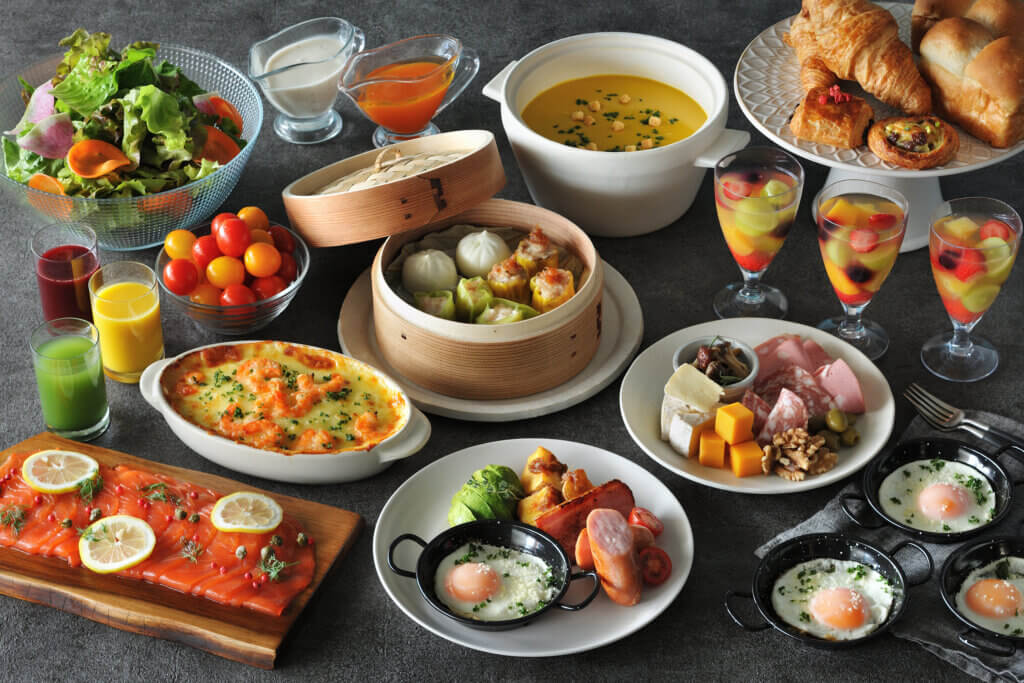
In terms of dining, an OMO Bakery will open as the first of its kind within the OMO brand. The bakery is set to feature items such as Yokohama-style curry bread, as well as a concept known as “bread and drinks,” which encourages pairing bread with alcoholic beverages. The hotel’s 276 guestrooms incorporate red, blue, and green color tones that were used in the former city hall, carrying elements of the building’s historical memory into a contemporary setting.
HOSHINOYA Nara Prison: The Former Nara Prison Reimagined as a HOSHINOYA Property—An Opportunity to Stay in an Important Cultural Property (Updated January 20)
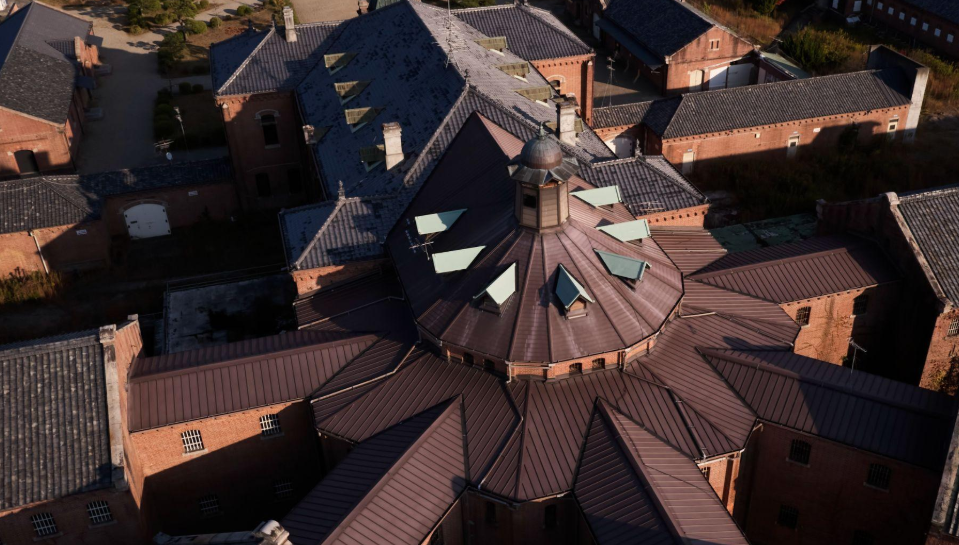
In Nara City, a preservation and adaptive reuse project is underway for the former Nara Prison, an Important Cultural Property completed in 1908. On April 27, 2026, the Nara Prison Museum is scheduled to open as the first phase of this initiative.
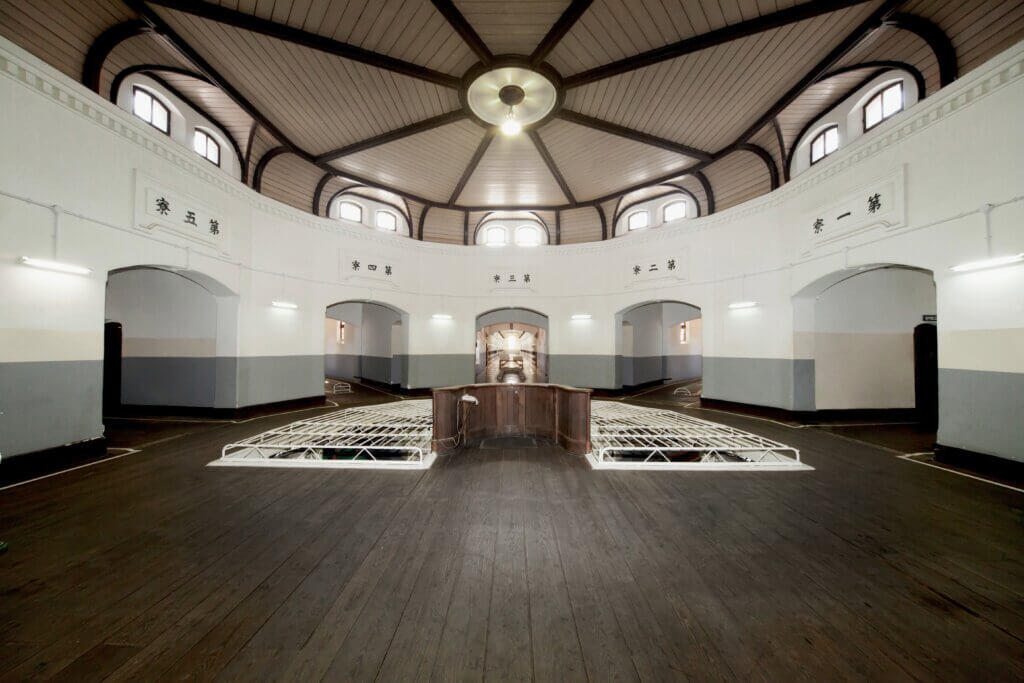
The former Nara Prison is the only remaining complex that preserves the full original form among the five major prisons planned by the Meiji government. The red-brick structure, designed by Keijiro Yamashita, is recognized for its high historical and architectural value. The museum’s concept, described as “Questions from a Beautiful Prison,” positions the site as a place where visitors are invited to reflect on freedom and their own way of life through the experience of a disciplined architectural environment.
As part of the same project, HOSHINOYA Nara Prison is also planned, further extending the reuse of the historic complex. The author previously visited the former Nara Prison, and notes that the space left a strong impression, evoking a cinematic atmosphere. How this distinctive environment will be reinterpreted through the current redevelopment has drawn attention.
From an Important Cultural Property to a Reimagined Space: Nara Prison Museum and HOSHINOYA Nara Prison
The former Nara Prison, located in Hannyaji-cho, Nara City, will be redeveloped as HOSHINOYA Nara Prison, a luxury brand operated by Hoshino Resorts. The property is scheduled to open on June 25, 2026. Constructed in 1908 (Meiji 41), the red-brick prison complex is the only surviving facility among the five major prisons planned by the Meiji government. The project’s distinctive approach lies in transforming a space long preserved as a cultural asset into a “stayable experience.”
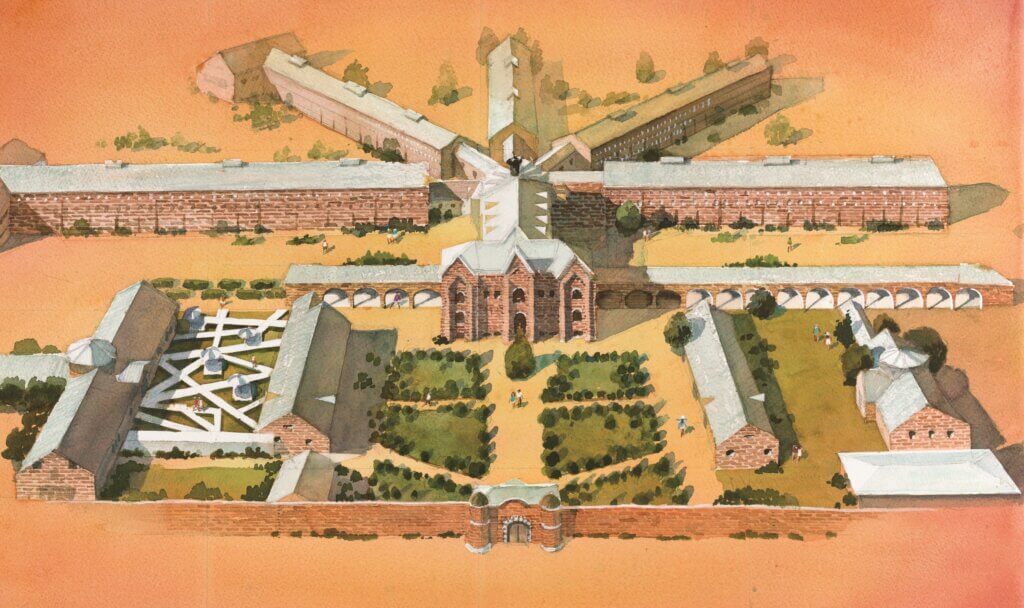
A defining feature of the building is the Haviland system, in which wings radiate outward from a central guardhouse. This layout, regarded as representative of Japan’s modern prison architecture, was designated an Important Cultural Property in 2017. Hoshino Resorts has set the concept as “Akebono no Jūyō Bunkazai” (literally, “An Important Cultural Property at Daybreak”), aiming to preserve historic architectural elements while weaving aspects of Western culture introduced to Japan during the early modernization period into the guest experience.
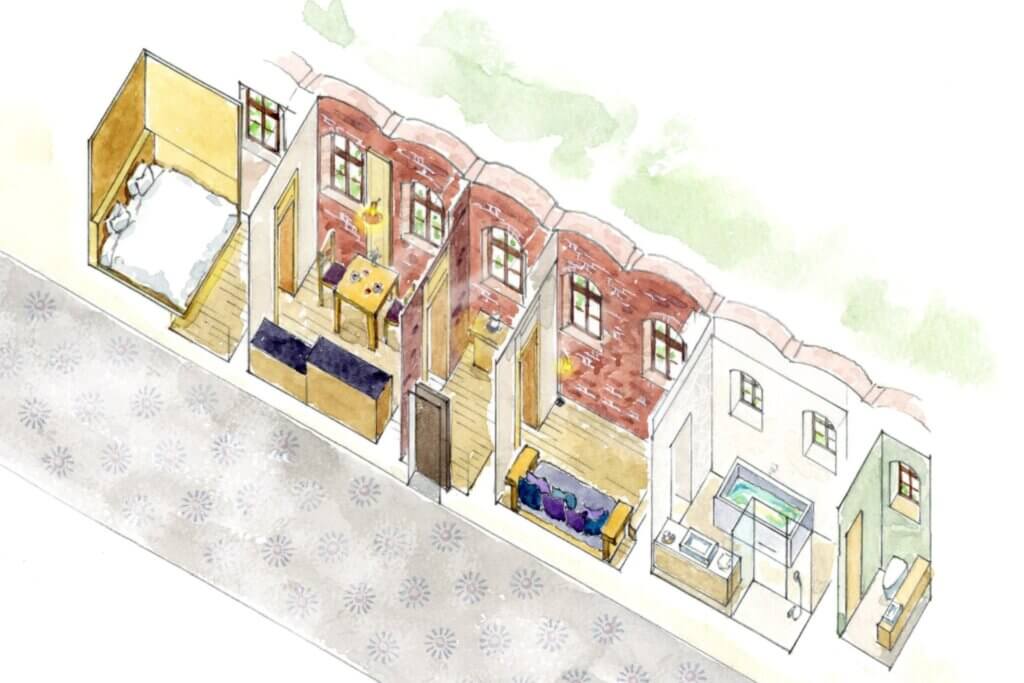
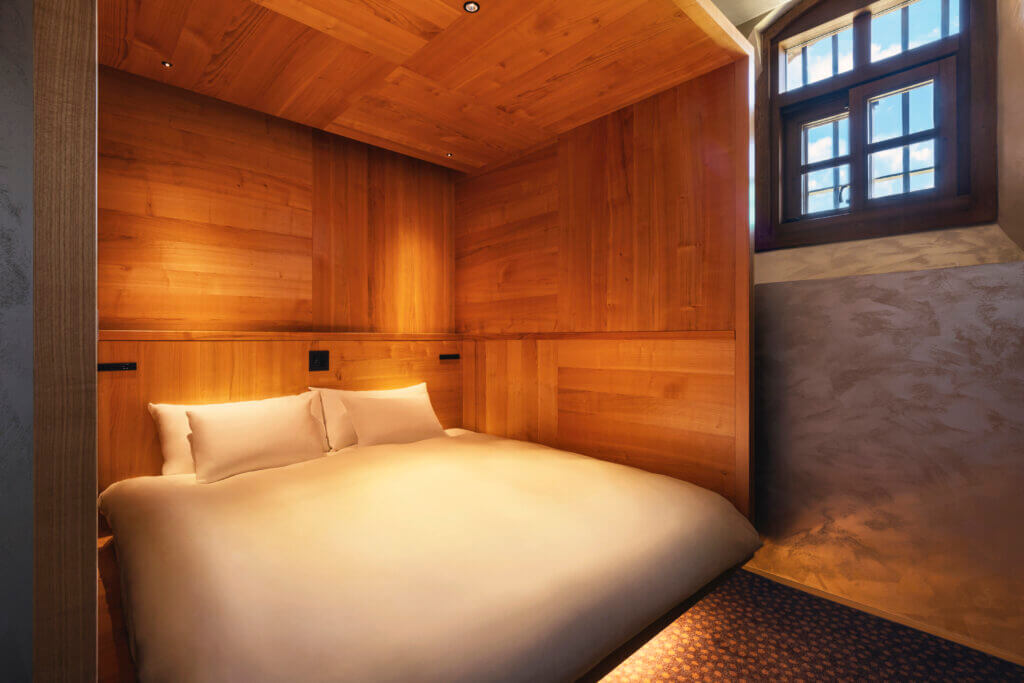
Guest accommodations will be created by connecting former prison cells, resulting in 48 all-suite guestrooms. One room category, “The 10-Cell,” combines ten former single-occupancy cells, bringing together traces of the original structure—such as hand-laid bricks and iron columns—with contemporary comfort. A separate dining building will offer Japanese French cuisine, and additional spatial design elements and activities are currently under planning.
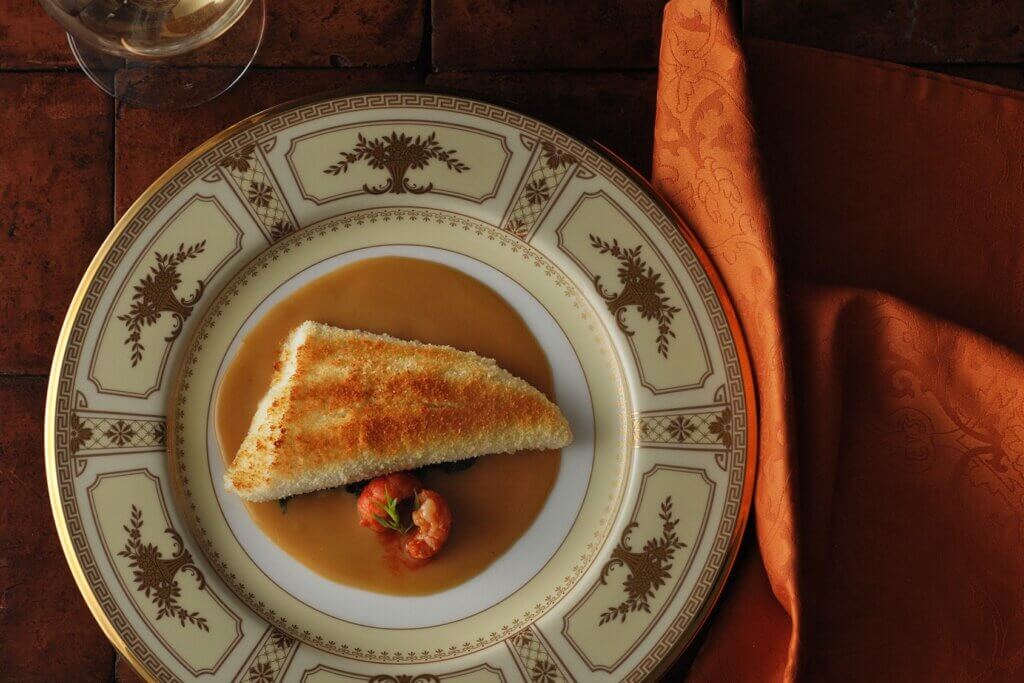
Room rates start from JPY 147,000 per night (per room, inclusive of tax and service charge; meals not included). Check-in is at 15:00 and check-out at 12:00. Reservations will open on January 20, 2026. The property is approximately 10 minutes by car from JR Nara Station and about 6 minutes by car from Kintetsu Nara Station.
KAI Kusatsu: A Private Tunnel Linking the Lively Hot Spring Town with a Tranquil Retreat
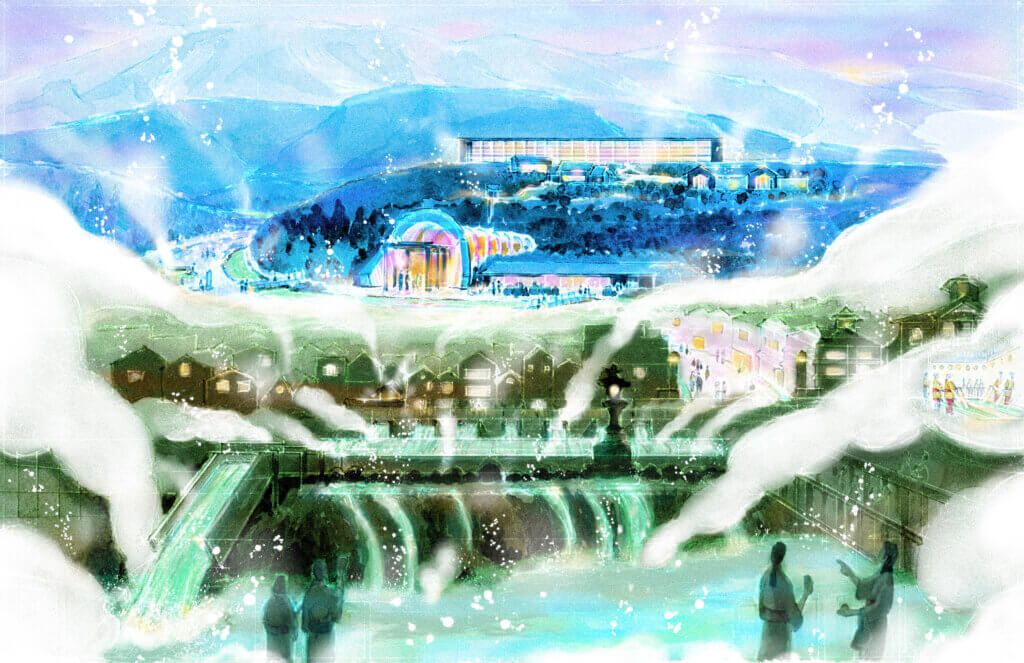
KAI Kusatsu is scheduled to open on June 7, 2026, in Kusatsu Onsen, Gunma Prefecture, one of Japan’s three most renowned hot spring destinations. Located on elevated ground at the foothills of Mount Kusatsu-Shirane, the property is developed under the concept of “a wooded hot spring inn connected to the hot spring town by a tunnel.”
The defining feature is a guest-only tunnel that directly links the hotel to the hot spring town. Passing through the tunnel leads guests to the area adjacent to Sainokawara Park, known for its large open-air baths. This layout allows guests to move freely between strolls around the lively Yubatake area and quiet time at the inn, balancing activity and calm within a single stay.
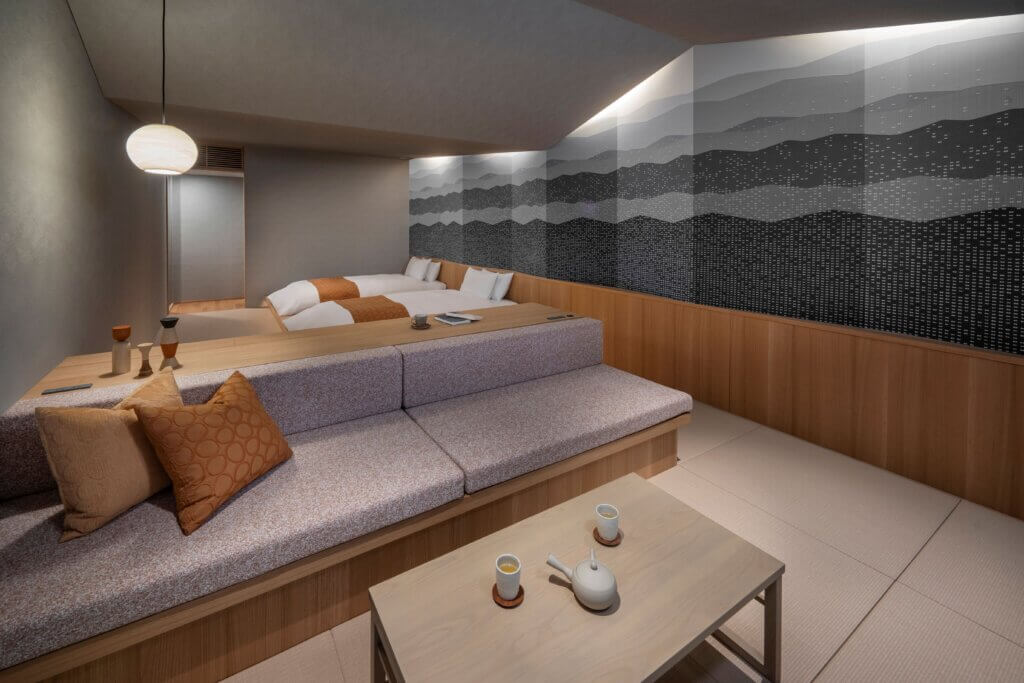
Large Communal Baths and Textile Interiors Inspired by Kusatsu’s Nature
Guestrooms are themed as “Silk Art Rooms,” referencing Gunma’s history as a center of sericulture. The interiors are designed by textile designer Reiko Sudo, featuring woven artworks that depict Kusatsu’s rising steam, as well as lampshades crafted from silk yarns to create a comfortable atmosphere.
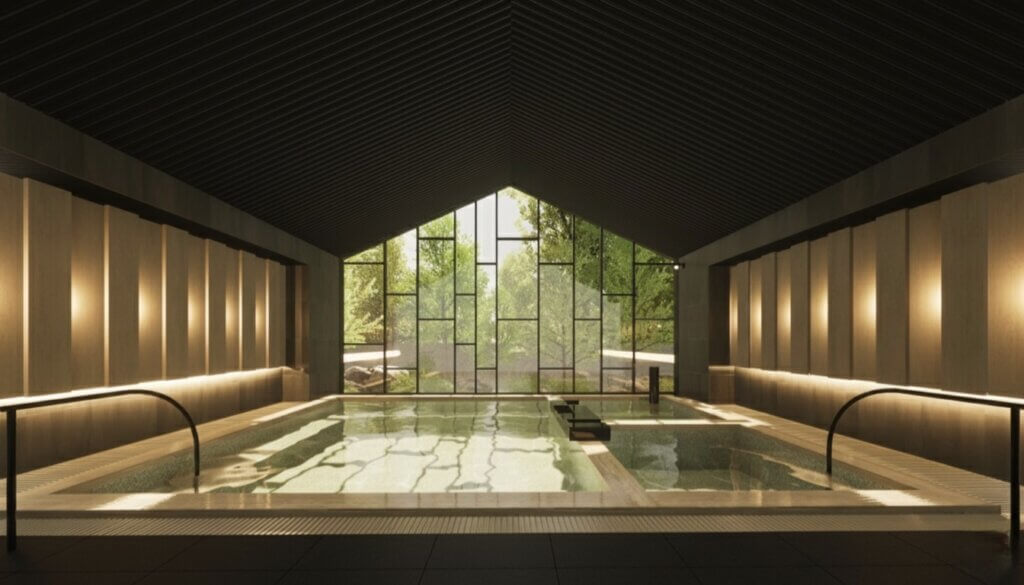
The bathing facilities offer two different acidic hot spring sources: Bandai-kō Gensen, known for its strong acidity, and the rarer Sainokawara Gensen, allowing guests to experience contrasting water qualities during their stay.
Dining options include kaiseki meals served in semi-private dining rooms, as well as Soba Kappo SAI, an on-site soba restaurant offering 100% buckwheat soba made from locally milled flour, paired with natural wines. These options broaden the range of ways guests can enjoy their stay while remaining within the property.
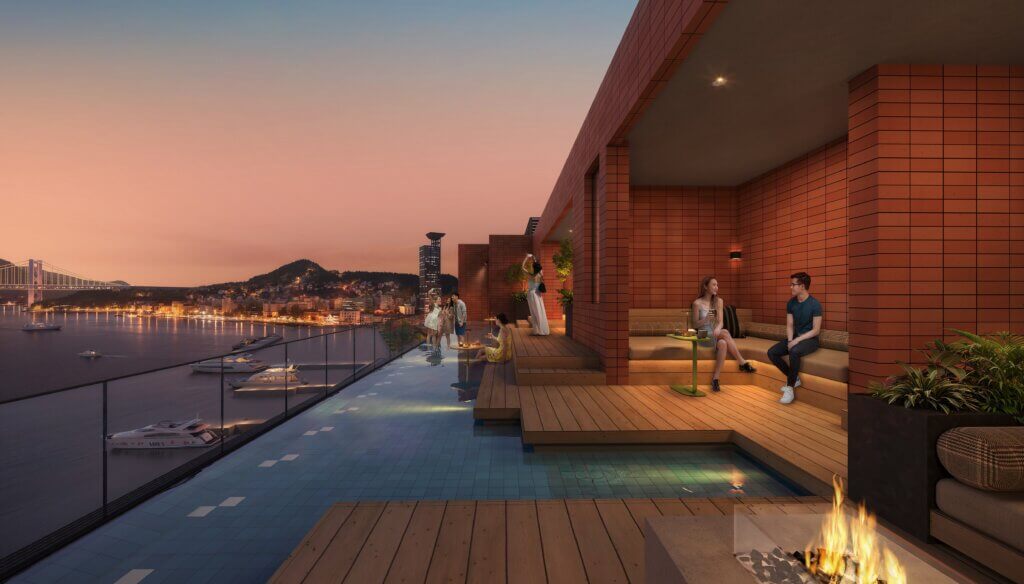
BEB5 Mojiko: First Entry into Fukuoka Prefecture, Offering Panoramic Views of the Kanmon Straits
BEB5 Mojiko by Hoshino Resorts is scheduled to open on July 24, 2026, marking the group’s first property in Fukuoka Prefecture. BEB, positioned as a hotel brand for younger travelers, is built around the concept of “more than an izakaya, less than a full-fledged trip,” proposing relaxed stays enjoyed freely with like-minded companions.
Located in the Mojiko Retro district, the hotel adopts the concept of a “Tokimeki Strait Stay.” All 119 guestrooms offer views of the Kanmon Straits, allowing guests to enjoy the seascape from every room.
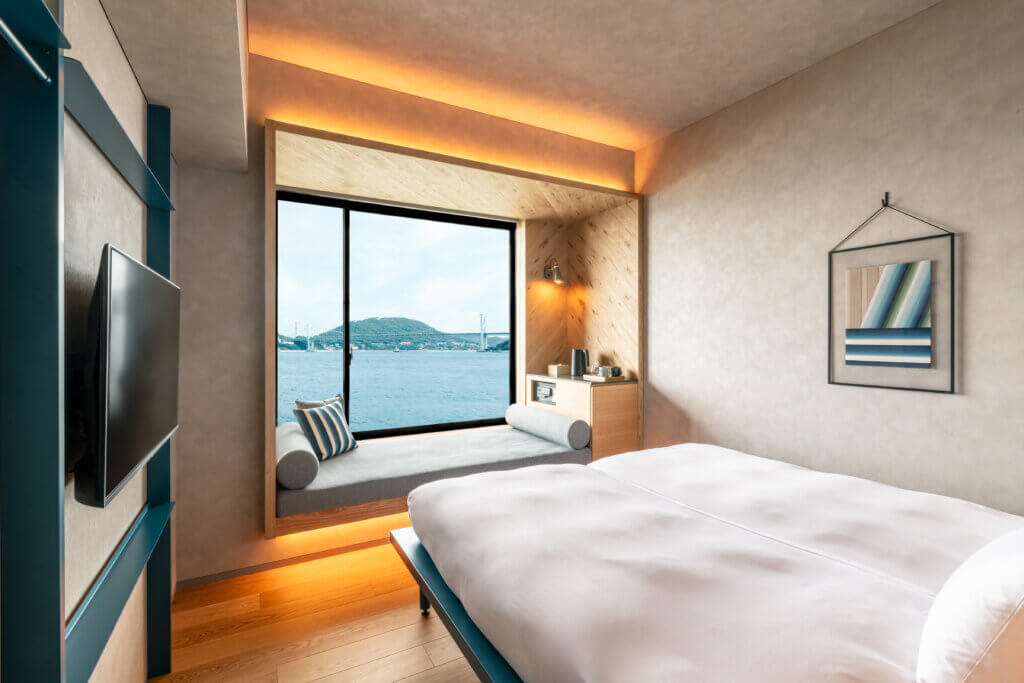
Guestrooms and Public Spaces: A 24-Hour Social Hub and Playful Room Designs
The hotel’s top floor houses TAMARIBA, a 24-hour public space from which guests can observe ships passing through the Kanmon Straits and the illuminated Kanmon Bridge at night. Bringing in outside food and drinks is encouraged, enabling guests to gather local specialties and spend evenings at their own pace.
Guestrooms feature playful designs, including loft-style Yagura Rooms reminiscent of a secret hideout and rooms with large daybeds placed by the windows, referred to as “Relaxation Berths.” With Mojiko Station located approximately a four-minute walk away, the hotel also offers convenient access, positioning it as a practical base for sightseeing in the area.
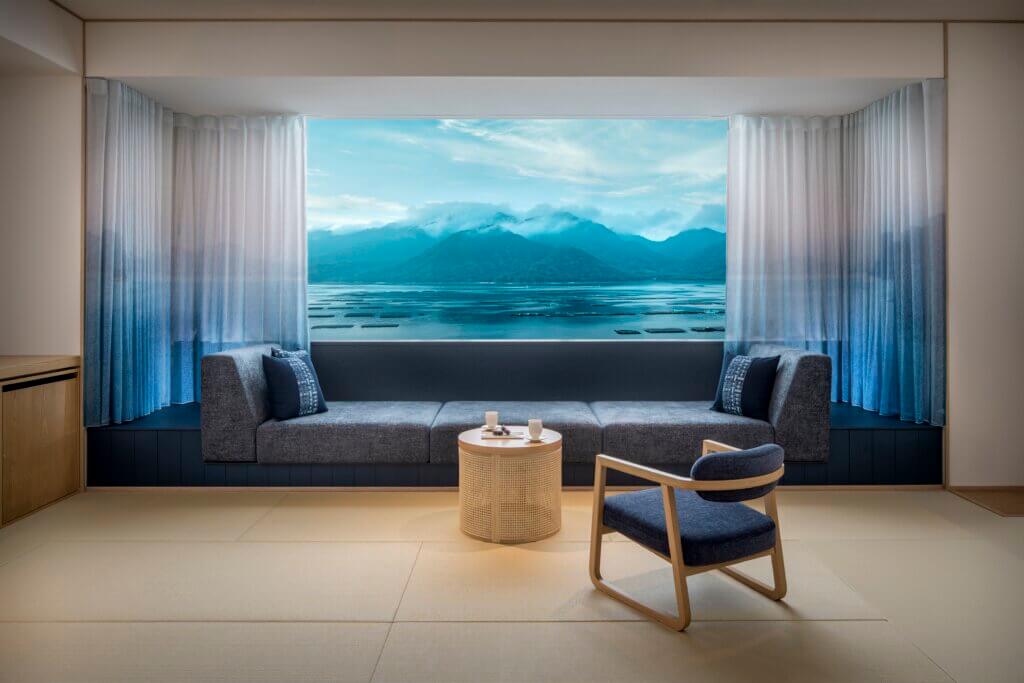
KAI Miyajima: First Entry into Hiroshima Prefecture, Where the Seto Inland Sea Meets Traditional Craft
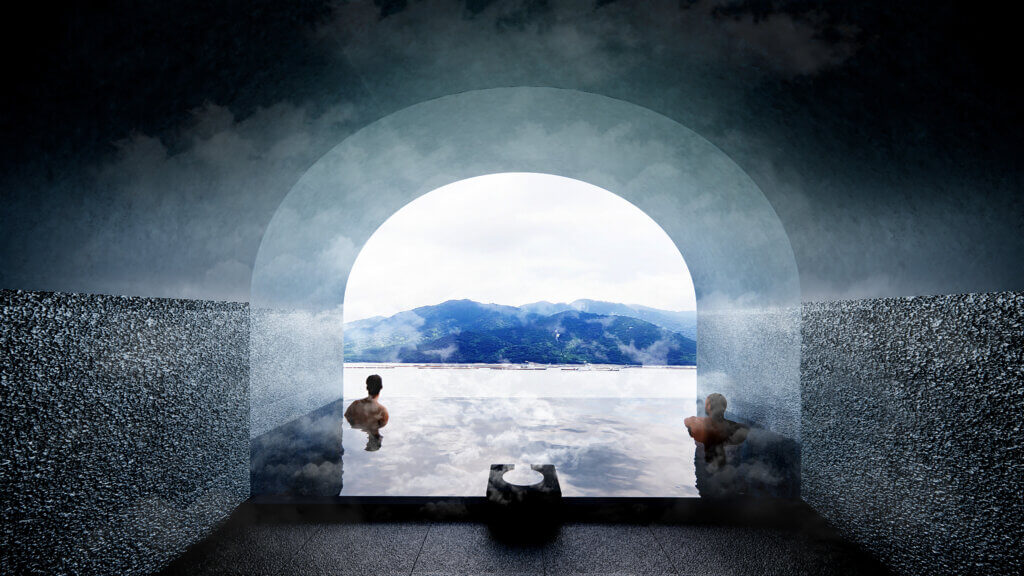
KAI Miyajima, marking Hoshino Resorts’ first property in Hiroshima Prefecture, is scheduled to open in summer 2026 in the Miyajimaguchi area overlooking Itsukushima Shrine. All 54 guestrooms will offer ocean views, allowing guests to take in the scenic seascape formed by the islands of the Seto Inland Sea.
The property’s local-themed guestrooms will be known as “Umigiri no Ma” (Sea Mist Room), featuring designs inspired by the ethereal sea mist that appears in early summer.
Craft and Bathing Experiences Engaging the Senses with Local Culture
The guestrooms incorporate regional craftsmanship that reflects the character of the Seto Inland Sea. These include lighting made from Aji glass, expressing deep blue tones associated with the sea; cushions crafted from Fukuyama denim produced in the Bingo region centered on Fukuyama City; and Otake washi, a traditional hand-made paper from Otake City. Near the windows, tables inspired by fish baskets traditionally used by fishermen further reference local history and culture.
The bathing facilities offer views of both sea and mountains from the large communal bath on the top floor. In addition, a stone bath recreates a style of steam bathing once common in the Seto Inland Sea region, reinterpreted in a contemporary form to provide a distinctive bathing experience.
KAI Matsumoto: An Intellectual Retreat Where Art and Hot Springs Converge—Evolving Through Renewal
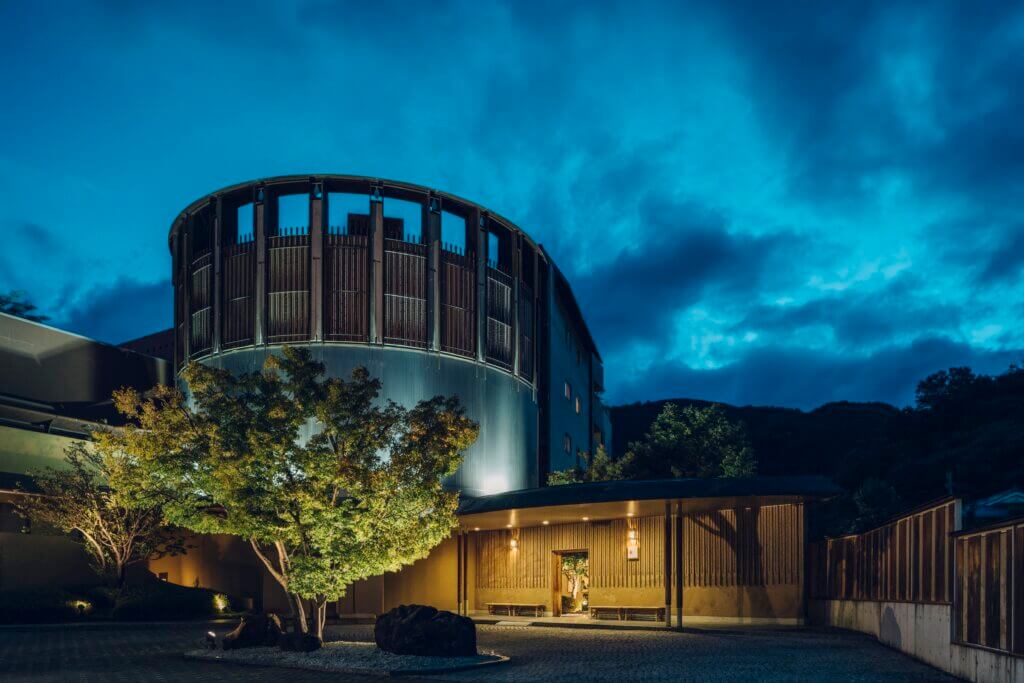
Matsumoto is widely known for Matsumoto Castle and its setting amid the Japanese Alps, and has long been regarded as a city with a strong connection to music and the arts. Located in the historic Asama Onsen area, KAI Matsumoto is scheduled to reopen following a renewal in summer 2026, presenting a modern space shaped by music and art.
The renovation retains the property’s established strengths, including its varied bathing experiences and culinary approach, while introducing elements designed to further engage guests’ intellectual curiosity and sensibilities. The renewed concept positions the hotel as a refined hot spring retreat that integrates cultural expression with relaxation.
Eight Types and Thirteen Styles of Bathing, Paired with Shinshu Wine
A defining feature of KAI Matsumoto is its large communal bathing area, which offers eight types of baths in thirteen different styles. Guests can enjoy the soft waters of Asama Onsen in settings that range from cypress-scented indoor baths to open-air baths with a more expansive feel, each providing a distinct atmosphere.
Dining at the property places emphasis on pairing cuisine with Shinshu wines, highlighting the region’s agricultural and culinary heritage through carefully prepared kaiseki-style meals. Reflecting Matsumoto’s identity as a city of music, in-house experiences such as concerts are also part of the offering, and are expected to gain additional depth following the renewal.
KAI Zao: A “Front-Row Seat in the Sky” Inspired by Okama, the Symbol of Mount Zao
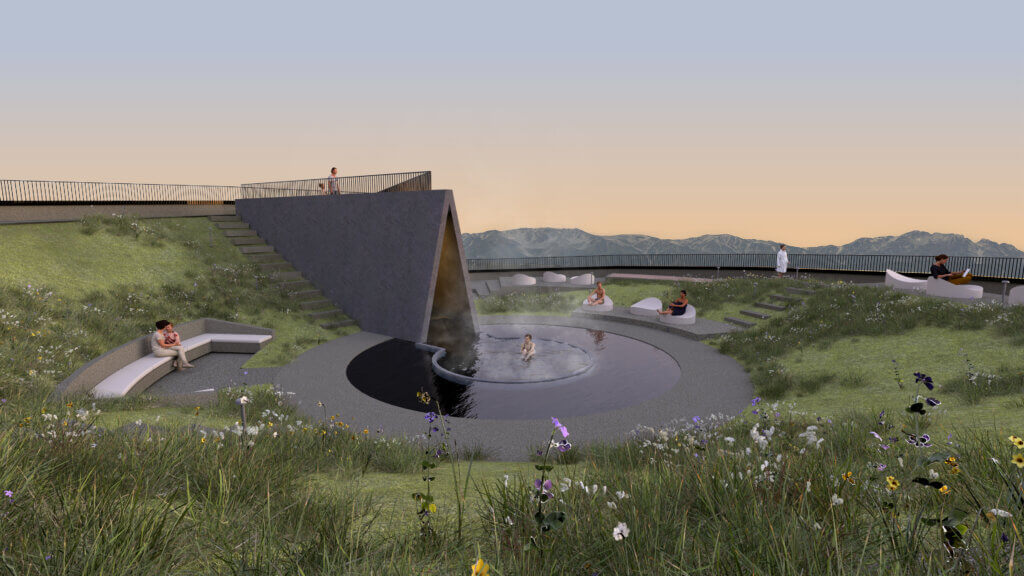
KAI Zao will mark Hoshino Resorts’ first entry into Yamagata Prefecture when it opens in autumn 2026. The property will be located in Zao Onsen, often described as a “hot spring village in the sky,” at an elevation of approximately 880 meters. The design draws inspiration from Okama Crater Lake, the iconic crater lake of Mount Zao, and is set amid the natural landscape of the Zao Mountains. The concept centers on experiencing the volcanic environment and seasonal changes of Zao through all five senses.
An Immersive, Non-Ordinary Experience on a 360-Degree Rooftop Terrace
The property’s central feature is a 360-degree panoramic rooftop terrace modeled after Okama. From this unobstructed, open terrace, guests can view the Zao mountain range to the east and, to the west, the pastoral scenery of Yamagata alongside distant views of the Asahi Mountains. A jacuzzi bath is positioned at the center of the terrace, allowing guests to bathe while observing the continuously changing landscape. Seating areas are arranged throughout the terrace, and the space is accented with alpine plants native to Zao, offering guests multiple vantage points to spend time in close connection with nature.
Three Baths Offering a Gradual Experience of Zao’s Acidic Hot Springs
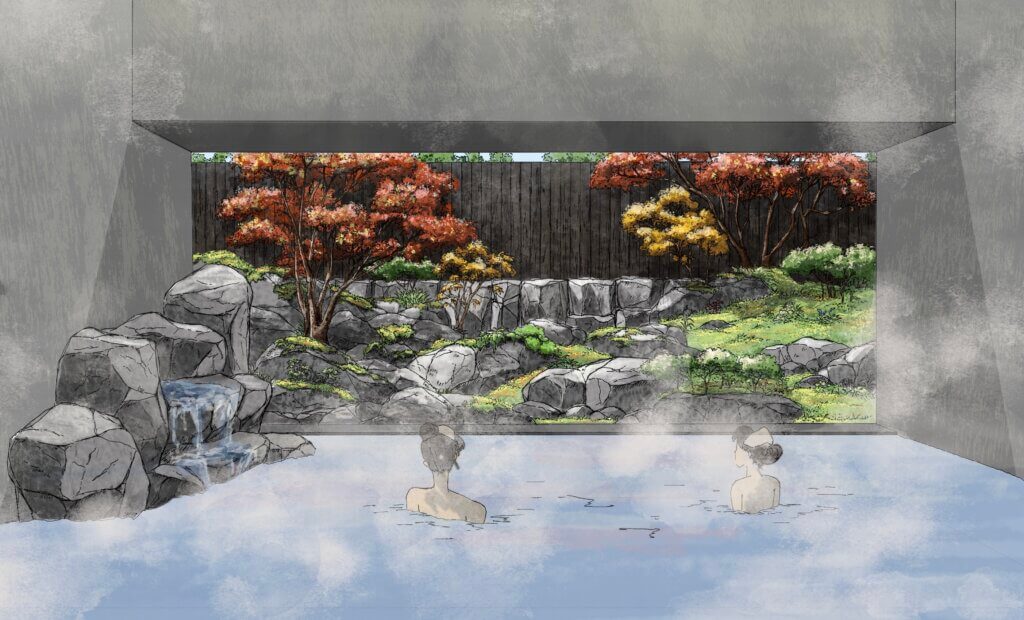
Adjacent to the accommodation building, a dedicated bathhouse provides access to Zao Onsen’s sulfur-rich waters, known for their strong acidity. Three separate baths with varying concentrations are prepared to offer a step-by-step bathing experience. Guests begin with an open-air bath designed for gradual acclimation, proceed to a free-flowing source bath where the strongly acidic water can be experienced more fully, and conclude with a finishing bath intended to bring the body back to balance.
In front of the open-air bath, a quiet garden featuring locally sourced Zao stone extends outward, creating a calm bathing environment distinct from the dramatic rooftop terrace and offering an alternative setting for reflection and relaxation.
A Nationwide Series of Openings and Outlook Beyond 2027
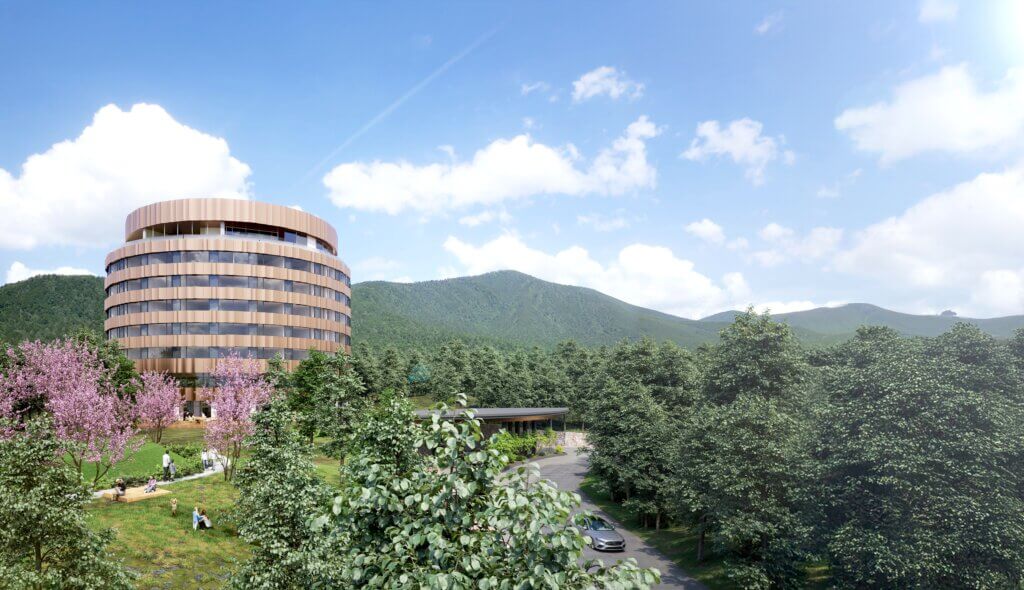
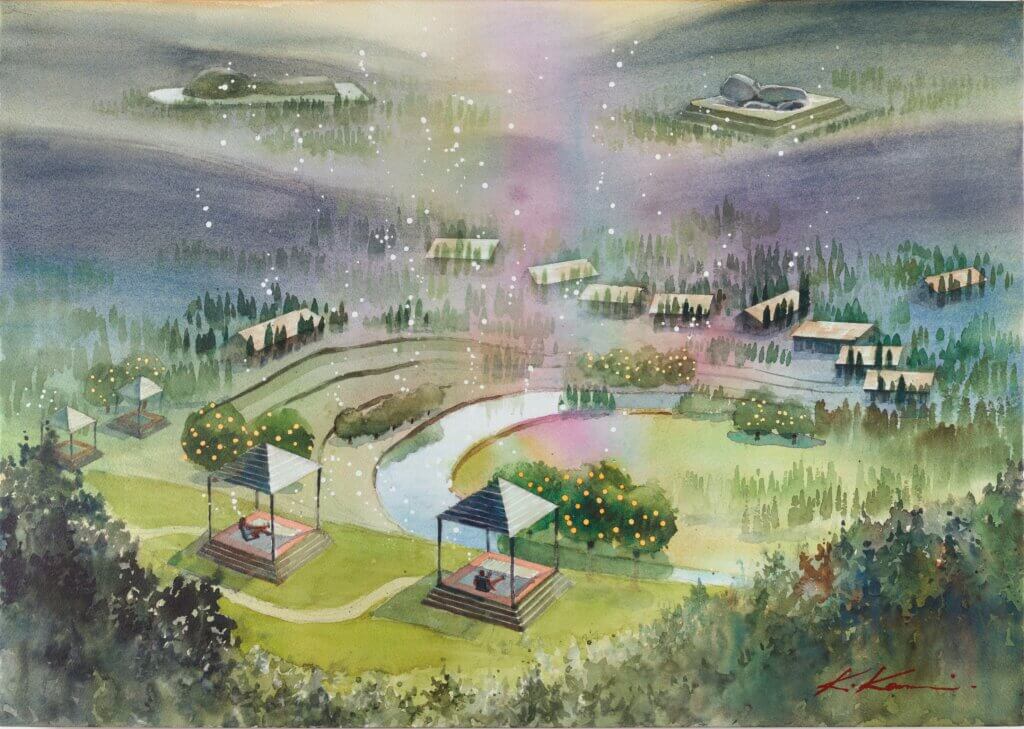
In 2027, RISONARE Fukui is scheduled to open as Hoshino Resorts’ first property in Fukui Prefecture, located within Katsuyama Dinosaur Forest. The facility is expected to offer activities themed around dinosaurs. In the same year, HOSHINOYA Asuka will open in Asuka Village, Nara Prefecture, proposing a stay that invites guests to reflect on the long passage of time in a place regarded as the birthplace of the Japanese state.
Hoshino Resorts’ New Properties in the Context of MICE
The new properties that Hoshino Resorts is rolling out toward 2026 extend beyond the traditional framework of accommodation and present notable possibilities within the MICE context.
Value as Unique Venues
Facilities such as Nara Prison Museum and HOSHINOYA Nara Prison, developed through the reuse of the former Nara Prison, as well as OMO7 Yokohama, created from the former Yokohama City Hall, carry strong messages through their historical backgrounds and architectural character. In settings such as corporate anniversary events or special meetings and receptions hosting domestic and international guests, these venues can offer experiences shaped by context that differ from conventional locations.
Applications for Incentive Travel
Properties including HOSHINOYA Asuka, KAI Zao, and RISONARE Fukui are positioned to deliver experiences rooted in the distinctive character of their locations. Stays that immerse participants in local culture and natural environments can provide a sense of separation from daily routines and support refreshment during incentive programs.
Affinity with FAM Tours and Team Building
The relaxed public spaces found at BEB5 Mojiko, including TAMARIBA, and at OMO5 Yokohama Bashamichi are designed to encourage communication in informal settings. In addition, guided programs led by OMO brand “OMO Rangers,” which introduce local highlights, are well suited to FAM tours aimed at uncovering lesser-known regional attractions.
A Role in Regional Revitalization
These facilities are positioned not only as places to stay, but also as focal points for regional revitalization. Communicating local history, traditional crafts, and food culture to domestic and international audiences through MICE activities aligns with approaches to sustainable tourism. Collectively, Hoshino Resorts’ new portfolio is expected to add further options and value to Japan’s MICE market.

-
Taipei Game Show 2026: January 29–February 1 at Taipei Nangang Exhibition Center.History and Highlights of One of the Asia-Pacific Region’s Leading Game Trade Shows
-
【On-the-Ground Report】A Comprehensive Guide to Major MICE Facilities and Unique Venues in Busan, South Korea, Featuring Over 70 Images (BEXCO, BPEX, Nurimaru, and More)