【Coverage】TechGALA Japan 2026: A City-Wide Tech MICE Event Across Nagoya, Reminiscent of SXSW
TechGALA Japan 2026 was held from January 27 to 29. Day 1 and Day 2 took place across multiple venues in Nagoya’s Sakae area, while Day 3 was hosted at STATION Ai in the Tsurumai district. What particularly caught the editorial team’s attention was not only the content, but the choice of venues themselves.
Rather than concentrating all programs in a single large convention facility, TechGALA adopted a distributed, city-wide format, with multiple venues spread across the urban area. Participants were encouraged to move between locations, experiencing the city as part of the event.
- How were the venues used?
- Was it realistic for participants to move between locations?
- Could an event still function effectively with its programs dispersed across the city?
On the first day, the editorial team walked through all the venues in the Sakae area on foot. Let us take a closer look at the city-based event experience, step by step.
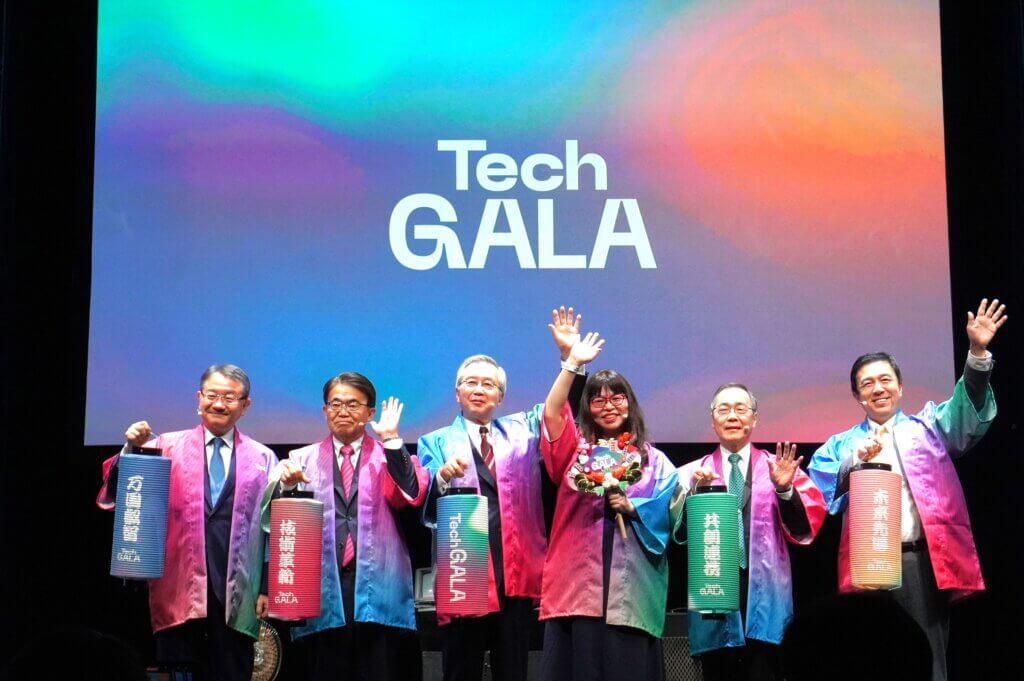
A City-Wide, Circulating Event Design Inspired by SXSW
TechGALA Japan is an event that brings together professionals from around the world who are shaping contemporary society across a wide range of fields. It is operated by a consortium comprising the Chubu Economic Federation, Nagoya University, Aichi Prefecture, Nagoya City, Hamamatsu City, and other partners.
Event details here https://micetimes.jp/pre-techgala2026/
The scope of topics addressed at TechGALA extends beyond technology to include art and music. This multidisciplinary approach calls to mind South by Southwest (SXSW), one of the world’s largest business conferences and festivals, where trade shows, music festivals, and film festivals take place simultaneously. Another similarity lies in the use of multiple venues distributed throughout the city, rather than concentrating activities in a single location.
Among the speakers was Peter Lewis, Chief Commercial Officer (CCO) of SXSW. His participation suggested that elements of SXSW’s event design and operational philosophy may have influenced the planning and management of TechGALA.
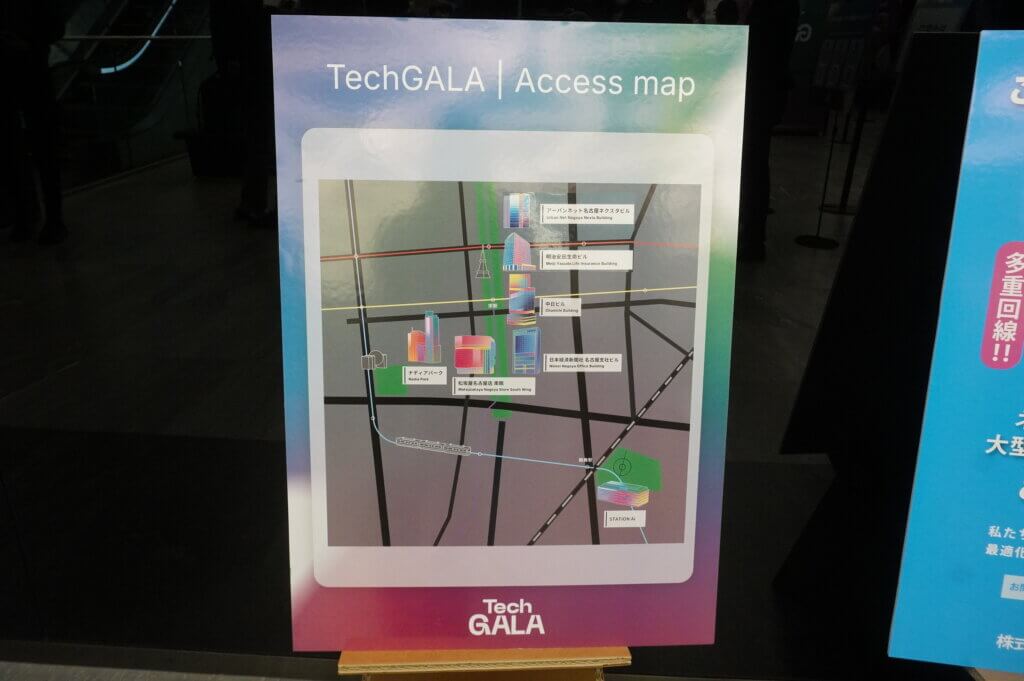
Six Venues Operating Simultaneously Each Day Within Walkable Sakae Area
Day 1 and Day 2 were held across the Sakae area of Nagoya, while Day 3 took place in the Tsurumai area. Over the three-day period, programs were hosted at a total of 10 venues.When side events are included, the number of venues increased significantly, further extending the event’s presence throughout the city.
Venues Visited During the Coverage (Locations Marked in Blue on the Map)
- Chunichi Hall & Conference
- Matsuzakaya Hall
- Nikkei Building Nagoya Branch
- NADYA PARK (Nagoya Innovators Garage)
- Meiji Yasuda Life Insurance Building
- Urban Net Nagoya Nexta Conference
9:20 | Chunichi Hall & Conference — A Keynote Venue Directly Connected to Sakae Station
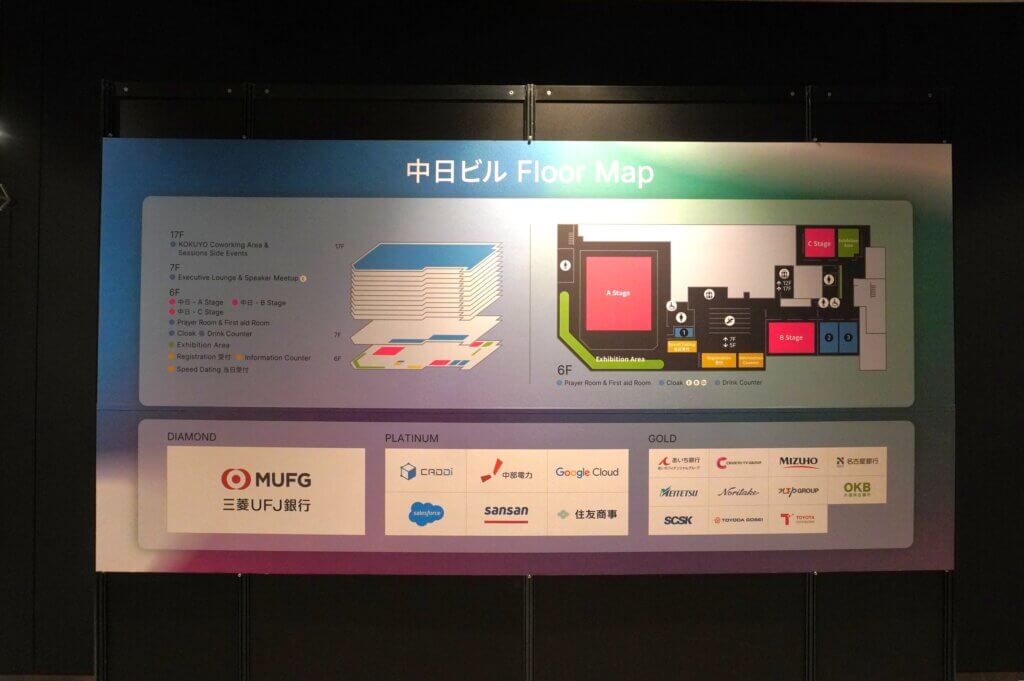
Located just steps from Sakae Station, Chunichi Hall & Conference is situated within the Chunichi Building, which opened in 2024. The facility includes a multipurpose event hall and eight meeting rooms on the 6th floor. It is operated by Magnet Studio.
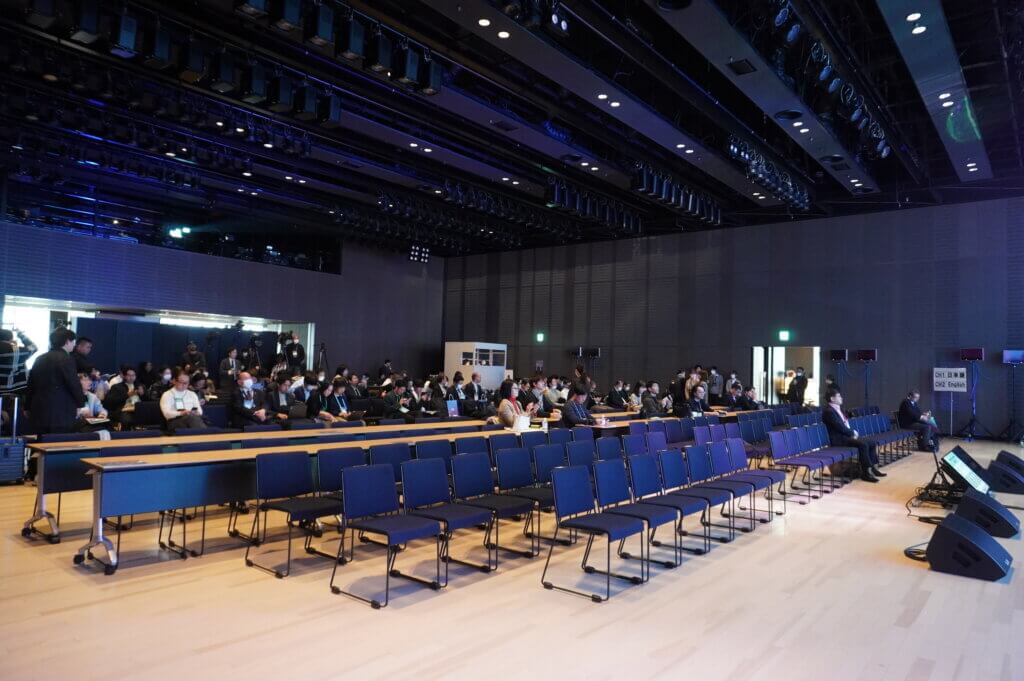
The flat, approximately 600-square-meter multipurpose space known as “Chunichi Hall” served as the venue for keynote speeches and conference sessions.
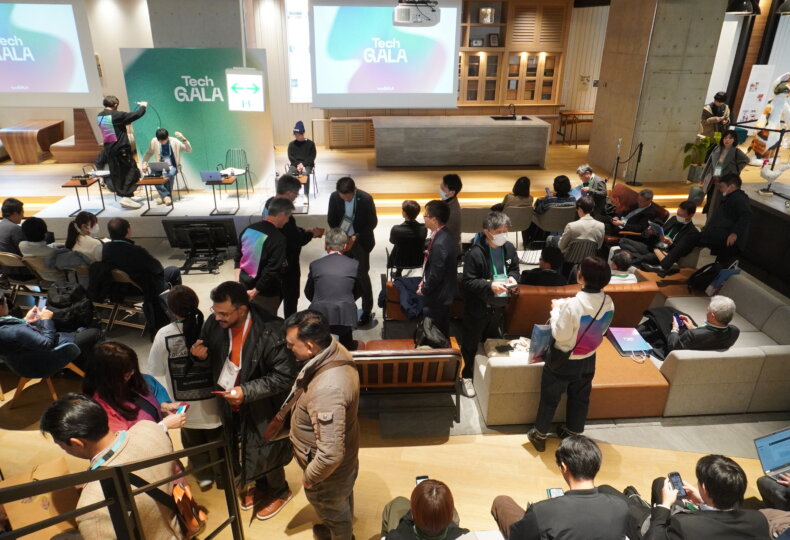
The hall is equipped with around 300 movable seats. During sessions, seating at the front was reserved for media representatives, executives, and sponsors, while general participants and media crews filming the event were positioned toward the rear. At the opening session, the venue reached full capacity, with some attendees standing.
To manage congestion, the venue employed a circulation plan that separated entrance and exit routes, contributing to smoother crowd flow during peak periods.
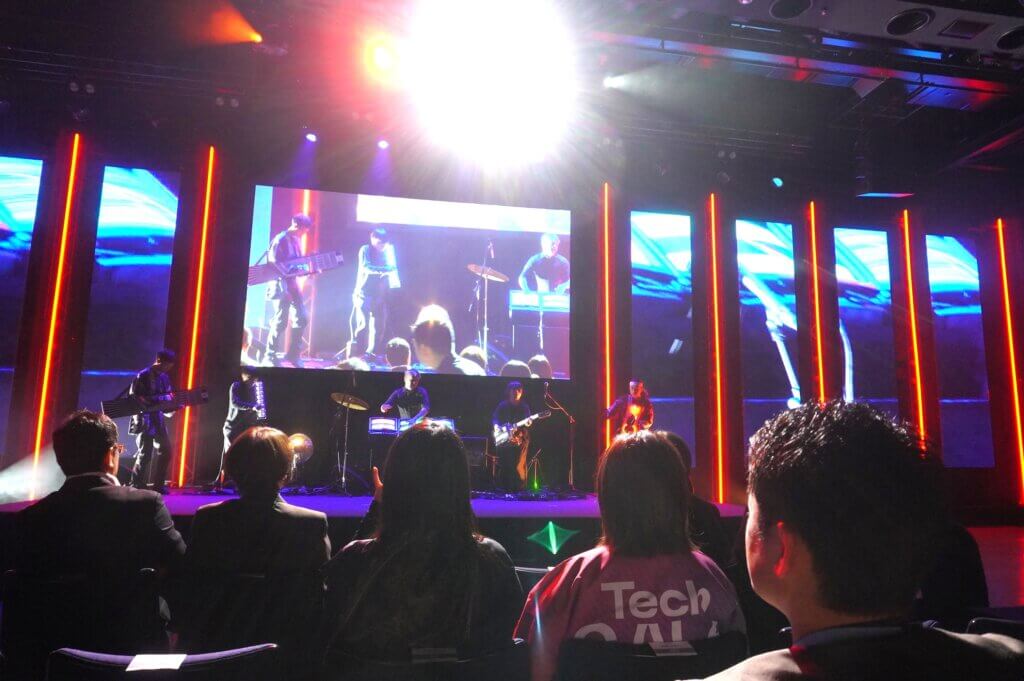
Both the opening and closing programs featured live performances by artists. The opening performance was a live set by Electronics Fantastikos!, a group known for creating and performing with instruments remade from home appliances and old musical instruments.
The choice reflected TechGALA’s emphasis on technology and creative experimentation. High school students from Nagoya also joined the performance, contributing to a collaborative stage that brought together professional artists and local youth.
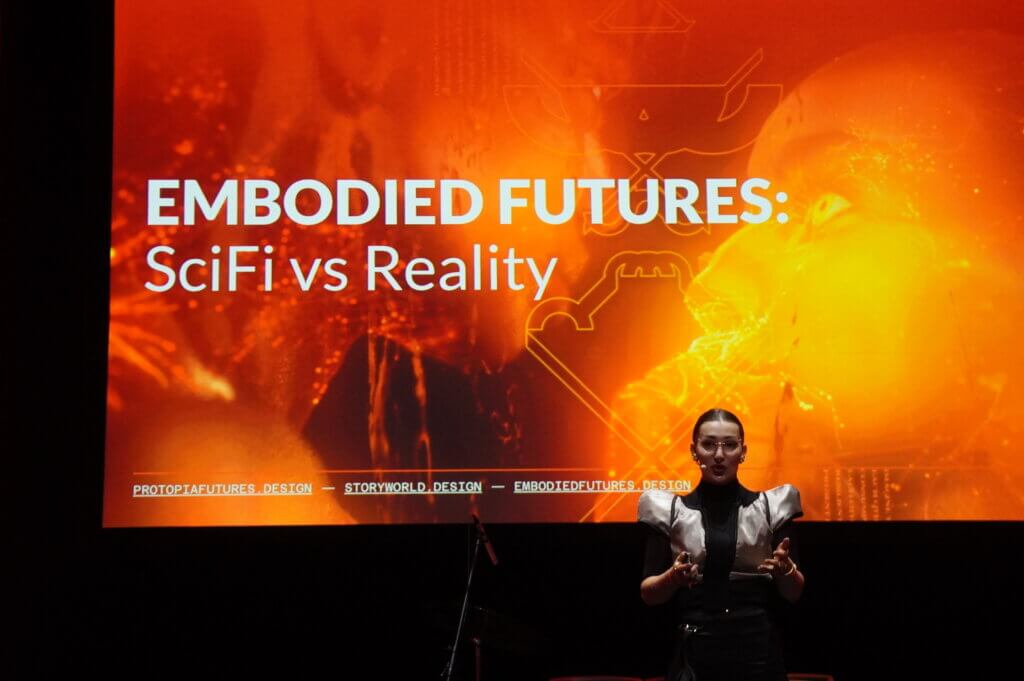
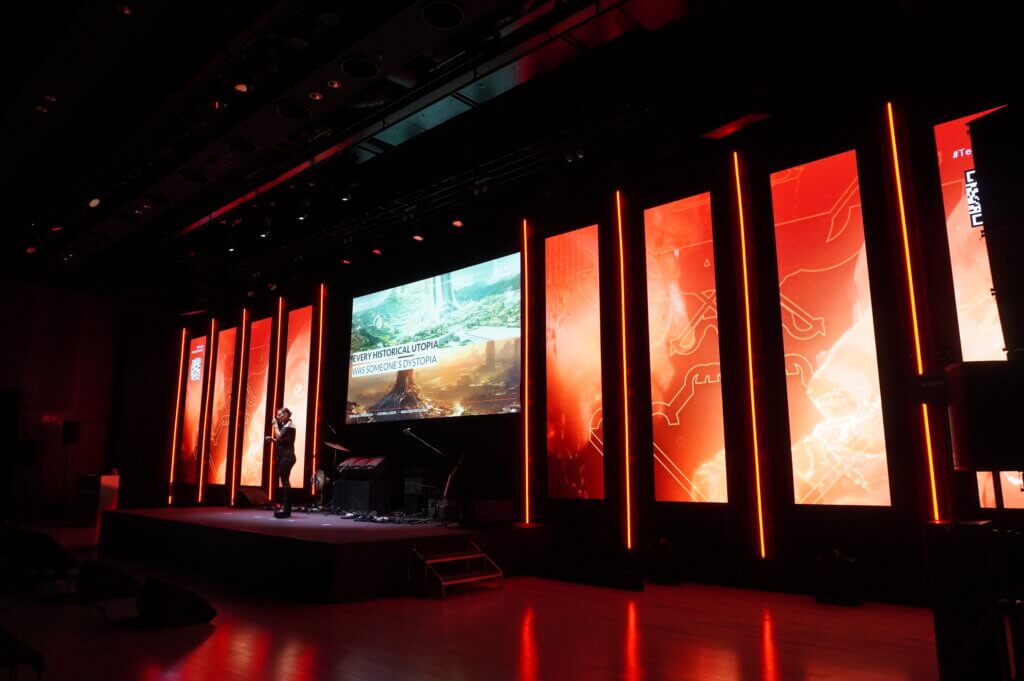
This photo shows a keynote session by Monika Bielskyte. Multiple vertical LED panels were combined to form a large-scale visual display, creating an immersive backdrop for the presentation.
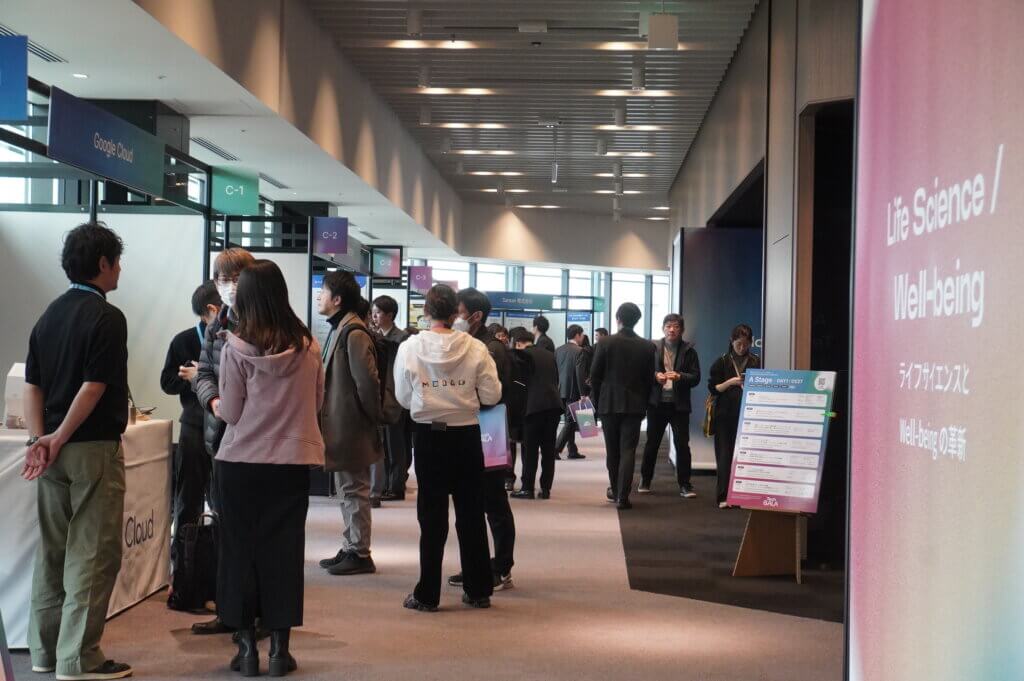
The foyer functioned as a multipurpose space, accommodating exhibitions, registration, and networking. According to the venue, the area can host approximately 250 people for a standing reception.
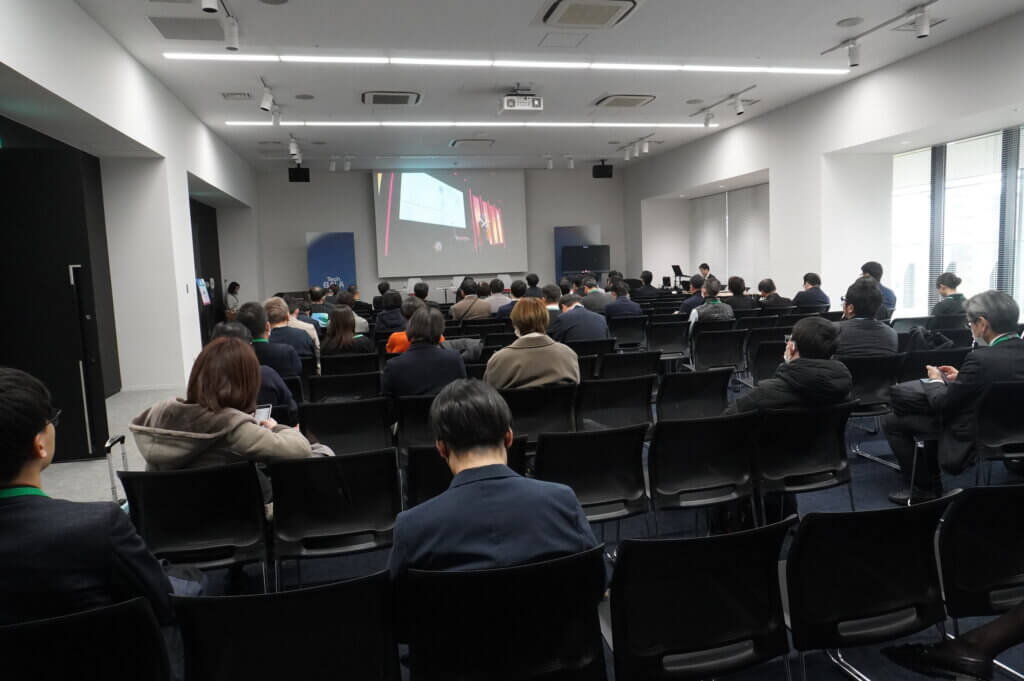
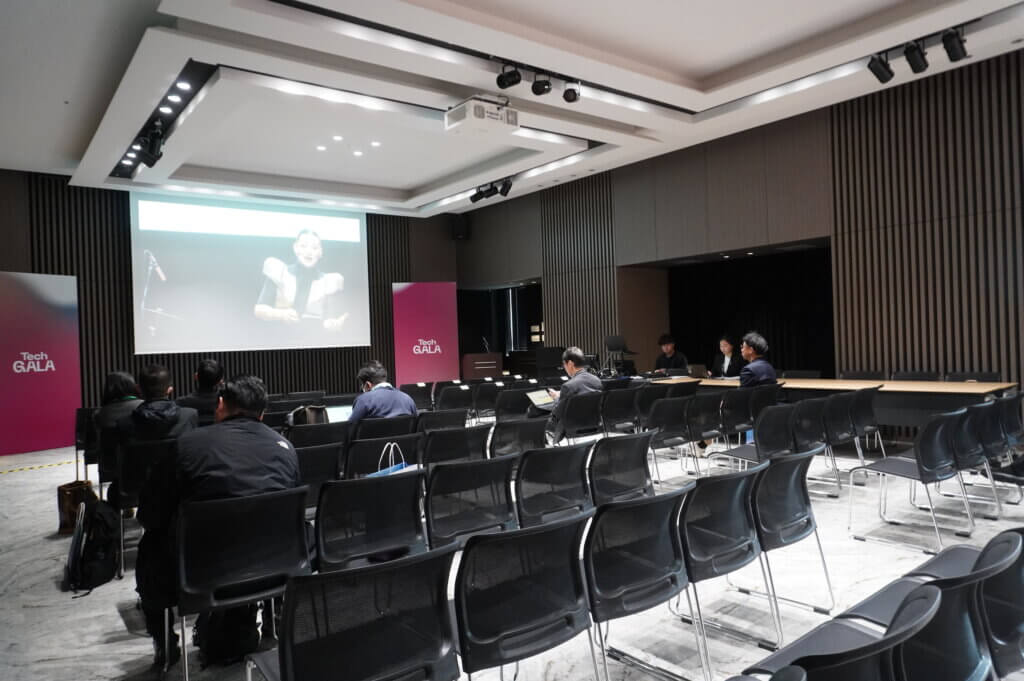
Room 2 is a conference room configured in a theater-style layout, with seating for approximately 150 participants. At the beginning of the program, it was used as a satellite venue to livestream the keynote sessions. Pitch presentations delivered in English were also streamed with Japanese interpretation.
For participants who preferred a setting where they could focus on listening or attend sessions in a calmer environment, this room offered an appropriate level of distance from the main hall. As a result, it also contributed to easing congestion in the primary keynote venue.
Following the keynote sessions, Room 2 functioned as a standard conference area, hosting a series of regular sessions.
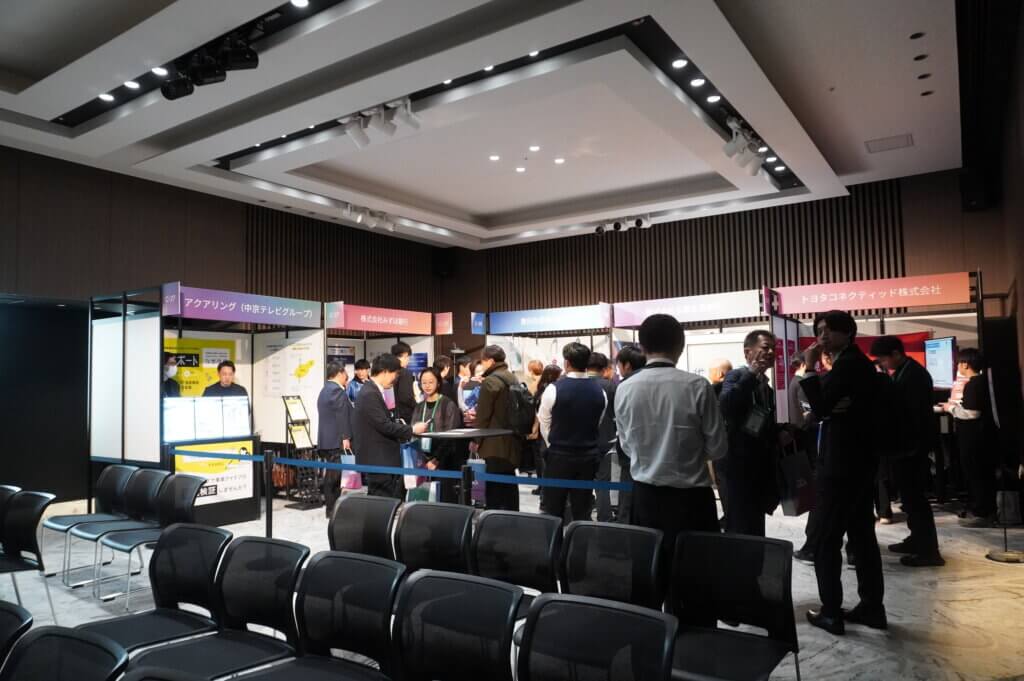
The boardroom was arranged with approximately 50 seats at the front, while exhibition booths were set up behind the seating area. This layout allowed conference sessions and exhibition functions to coexist within the same space.
Chunichi Hall & Conference https://chunichi-hall.jp
(6-minute walk)
11:45 | Matsuzakaya Hall — Sessions on Art and Diversity Held Inside a Department Store
Matsuzakaya Hall is located on the 8th floor of the South Building of Matsuzakaya Nagoya Store. During TechGALA, the venue hosted sessions centered on diversity, art, and creativity.
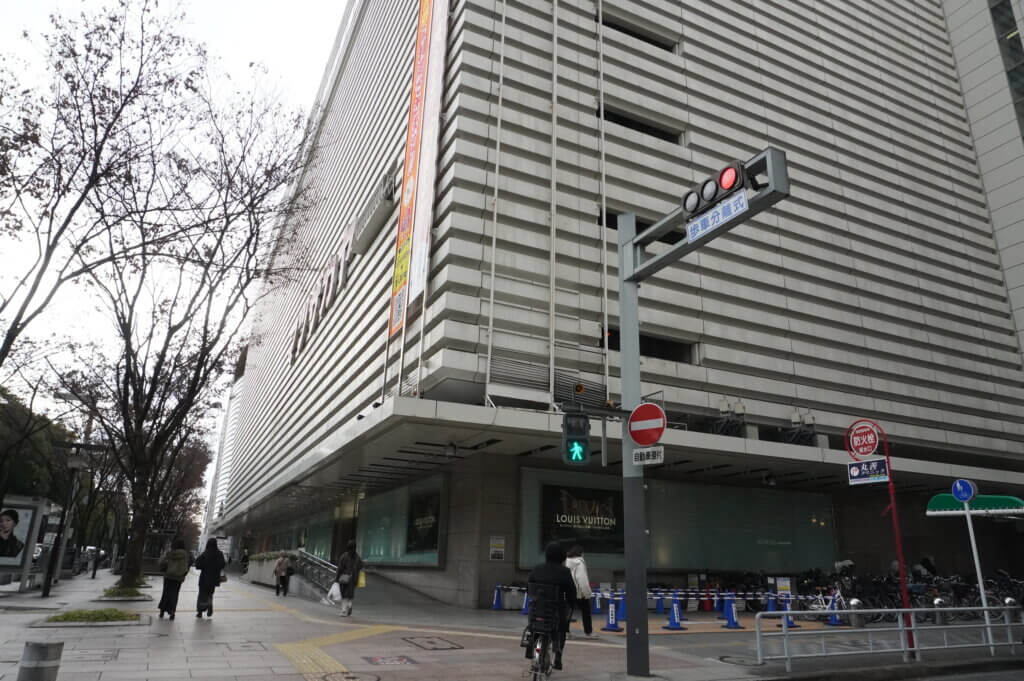
Roughly half of the space was arranged as seating for audiences, while the remaining area functioned as an exhibition zone. A DJ booth and a relaxation area designed to evoke the atmosphere of a campfire were also set up within the hall.
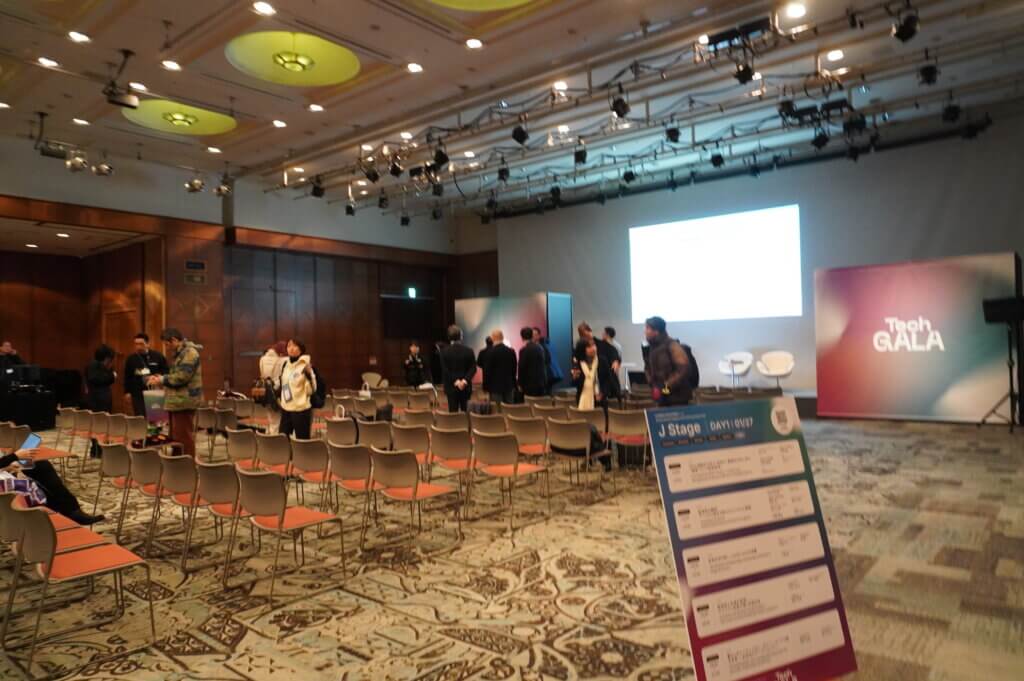
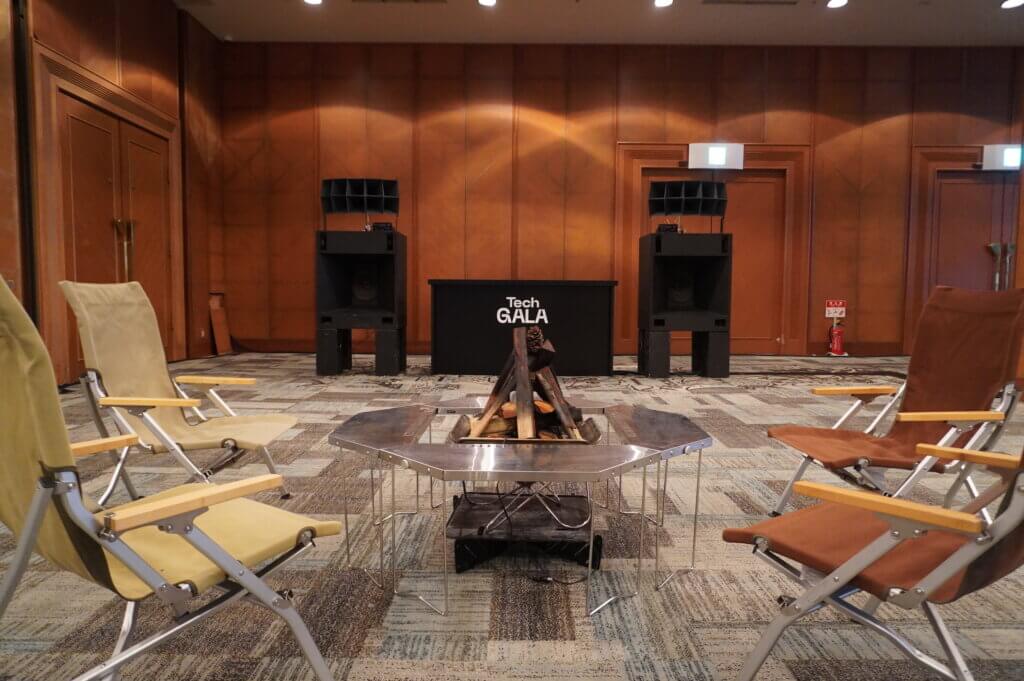
A large-scale renovation of the space has been announced. The art sales floor is scheduled to expand to approximately 2.5 times its current size, transforming the entire floor into an art-focused space—an approach described as unprecedented among department stores in Japan. The renewed space is scheduled to open in spring 2027, suggesting that the current configuration of Matsuzakaya Hall may only be seen for a limited time.
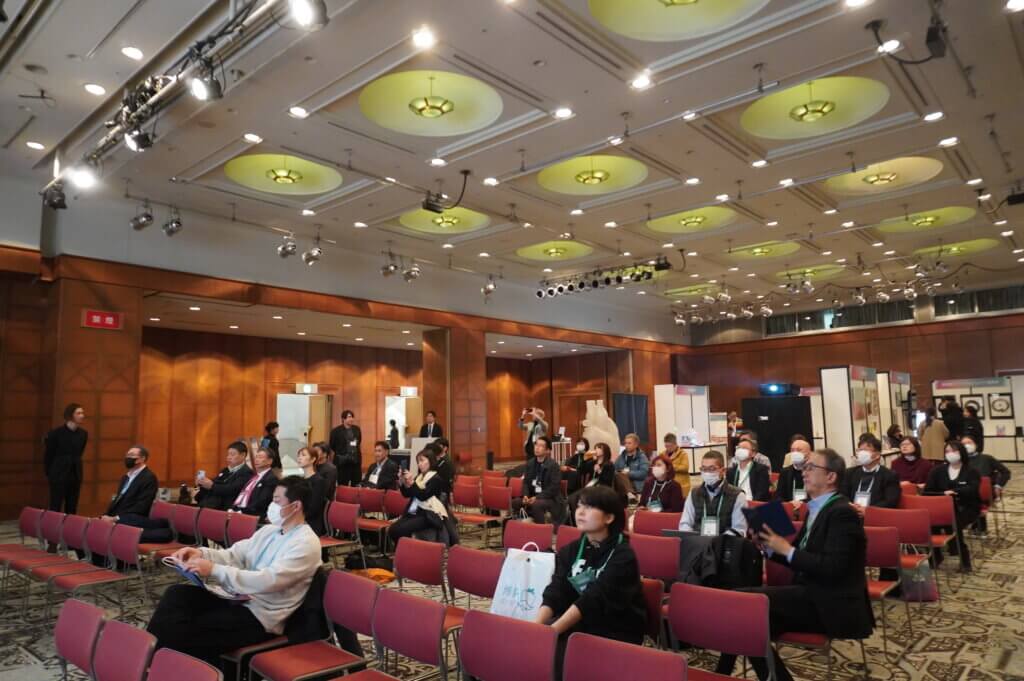
Scene from the session “Management Techniques of ‘Tuning’ Beyond Efficiency and Optimization, Inspired by SPAC Theatre.”
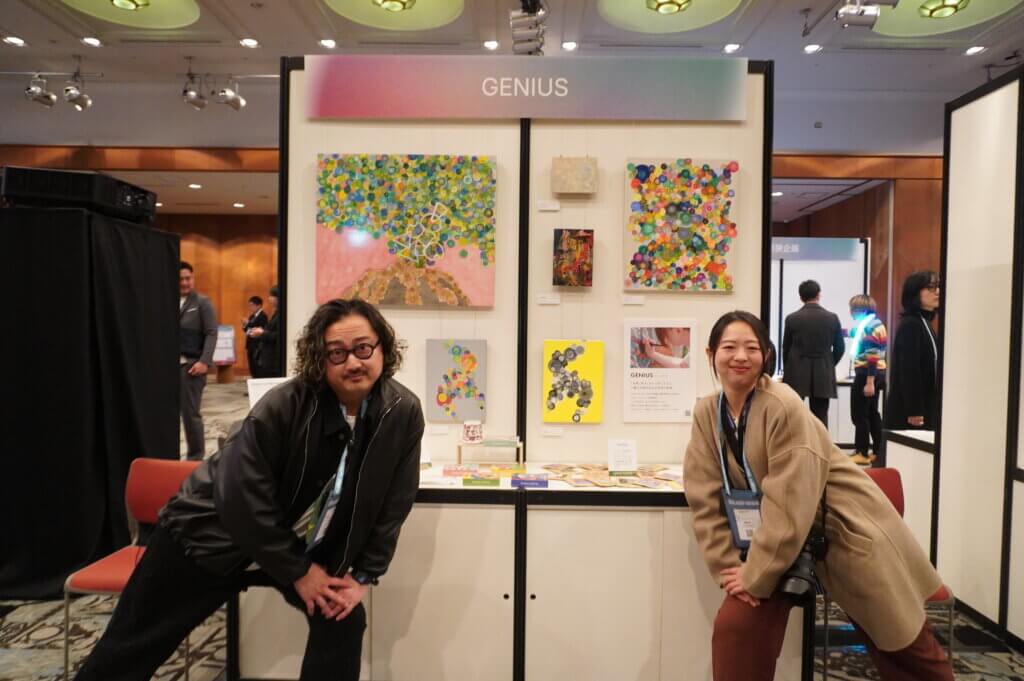
This exhibitor was Nishimura of Suminasu Inc.. He operates GENIUS, an art-focused Type B continuous employment support facility in Saga City.
A defining characteristic of GENIUS is its emphasis on a structured development process. Individuals who experience psychological burdens, as well as those who have had little prior exposure to art, are supported as they gradually give form to their inner emotions and sensibilities. This process is carefully sustained as part of the organization’s business model.
At first glance, the initiative may appear to sit primarily within the context of art and social welfare. However, the team also positions itself as a startup. From this perspective, their participation was not disconnected from the broader themes explored at TechGALA.
Suminasu Inc. https://geniusart.jp
Matuszakaya hall https://www.matsuzakaya.co.jp/nagoya/floor/8f-s.html
(13-minute walk)
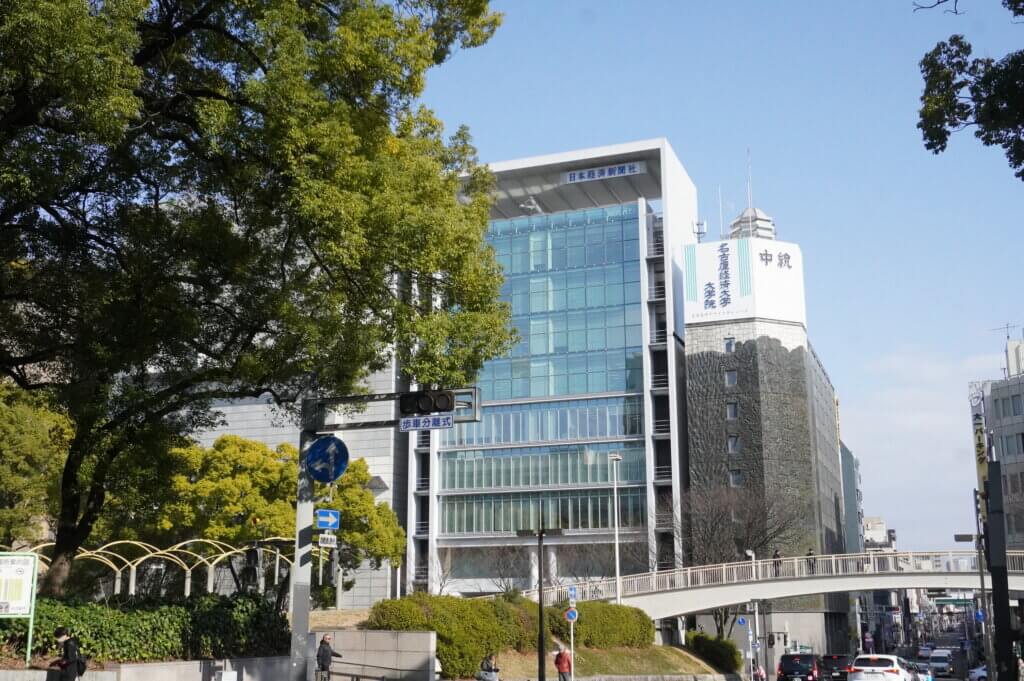
13:15 | Nikkei Building Nagoya Branch — A Special Event Co-hosted with NIKKEI THE PITCH
A special event supporting open innovation was held in collaboration with NIKKEI THE PITCH, a media partner of TechGALA. NIKKEI THE PITCH is a nationwide initiative designed to support startups, family-business successor ventures (atotsugi ventures), and next-generation social entrepreneurs.
On Day 1, sessions and networking events were organized under themes produced by NIKKEI THE PITCH, including “Next-Generation Unicorns,” “Startups,” and “Reverse Pitch.” On Day 2, programs produced by TechGALA featured sessions with overseas startups, along with collaborative initiatives aimed at fostering cross-border innovation.
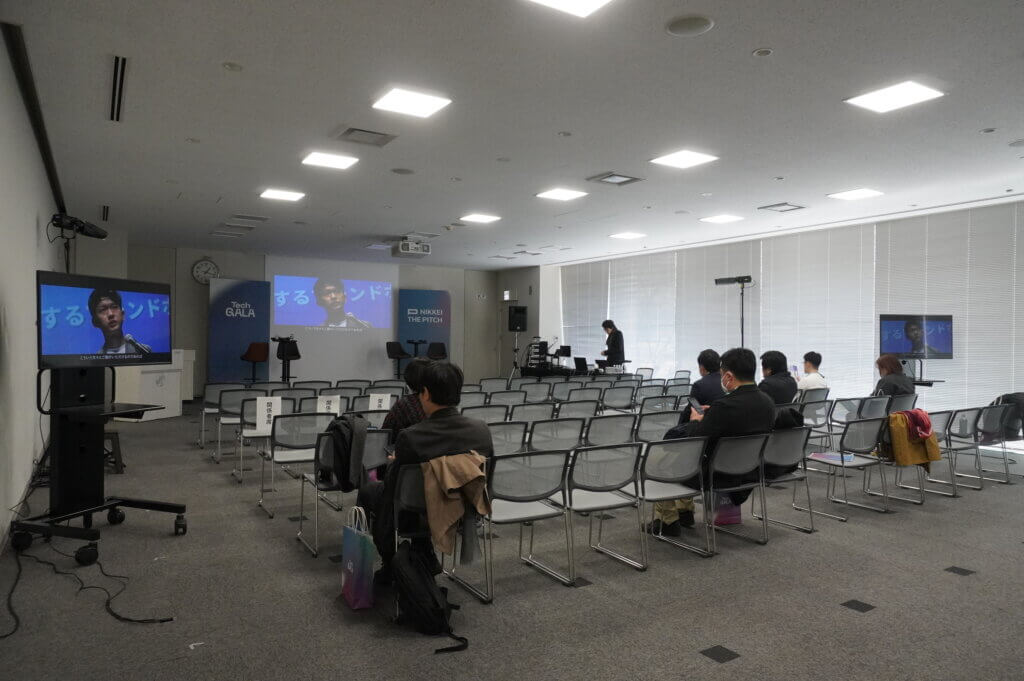
The event was held in the main conference room of the The Nikkei Nagoya Bureau. At the rear of the room, cameras and monitors were installed for live streaming, reflecting a setup designed from the outset for a hybrid format. To ensure that content remained easy to follow even from the back rows, video feeds were displayed on monitors, indicating careful consideration for visibility throughout the space.
The session was moderated by a broadcaster who has previously served as a presenter for Nikkei News Plus 9 and NIKKEI Sunday Salon. The discussion progressed at a steady pace, with key points clearly organized, making it easy for the audience to follow.
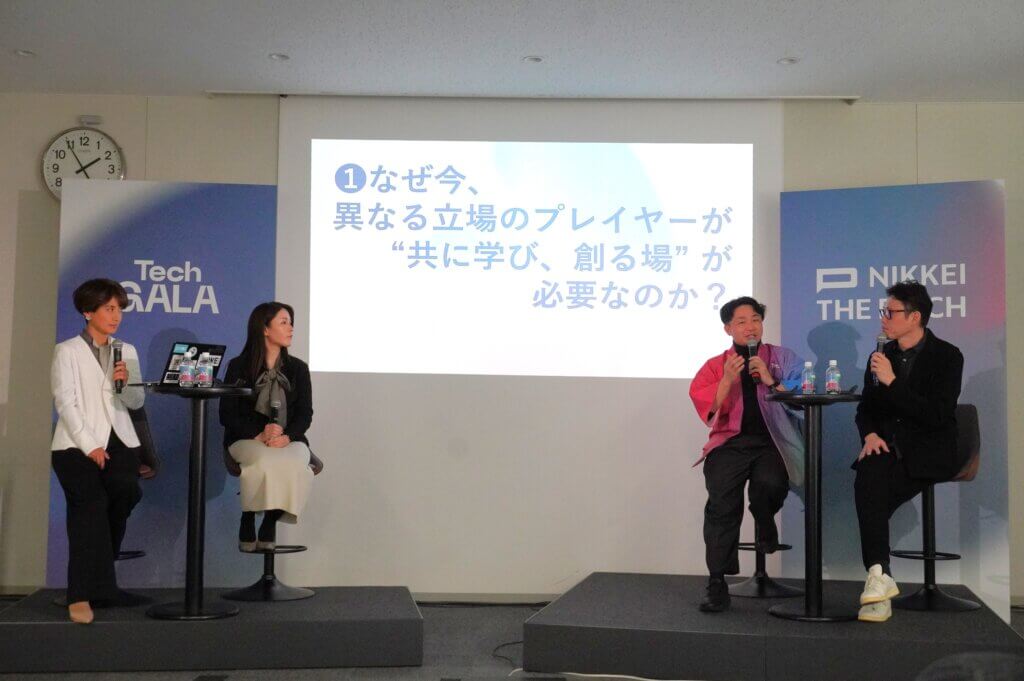
Scene from the session “Tradition × Innovation: New Forms of Innovation.” The editorial team attended for approximately one hour. A separate article will follow.
NIKKEI THE PITCH https://pitch.nikkei.com
(13-minute walk)
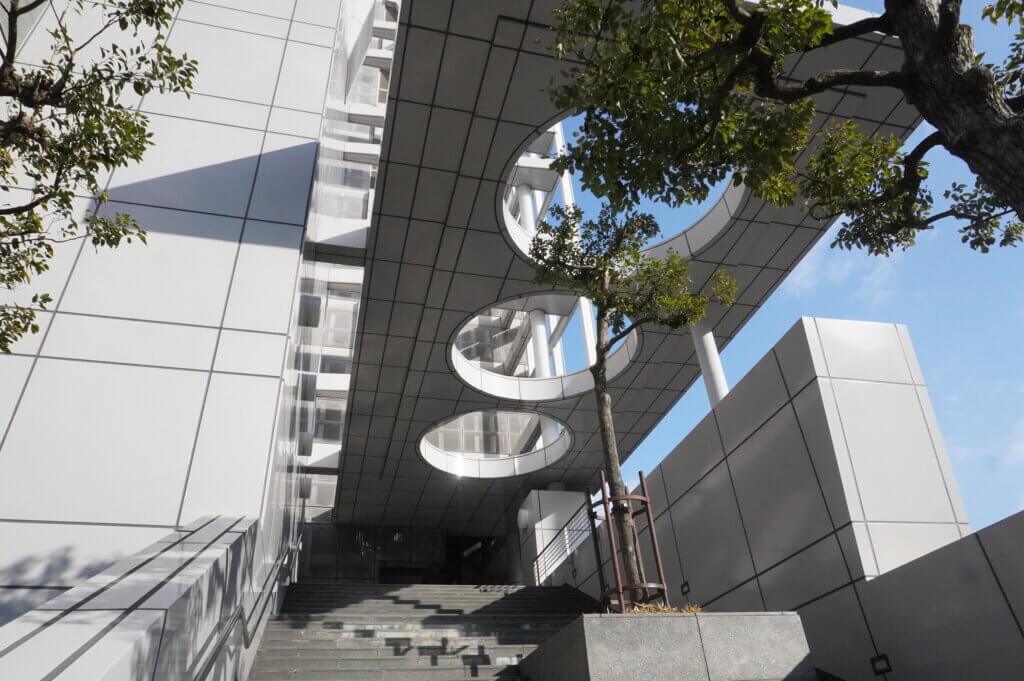
14:40 | NADYA PARK — Presentations, Exhibitions, and Sessions
Located in the Sakae Minami area, NADYA PARK is a mixed-use complex centered around the Design Center Building owned by Nagoya. From the basement level to the 7th floor, the facility houses a range of functions, including Nagoya Innovators Garage, design galleries, and exhibition spaces.
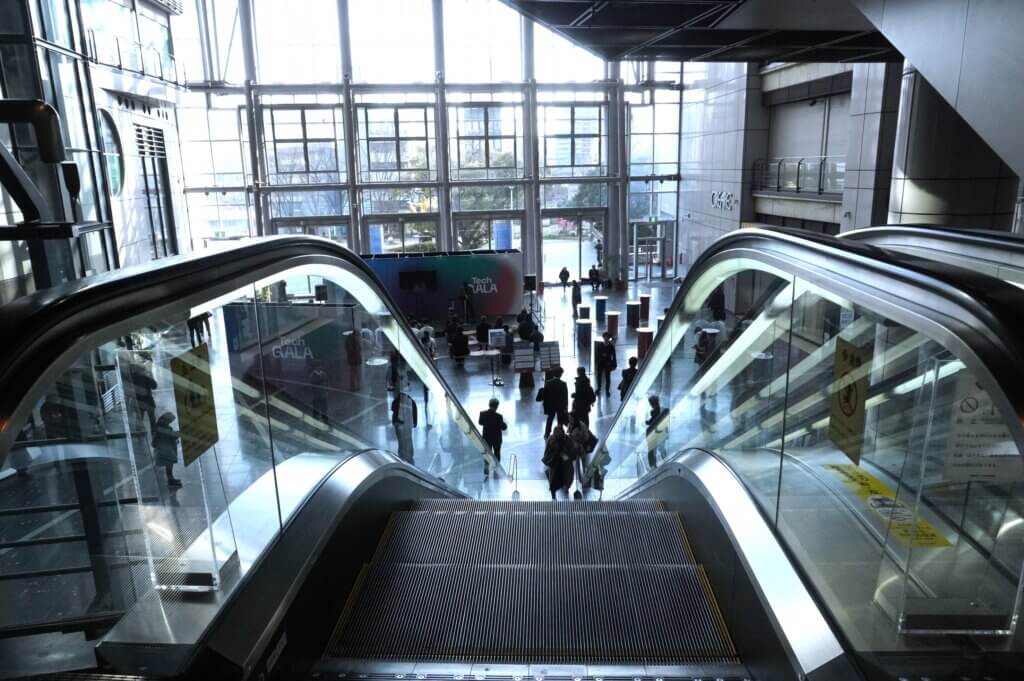
Programs were conducted across multiple spaces within the facility, including corporate presentations in the atrium, exhibitor showcases in the Design Hall, and conference sessions held at Nagoya Innovators Garage.
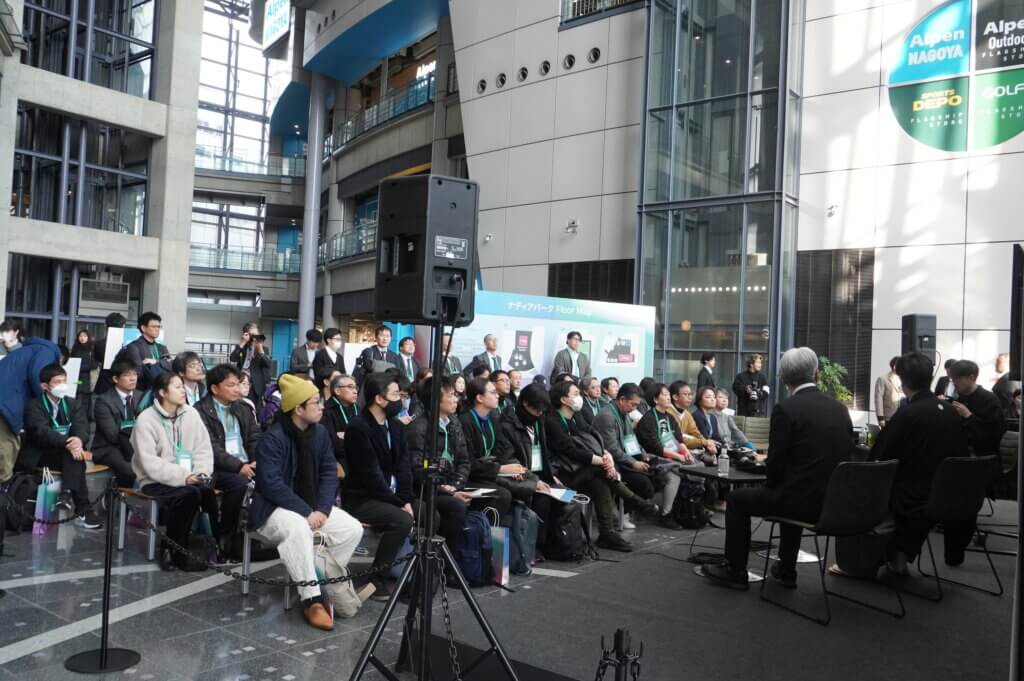
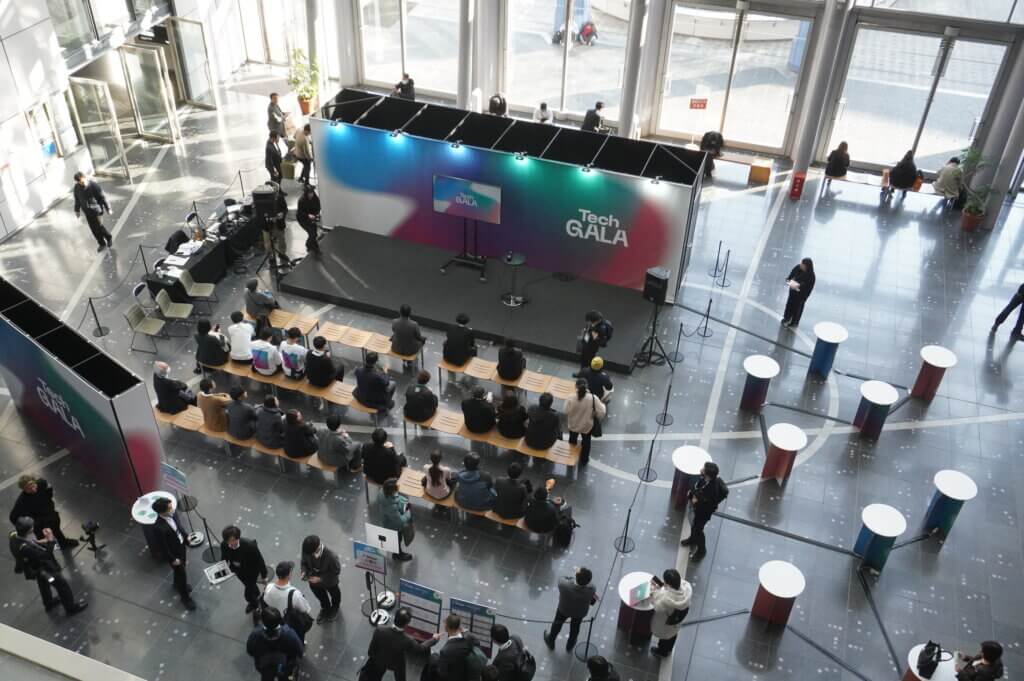
The open atrium on the second floor allowed sound to carry up to the upper levels of NADYA PARK. A stage was set up in the space, where corporate presentations were delivered in 20-minute segments, with audiences of around 40 people, including standing attendees.
This format made it possible to engage not only participants who came with a specific purpose, but also passersby who happened to move through the area, drawing them into the program organically.
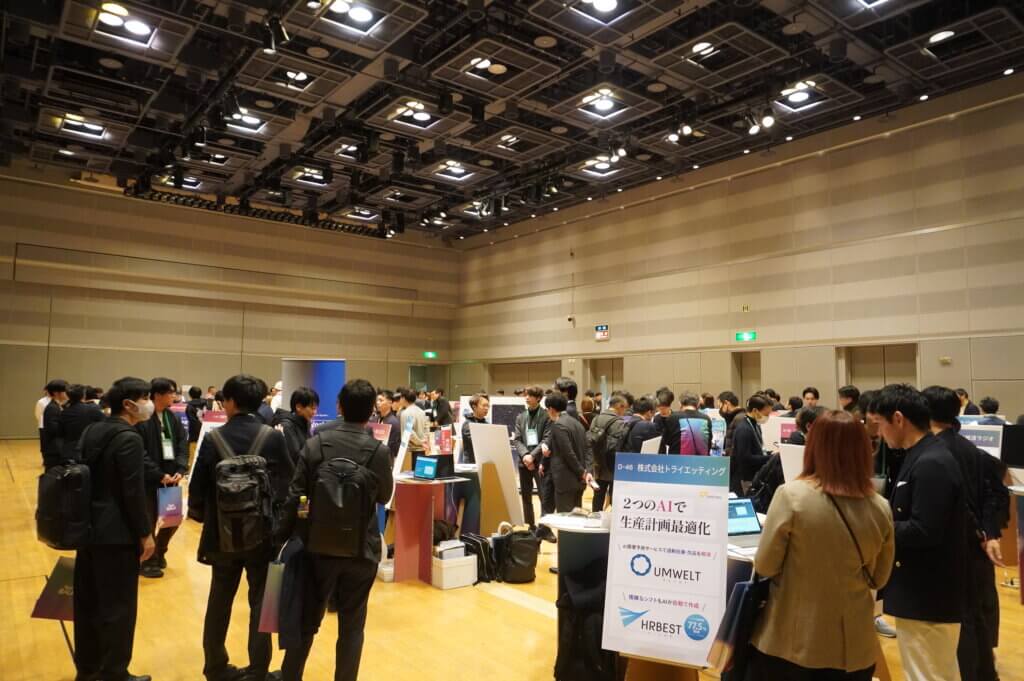
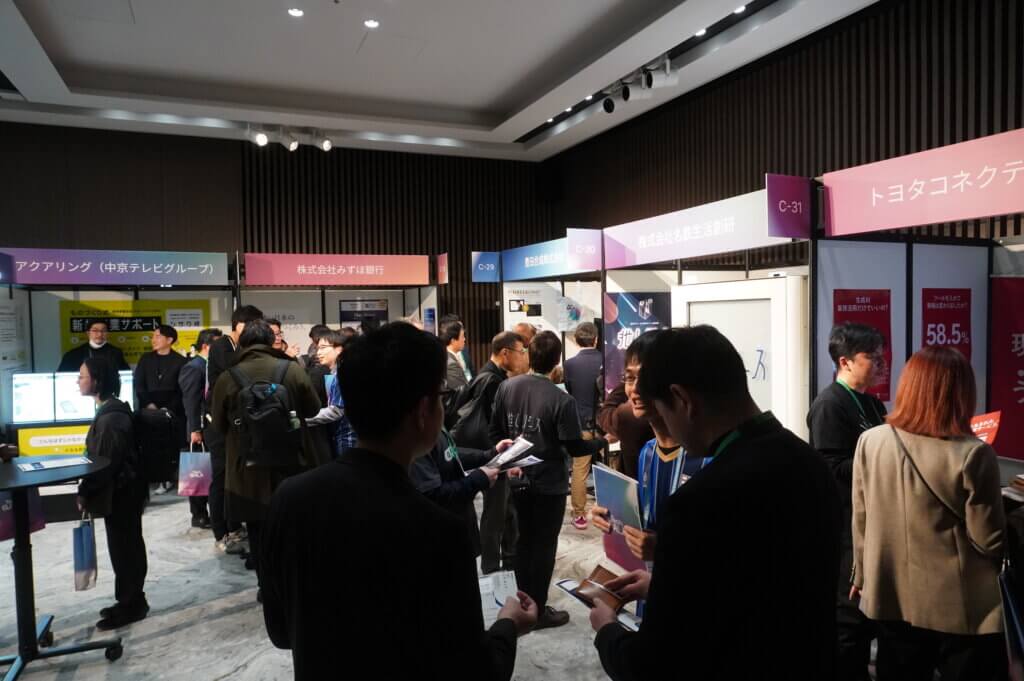
With a floor area of 553 square meters and a ceiling height of 8 meters, the Design Hall hosted approximately 70 exhibiting companies. No chairs or long tables were placed in the space, and the exhibition was designed primarily for standing conversations.
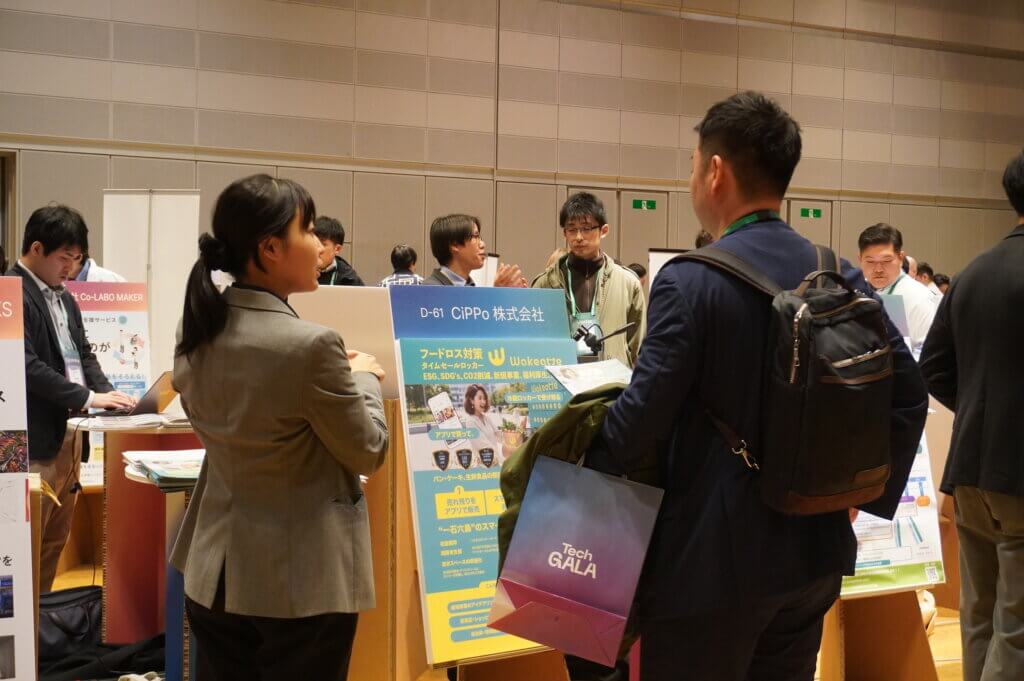
In 2026, the number of exhibitors is set to increase to 250 companies. The layout kept a close physical distance between each exhibitor and visitors, suggesting a design that prioritizes the number of participating companies and direct interaction.
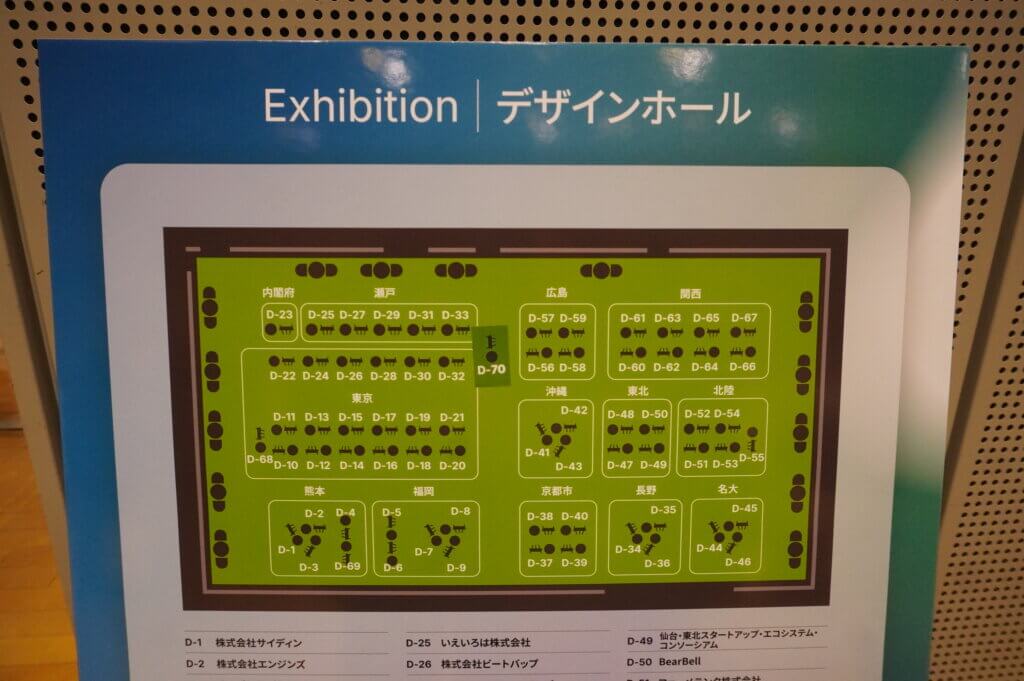
It should also be noted that this Design Hall is scheduled to close on March 31, 2026.
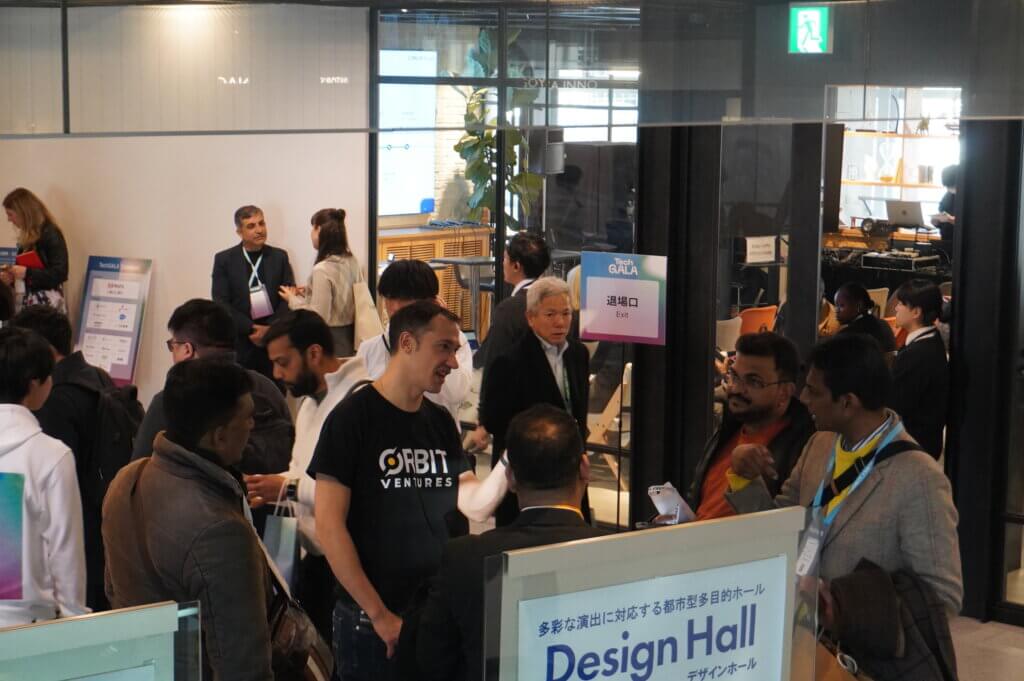
Nagoya Innovators Garage is a members-only innovation hub established in 2019 through a partnership between the Chubu Economic Federation and Nagoya.
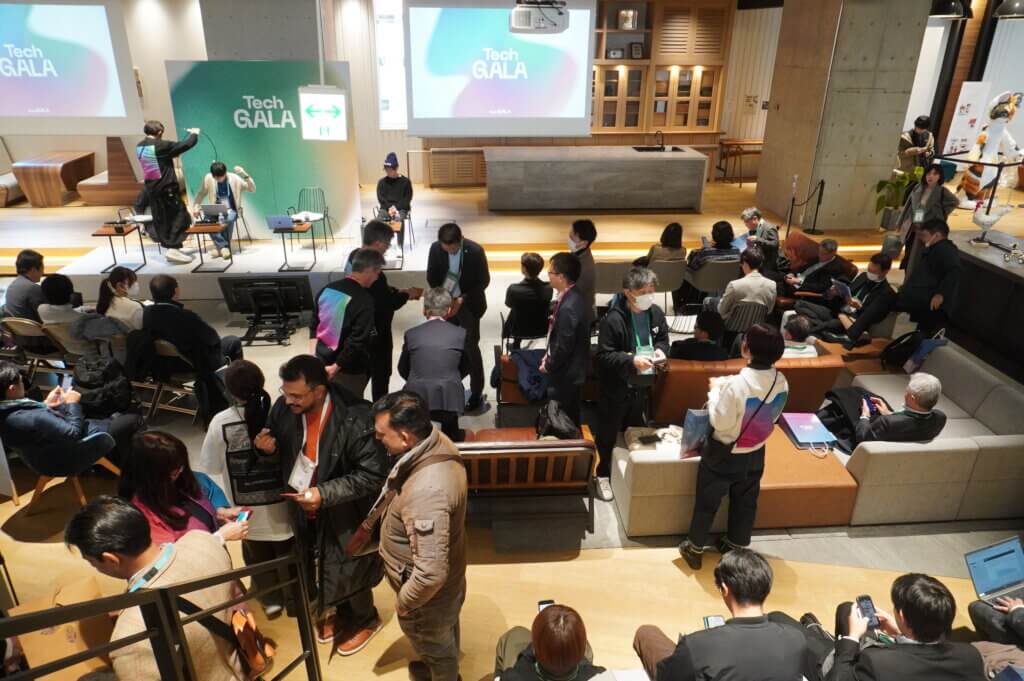
At the center of the facility is a large, tiered staircase-style space. Designed with a three-dimensional, mountain-like structure, it allows participants to access the seating area from both the front and rear, without a fixed notion of a “front” or “head” position. The changes in elevation enhance visibility, and the layout is structured to accommodate around 200 participants while minimizing a sense of crowding.
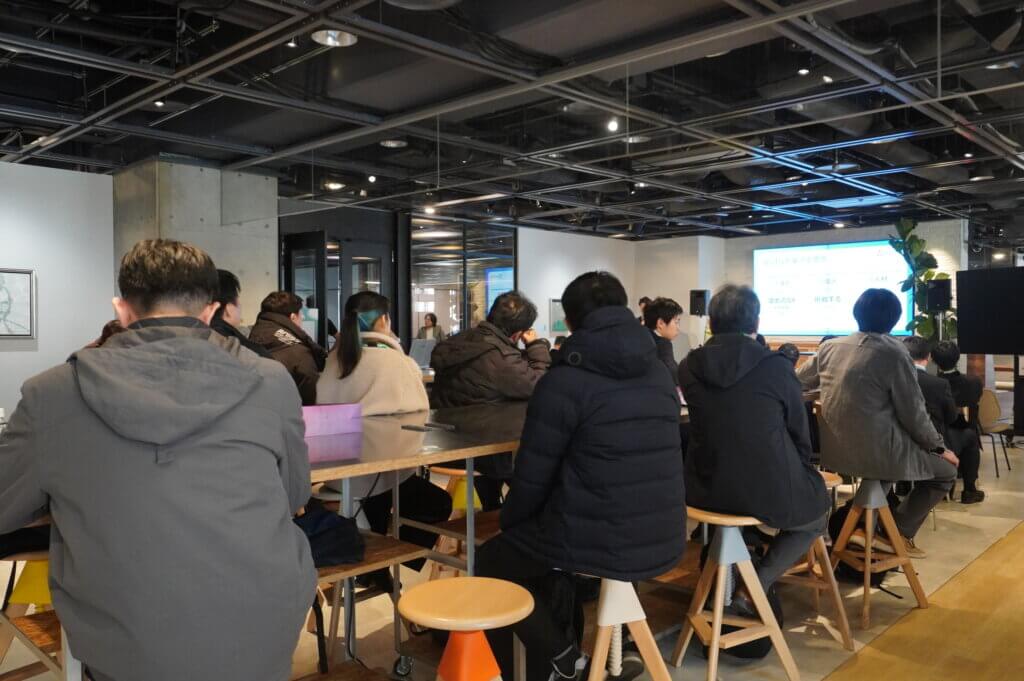
Within the same space, some participants were quietly working on their own tasks, while others were listening to the sessions. The environment allowed individuals to engage at a pace and distance that suited them, offering a degree of flexibility in how people chose to participate.
Nagoya Innovators Garage https://garage-nagoya.or.jp
NADYA PARK https://www.nadyapark.jp
(15-minute walk)
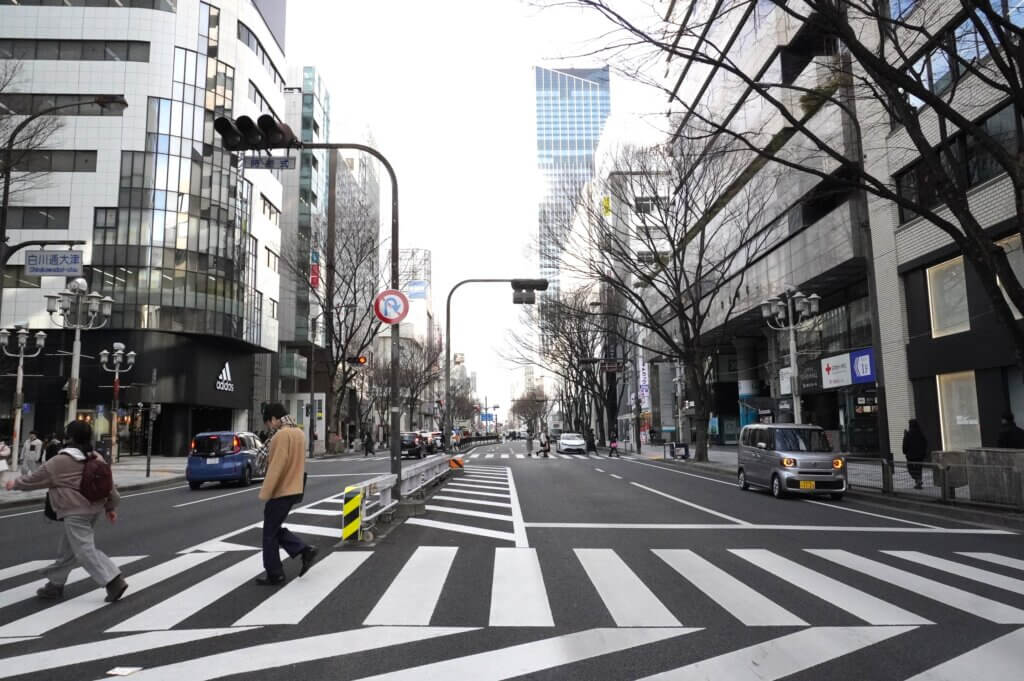
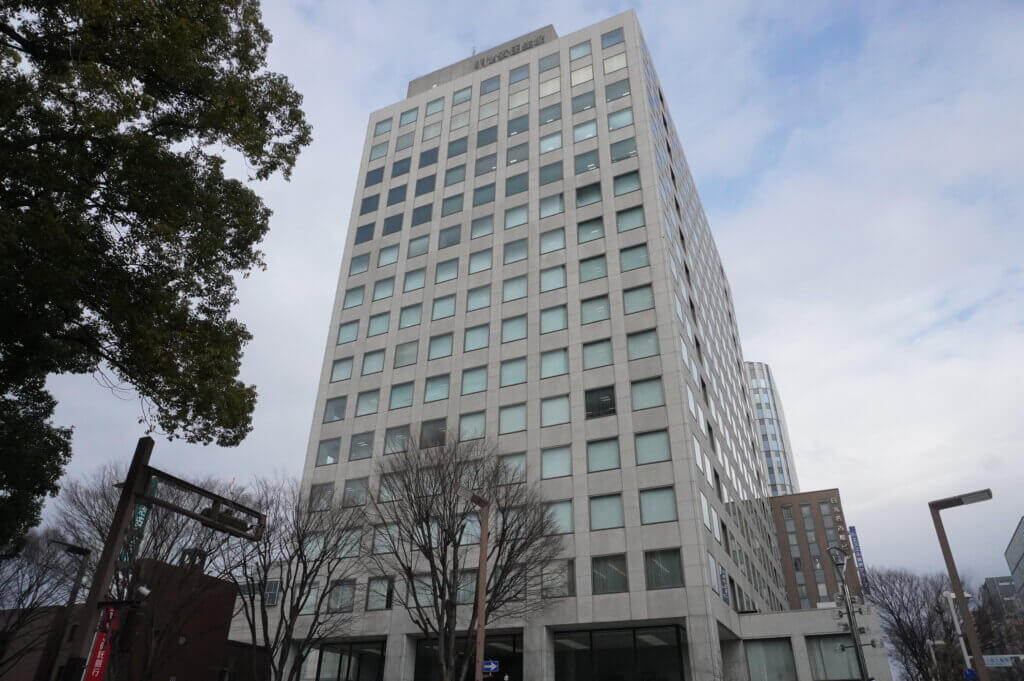
14:30 | Meiji Yasuda Life Insurance Building — A Dedicated Venue for Speed Dating Sessions Opposite the Chunichi Building
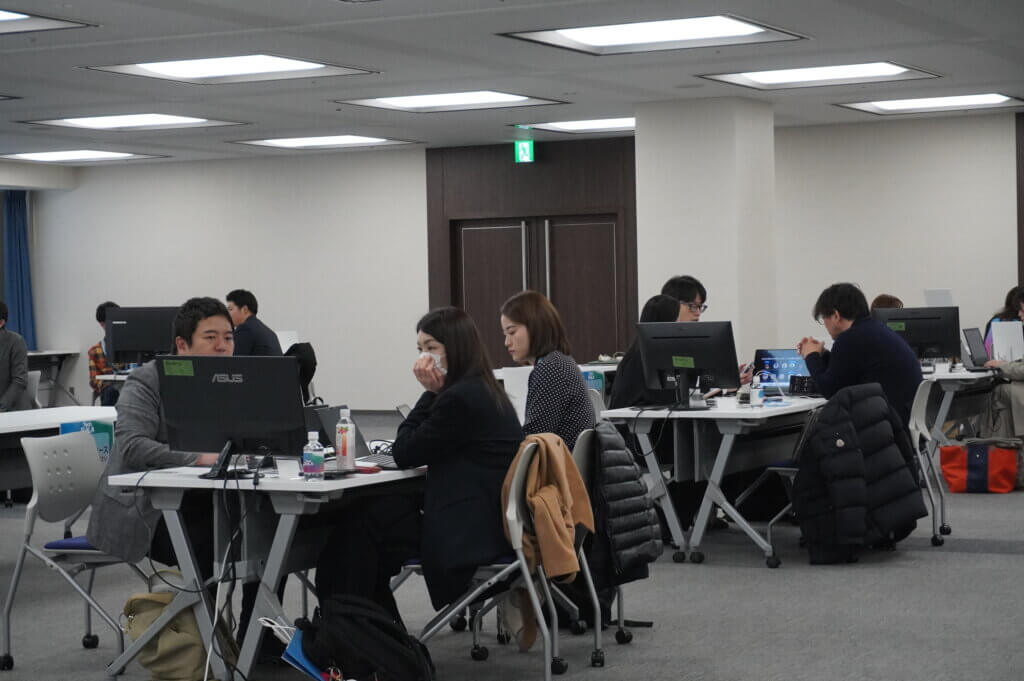
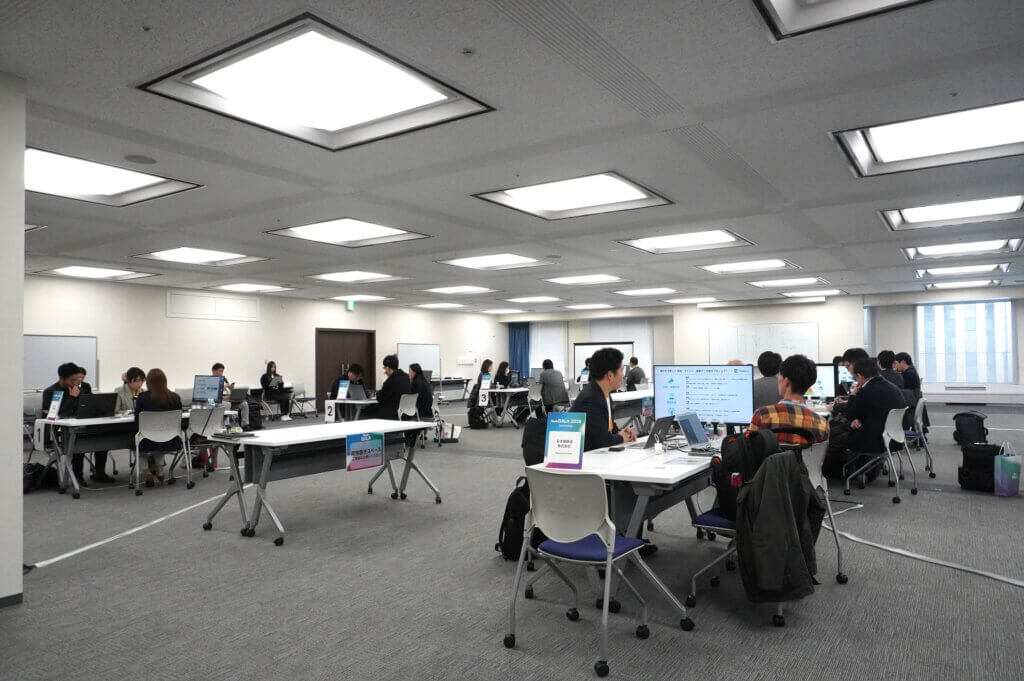
At the Meiji Yasuda Life Insurance Building, the conference room located on the top floor (16th floor) was utilized as a venue dedicated to speed dating sessions, functioning as a business matching space.
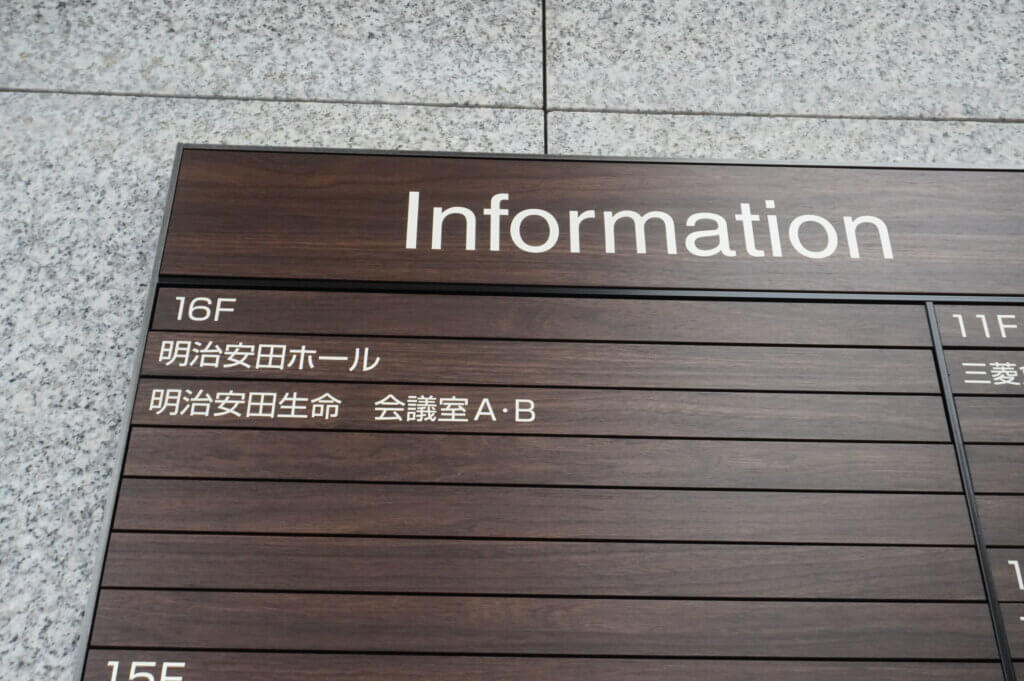
In this context, speed dating refers to a matchmaking format in which startups engage in 15-minute, one-on-one discussions with representatives from operating companies, venture capital firms, corporate venture capital units, and financial institutions. Participation was based on advance reservations. While some participants were seen checking for available slots on the day, most sessions had already been fully booked by the morning.
The hall offers seating for up to 380 people.
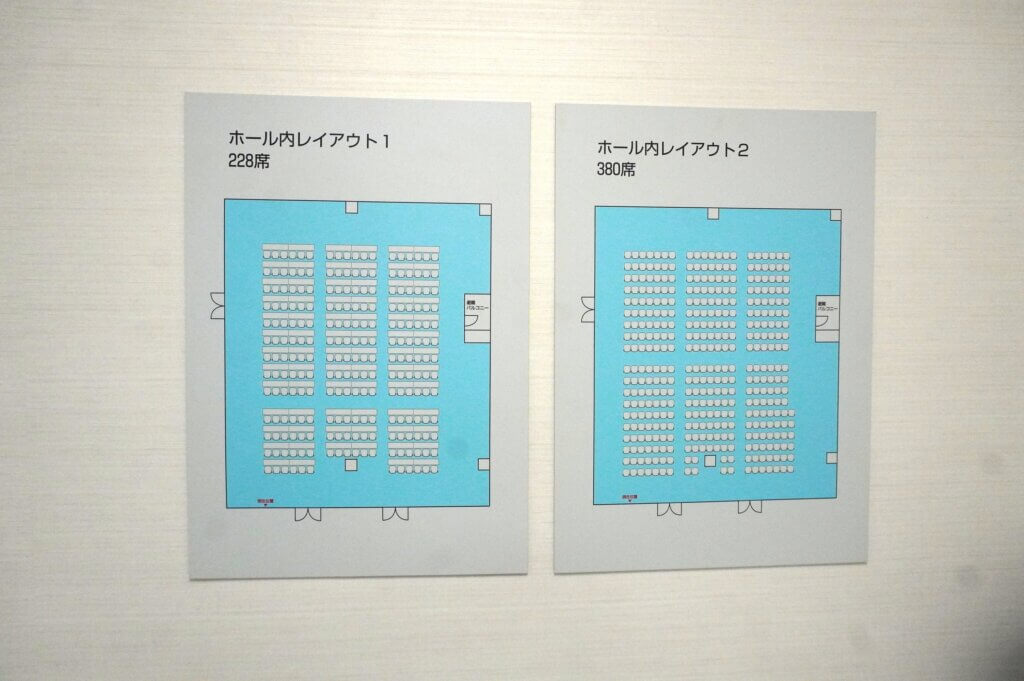
It is located directly opposite the Chunichi Building, which houses Chunichi Hall & Conference. This proximity made movement between the two venues straightforward for participants.
(15-minute walk)
15:15 | Urban Net Nagoya Nexta Conference — Well-Suited for Thematic Sessions
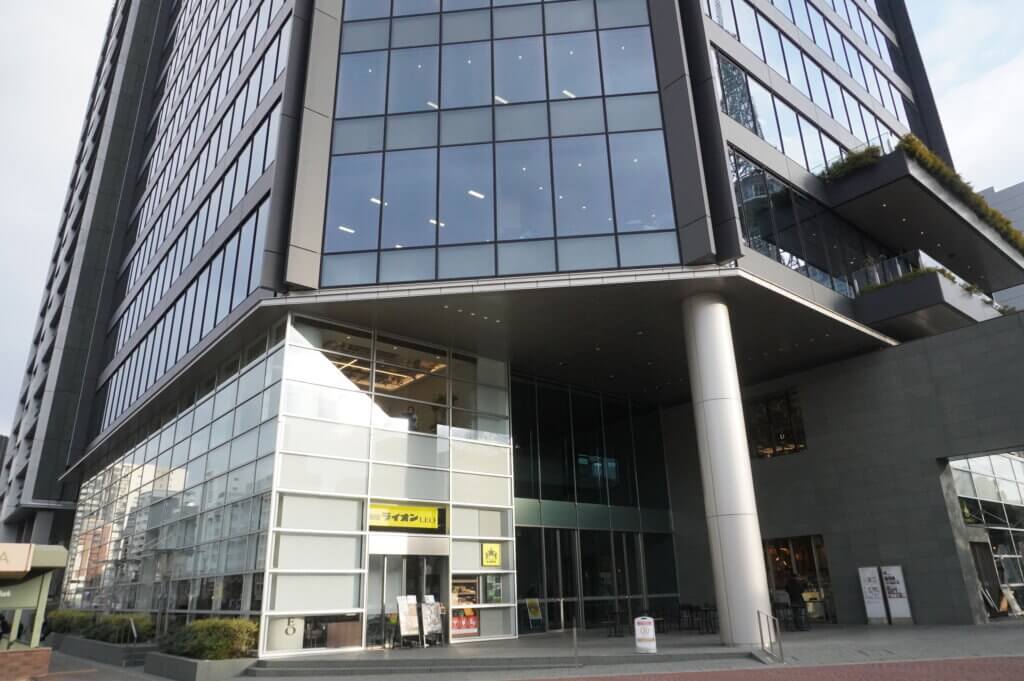
Urban Net Nagoya Nexta Conference is a conference facility located within the Urban Net Nagoya Nexta Building, which opened in 2022. During TechGALA, the venue was also used as a site for conference sessions.
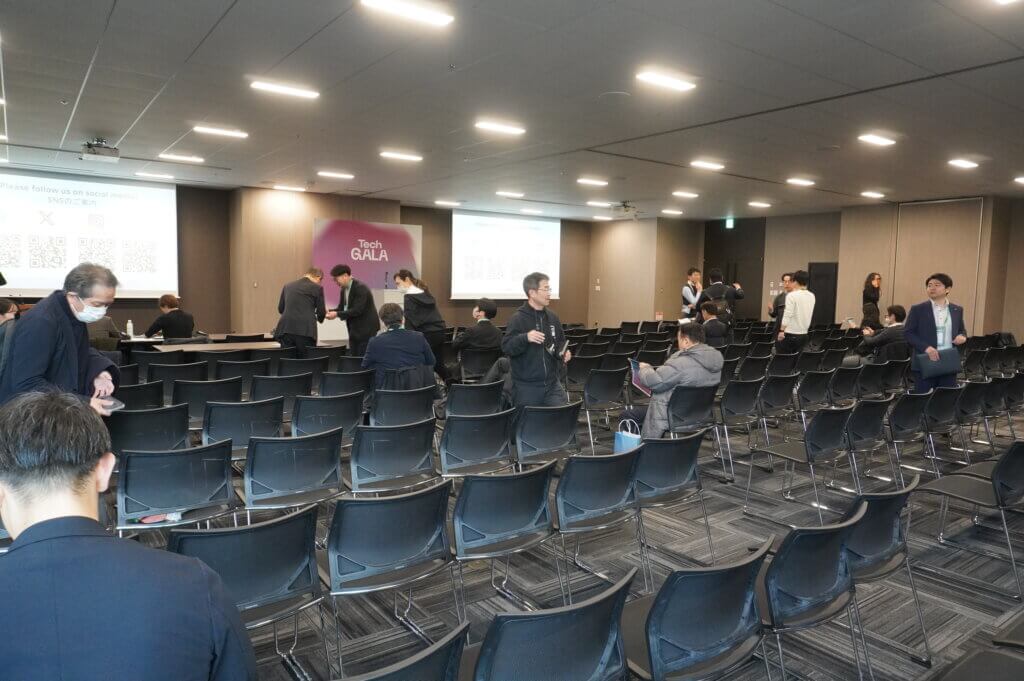
Located on the 3rd floor, Rooms A, B, and C can be combined to create a single integrated space of approximately 300 square meters. This photo shows the configuration with all three rooms connected. In a theater-style setup, the combined space can accommodate up to 234 participants.
In addition, the facility includes a total of seven meeting rooms. Each room can accommodate between 20 and 124 participants, allowing flexible use depending on the scale and purpose of breakout sessions or thematic programs.
Urban Net Nagoya Nexta Conference https://conference.nagoya-nexta.jp
Can a Distributed Event Format Truly Work?
Nagoya is home to multiple large-scale halls and convention facilities. As we walked through the city center—where TechGALA’s venues were located—it became clear that the event was not dispersed due to a lack of suitable facilities. Rather, the decision not to consolidate everything into a single venue appeared to be an intentional part of the event’s concept.
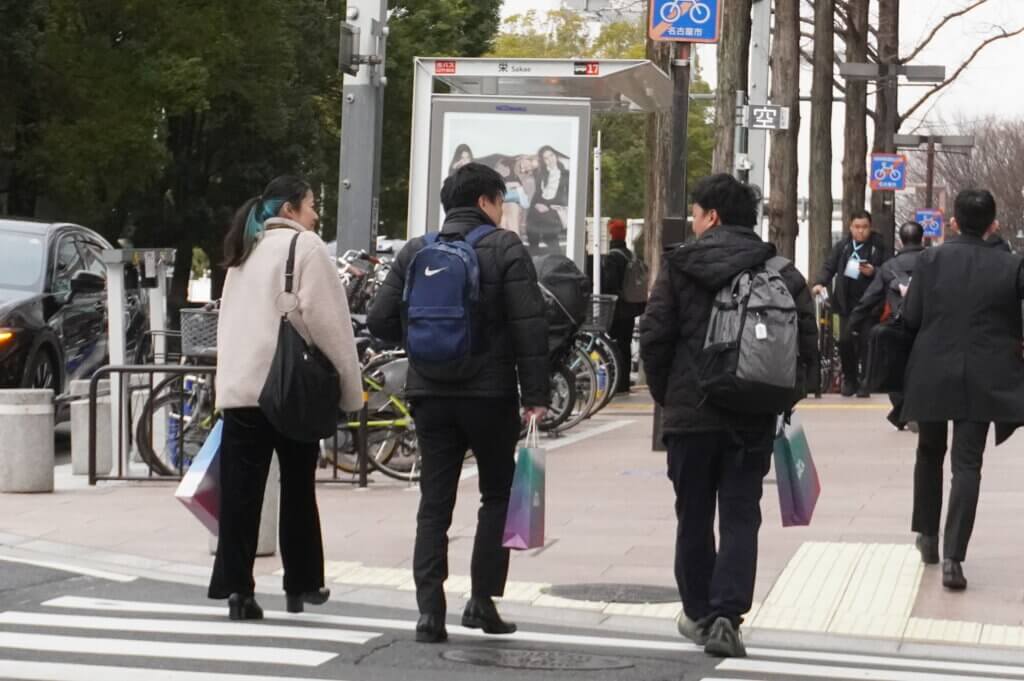
From morning through evening, the editorial team moved between venues, logging approximately 16,000 steps over the course of the day. All locations were within a 15–20 minute walking radius, making it possible to travel entirely on foot without relying on taxis. Across the city, we encountered business professionals carrying TechGALA tote bags, participants moving between venues by taxi, and high school students attending in school uniforms.
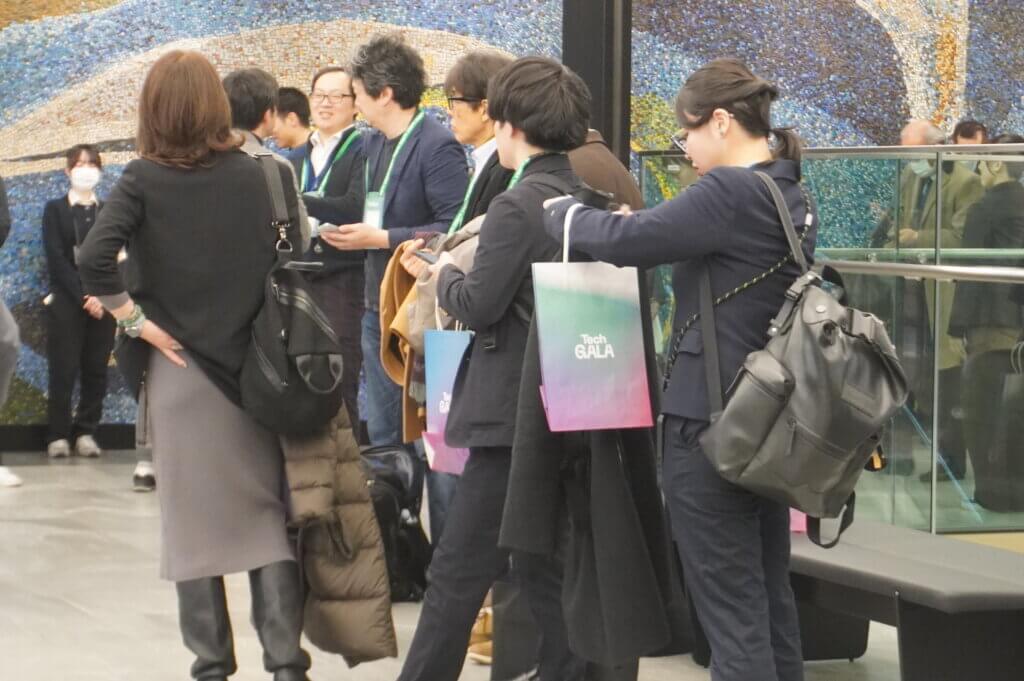
Despite the programs being spread across multiple locations, the overall experience was not diminished. On the contrary, the act of moving between venues offered moments of refreshment. Participants could choose sessions according to their interests, stepping out, relocating, and joining programs at their own pace. In this respect, the experience may feel closer to that of a music festival.
Each area also carried a distinct thematic character. For example, Matsuzakaya Hall emphasized programs related to art and diversity, while the Nikkei Building Nagoya Branch focused on initiatives associated with NIKKEI THE PITCH. This thematic zoning gave purpose to movement between venues. When the character of each space aligns with its content, a distributed event format can generate a synergistic effect rather than fragmentation.
Economic Impact Generated Along a “Line,” Not at a Single Point
From the perspective of economic impact, using the city itself as a venue—and activating it along a “line” rather than at isolated points—carries significant meaning. Instead of directing participants solely toward a single destination, integrating movement itself into the event experience allows spending to spread across the wider urban area.
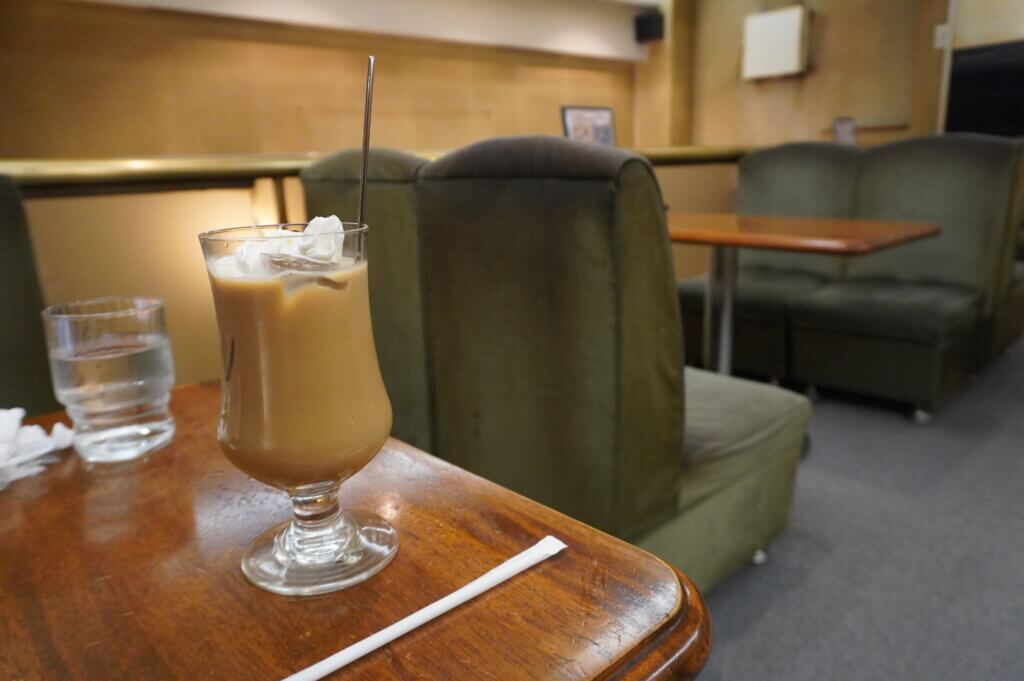
While moving between sessions, I personally stopped for lunch along the way and picked up coffee at a local café. These small, everyday actions illustrate how participant movement can translate into broader economic circulation throughout the city.
Rediscovering Existing Venues
Some participants may have been visiting these venues for the first time. From the perspective of the facilities themselves, the event likely also served as a promotional opportunity to introduce their spaces to new audiences.
The venues used for this edition were primarily conference rooms and halls. Looking ahead, if the organizers aim to further enhance the sense of a “GALA” as a festive gathering, incorporating more distinctive locations—such as theaters, historic buildings, bars, universities, outdoor plazas, or hotels—could broaden the range of experiences. Adding such unique venues may allow the event to explore new dimensions beyond conventional conference settings.
In Japan, events that use cities and regions as their stage are gradually increasing. Through TechGALA Japan, there is a sense that a circulating, city-based “signature event,” rooted in local character and identity, could take hold as a new form of urban festival.

-
【February 2026】Notable Trade Shows and Events in Japan

-
“TOKYO CREATIVE SALON 2026” Confirmed for March 13–22: A 10-Day, City-Wide Creative Festival Transforming Tokyo with Art and Fashion